Ji Chunlan, Deng Yusheng, Yang Aicheng, Lu Zhaoyu, Chen Yang, Liu Xusheng, Han Lijuan, Zou Chuan
Second Clinical Medical College, Guangzhou University of Chinese Medicine, Guangzhou, China.
Department of Nephrology, Guangdong Provincial Hospital of Chinese Medicine, Guangzhou, China.
Front Pharmacol. 2020 Jul 29;11:1092. doi: 10.3389/fphar.2020.01092. eCollection 2020.
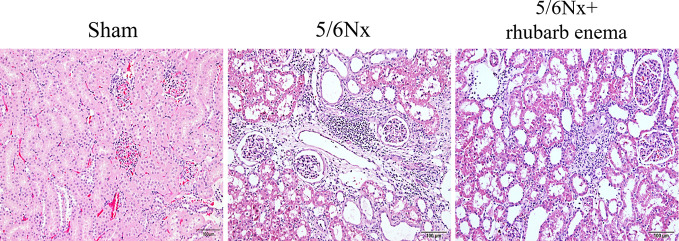
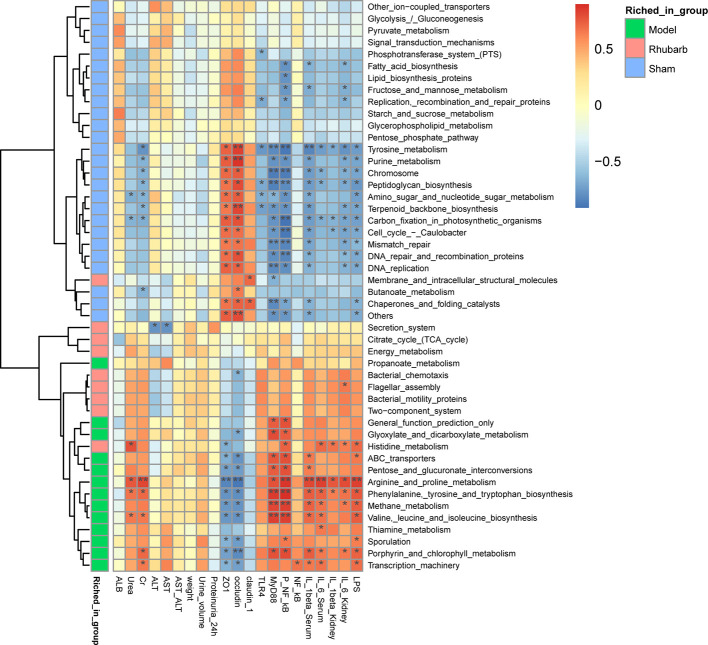
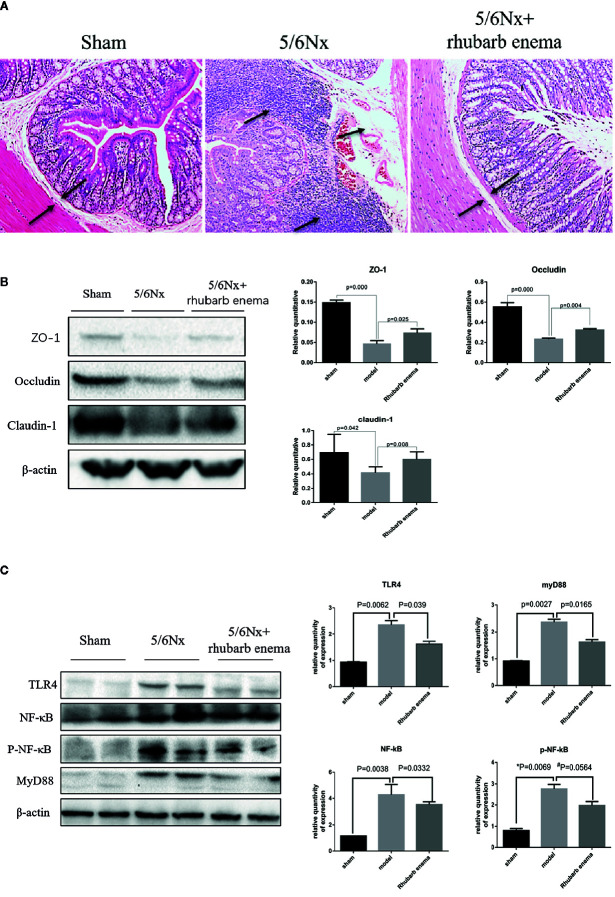
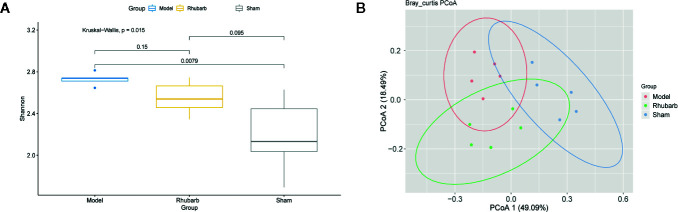
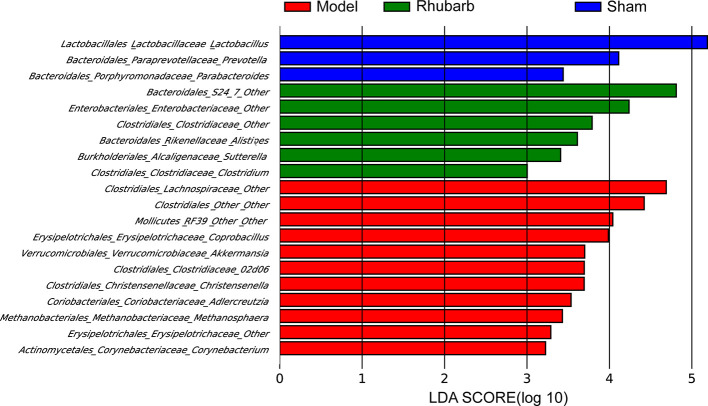
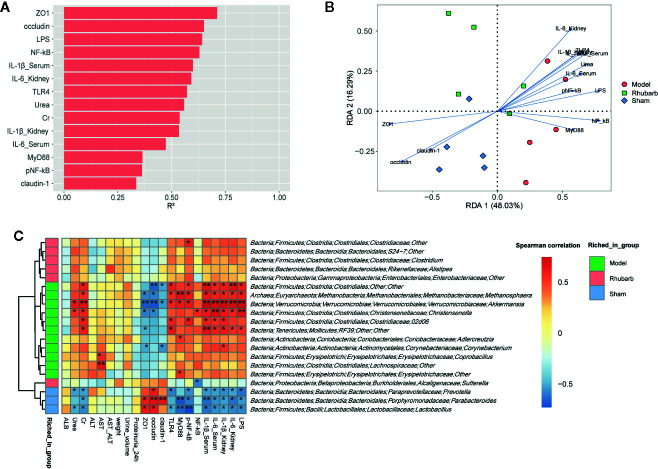
Chronic kidney disease (CKD) is often accompanied with colon mucosal barrier damage and gut microbiota disturbance, which strongly associate with up-regulated inflammation and kidney tubulointerstitial fibrosis. However, few interventions could protect the damaged barrier effectively. L or rhubarb is a common herbal medicine which is widely used to protect the colon mucosal barrier. In previous studies, we found that rhubarb intervention may reduce renal inflammation and tubulointerstitial fibrosis, gut microbiota modification. However, whether intestinal barrier function could be improved by rhubarb intervention and the relationship with intestinal flora are still unknown. Therefore, we investigated the effects of rhubarb enema on intestinal barrier, and further analyzed the relationship with gut microbiota in 5/6 nephrectomy rats. Results indicated that rhubarb enema improved the intestinal barrier, regulated gut microbiota dysbiosis, suppressed systemic inflammation, and alleviated renal fibrosis. More specifically, rhubarb enema treatment inhibited the overgrowth of conditional pathogenic gut bacteria, including , , and in CKD. The modification of gut microbiota with rhubarb intervention displayed significant correlation to intestinal barrier markers, TLR4-MyD88-NF-κB inflammatory response, and systemic inflammation. These results revealed that rhubarb enema could restore intestinal barrier by modifying several functional enteric bacteria, which may further explain the renal protection mechanism of the rhubarb enema.
慢性肾脏病(CKD)常伴有结肠黏膜屏障损伤和肠道微生物群紊乱,这与炎症上调和肾小管间质纤维化密切相关。然而,很少有干预措施能有效保护受损的屏障。大黄是一种常用的草药,广泛用于保护结肠黏膜屏障。在先前的研究中,我们发现大黄干预可能会减轻肾脏炎症和肾小管间质纤维化,改善肠道微生物群。然而,大黄干预是否能改善肠道屏障功能以及与肠道菌群的关系仍不清楚。因此,我们研究了大黄灌肠对5/6肾切除大鼠肠道屏障的影响,并进一步分析了其与肠道微生物群的关系。结果表明,大黄灌肠改善了肠道屏障,调节了肠道微生物群失调,抑制了全身炎症,并减轻了肾纤维化。更具体地说,大黄灌肠治疗抑制了CKD中条件致病性肠道细菌的过度生长,包括[此处原文缺失具体细菌名称]。大黄干预对肠道微生物群的调节与肠道屏障标志物、TLR4-MyD88-NF-κB炎症反应和全身炎症显著相关。这些结果表明,大黄灌肠可以通过调节几种功能性肠道细菌来恢复肠道屏障,这可能进一步解释大黄灌肠的肾脏保护机制。