Luo Lanxin, Wang Jun, Ding Dawei, Hasan Md Nabiul, Yang Sung-Sen, Lin Shih-Hua, Schreppel Philipp, Sun Baoshan, Yin Yan, Erker Thomas, Sun Dandan
Department of Neurology, University of Pittsburgh, Pittsburgh, PA, United States.
Department of Neurosurgery, University of Minnesota, Minneapolis, MN, United States.
Front Physiol. 2020 Jul 31;11:911. doi: 10.3389/fphys.2020.00911. eCollection 2020.
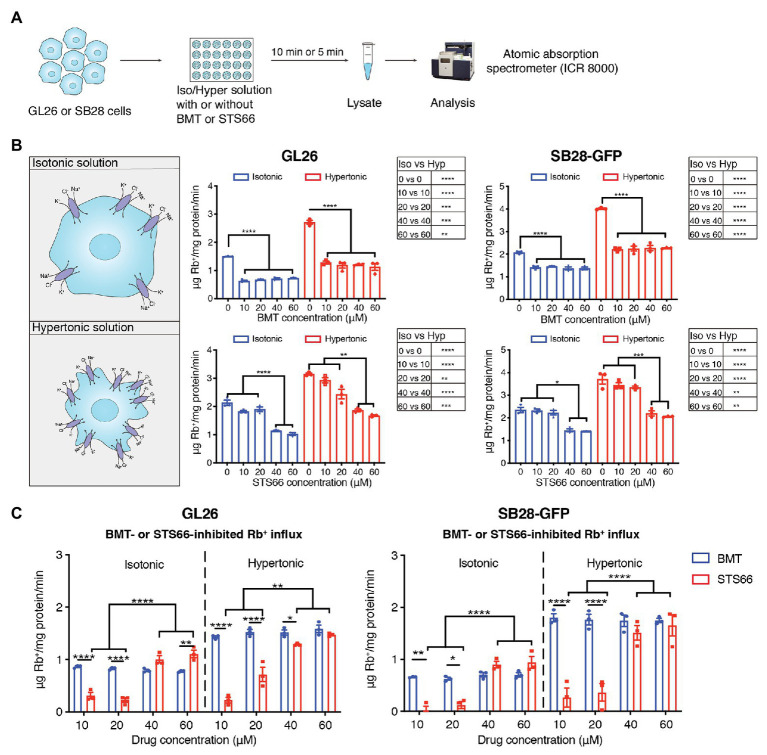
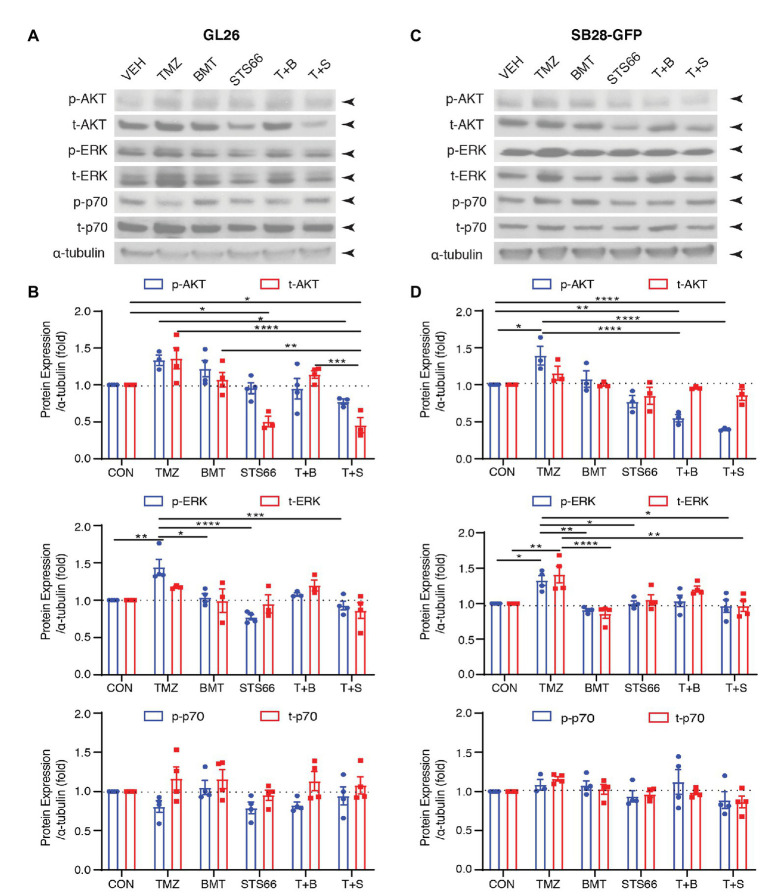
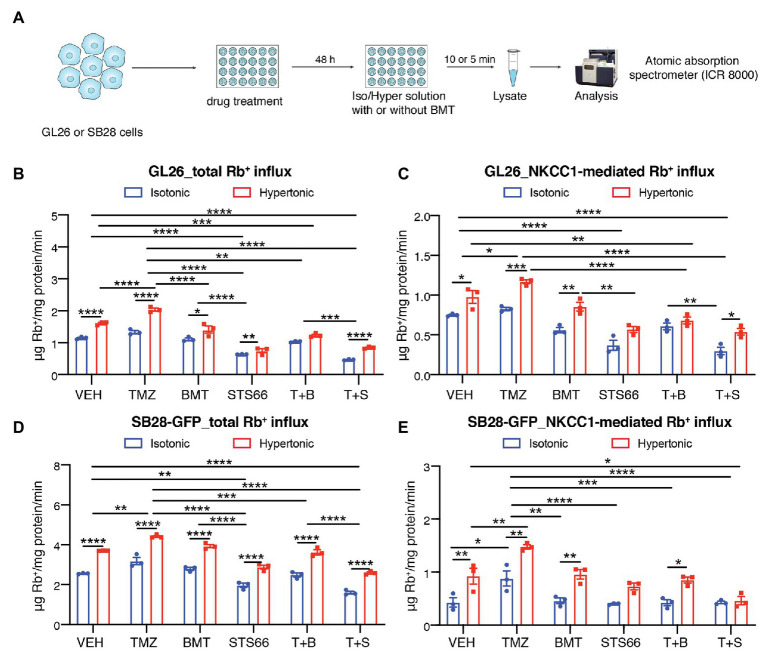
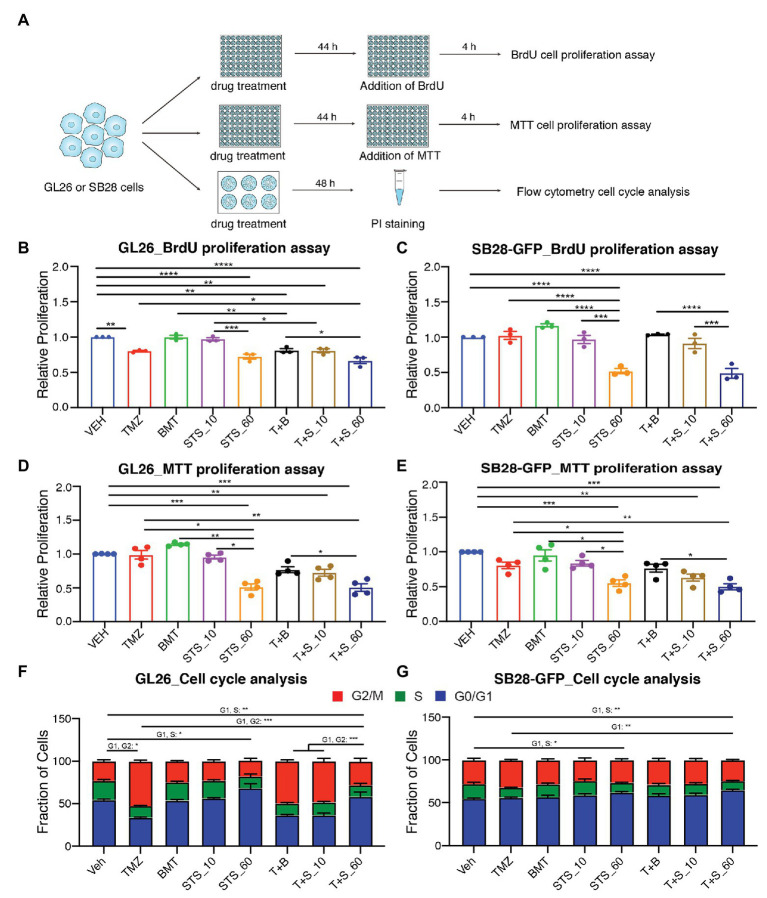
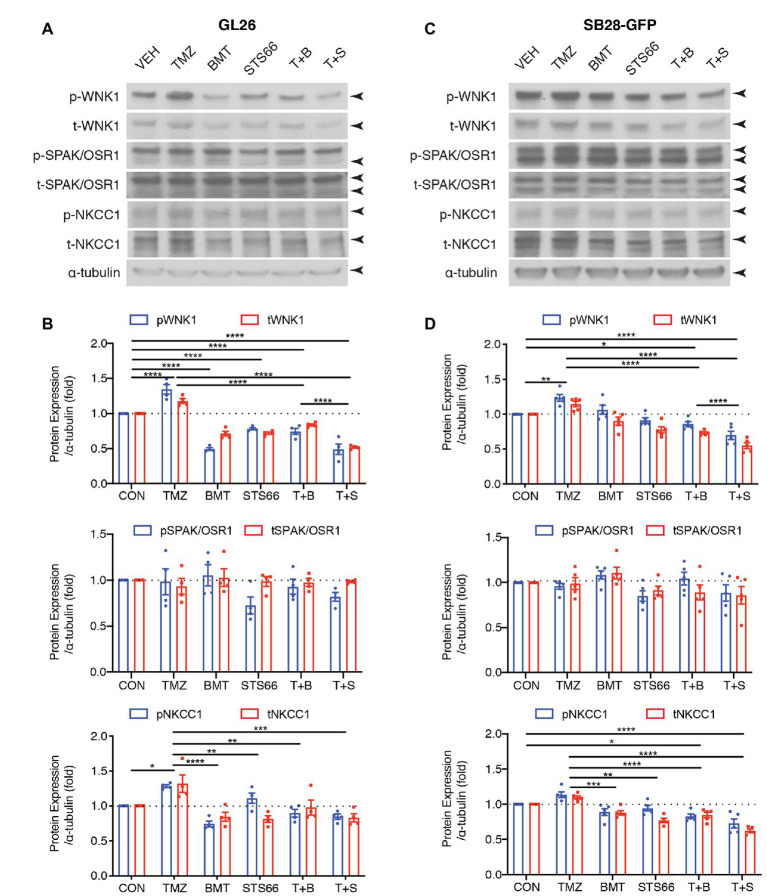
Na-K-2Cl cotransporter isoform 1 (NKCC1) is important in regulating intracellular K and Cl homeostasis and cell volume. In this study, we investigated a role of NKCC1 in regulating glioma K influx and proliferation in response to apoptosis inducing chemotherapeutic drug temozolomide (TMZ). The efficacy of a new bumetanide (BMT)-derivative NKCC1 inhibitor STS66 [3-(butylamino)-2-phenoxy-5-[(2, 2, 2-trifluoroethylamino) methyl] benzenesulfonamide] in blocking NKCC1 activity was compared with well-established NKCC1 inhibitor BMT. NKCC1 activity in cultured mouse GL26 and SB28-GFP glioma cells was measured by Rb (K) influx. The WNK1-SPAK/OSR1-NKCC1 signaling and AKT/ERK-mTOR signaling protein expression and activation were assessed by immunoblotting. Cell growth was determined by bromodeoxyuridine (BrdU) incorporation assay, MTT proliferation assay, and cell cycle analysis. Impact of STS66 and BMT on cell Rb influx and growth was measured in glioma cells treated with or without TMZ. Rb influx assay showed that 10 μM BMT markedly decreased the total Rb influx and no additional inhibition detected at >10 μM BMT. In contrast, the maximum effects of STS66 on Rb influx inhibition were at 40-60 μM. Both BMT and STS66 reduced TMZ-mediated NKCC1 activation and protein upregulation. Glioma cell growth can be reduced by STS66. The most robust inhibition of glioma growth, cell cycle, and AKT/ERK signaling was achieved by the TMZ + STS66 treatment. The new BMT-derivative NKCC1 inhibitor STS66 is more effective than BMT in reducing glioma cell growth in part by inhibiting NKCC1-mediated K influx. TMZ + STS66 combination treatment reduces glioma cell growth inhibiting cell cycle and AKT-ERK signaling.
钠-钾-2氯协同转运蛋白同工型1(NKCC1)在调节细胞内钾和氯的稳态以及细胞体积方面起着重要作用。在本研究中,我们调查了NKCC1在调节胶质瘤钾流入以及对诱导凋亡的化疗药物替莫唑胺(TMZ)反应中细胞增殖的作用。将新型布美他尼(BMT)衍生物NKCC1抑制剂STS66 [3-(丁基氨基)-2-苯氧基-5-[(2,2,2-三氟乙基氨基)甲基]苯磺酰胺]阻断NKCC1活性的效果与成熟的NKCC1抑制剂BMT进行了比较。通过铷(钾)流入来测量培养的小鼠GL26和SB28-GFP胶质瘤细胞中的NKCC1活性。通过免疫印迹评估WNK1-SPAK/OSR1-NKCC1信号通路以及AKT/ERK-mTOR信号通路蛋白的表达和激活。通过溴脱氧尿苷(BrdU)掺入试验、MTT增殖试验和细胞周期分析来确定细胞生长情况。在有或没有TMZ处理的胶质瘤细胞中测量STS66和BMT对细胞铷流入和生长情况的影响。铷流入试验表明,10 μM BMT显著降低了总的铷流入,在>10 μM BMT时未检测到额外的抑制作用。相比之下,STS66对铷流入抑制的最大作用在40 - 60 μM。BMT和STS66均降低了TMZ介导的NKCC1激活和蛋白上调。STS66可以降低胶质瘤细胞的生长。通过TMZ + STS66处理对胶质瘤生长、细胞周期和AKT/ERK信号通路的抑制作用最为显著。新型BMT衍生物NKCC1抑制剂STS66在降低胶质瘤细胞生长方面比BMT更有效,部分原因是通过抑制NKCC1介导的钾流入。TMZ + STS66联合治疗通过抑制细胞周期和AKT-ERK信号通路来降低胶质瘤细胞生长。