Zhao Xu, Chen Mingjie, Li Zhiping, Zhao Yan, Yang Huanling, Zha Lei, Yu Changxia, Wu Yuejin, Song Xiaoxia
Institute of Edible Fungi, Shanghai Academy of Agricultural Sciences, Shanghai, China.
Institute of Facility Agriculture and Equip, Gansu Academy of Agricultural Engineering and Technology, Wuwei, China.
Front Microbiol. 2020 Jul 29;11:1787. doi: 10.3389/fmicb.2020.01787. eCollection 2020.
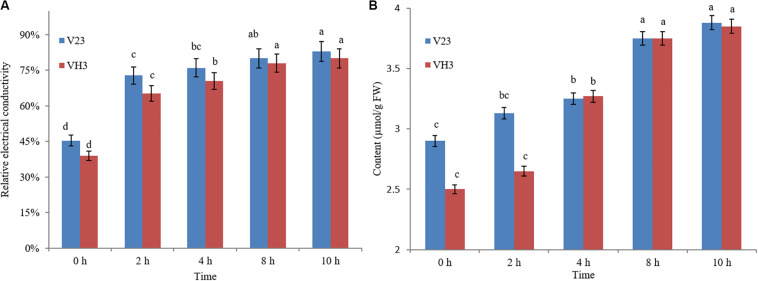
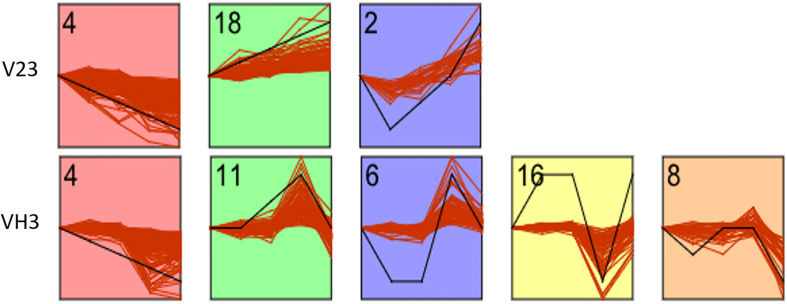
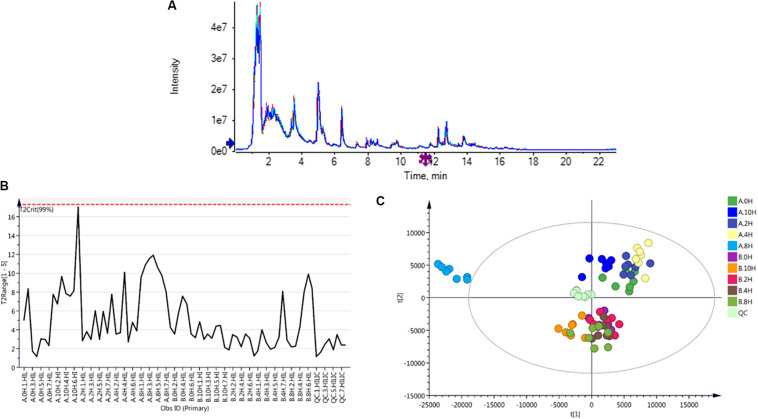
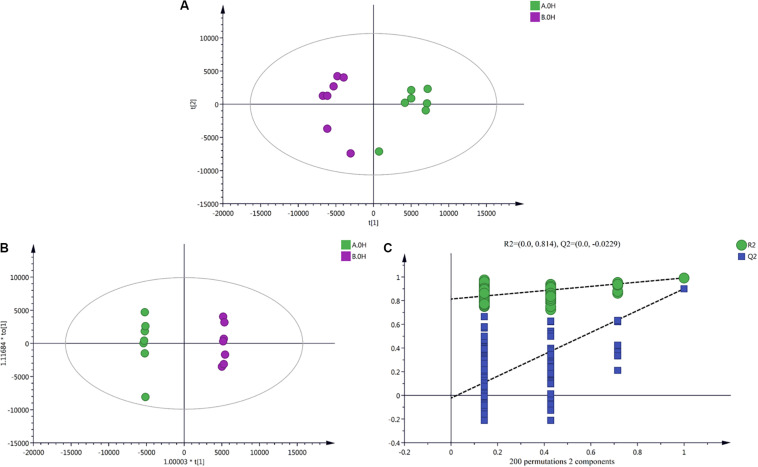
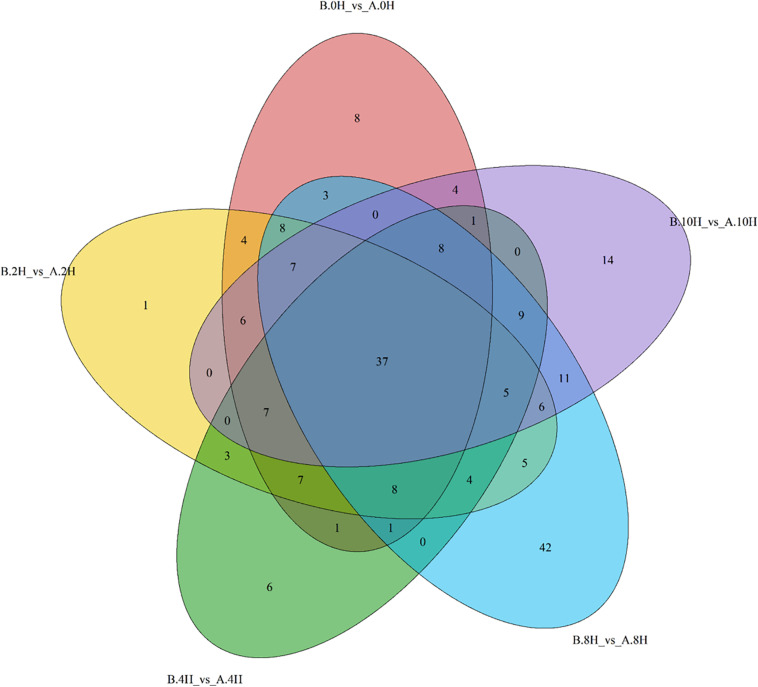
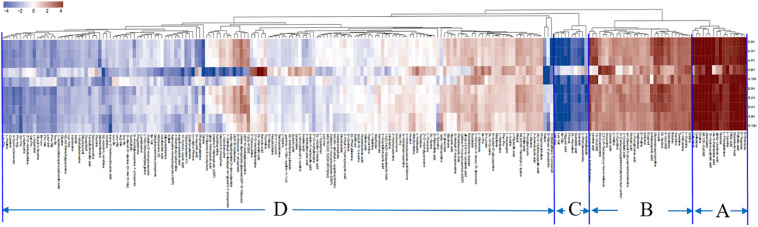
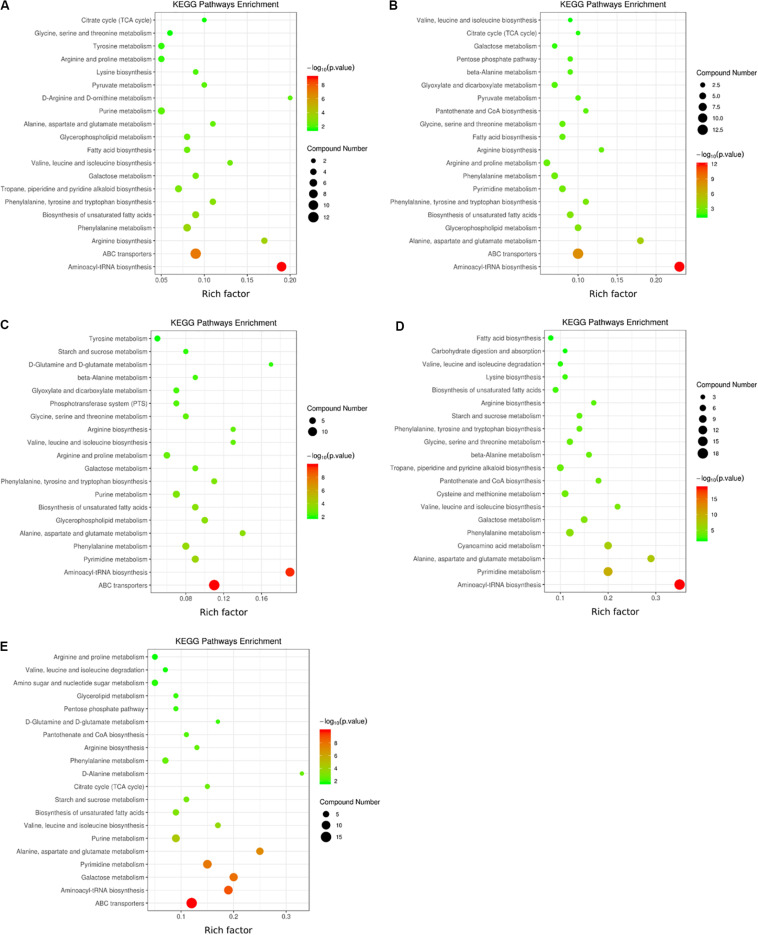
Low temperature can lead to the autolysis of (), hindering its growth and preservation and severely reducing its yield and quality. This autolysis of at low temperature has been reported, but a metabolomics-based investigation of the underlying mechanisms of the response to low temperature has not been reported. Therefore, this study aimed to explore the changes, levels and expression patterns of metabolites at low temperature. To understand the metabolic differences within , two strains with different levels of low-temperature tolerance were treated in an ice bath at 0°C for 2, 4, 8, and 10 h, while the blank control group was treated for 0 h. Metabonomics analysis was adopted to study the changes in in response to low temperature and the differences between the two different strains. Metabolic curves were analyzed at different time points by high-performance liquid chromatography-mass spectrometry (HPLC-MS). A total of 216 differential metabolites were identified and enriched in 39 metabolic pathways, mainly involving amino acid metabolism, carbohydrate metabolism, the TCA cycle, energy metabolism, etc. In this paper, we report the metabonomic analysis of in response to low temperature and compare the differences in metabolite expression between the low-temperature-resistant strain VH3 and the low-temperature-sensitive strain V23. Finally, the putative low-temperature resistance mechanism of VH3 is revealed at the metabolic level. This study provides a theoretical basis for revealing the regulatory mechanism of low-temperature resistance in and for future molecular breeding efforts.
低温会导致()自溶,阻碍其生长和保存,并严重降低其产量和品质。低温下()的这种自溶现象已有报道,但基于代谢组学对()低温响应潜在机制的研究尚未见报道。因此,本研究旨在探究()在低温下代谢物的变化、水平及表达模式。为了解()内部的代谢差异,将两株耐低温能力不同的菌株在0℃冰浴中处理2、4、8和10小时,而空白对照组处理0小时。采用代谢组学分析来研究()对低温的响应变化以及两株不同菌株之间的差异。通过高效液相色谱 - 质谱联用(HPLC - MS)在不同时间点分析代谢曲线。共鉴定出216种差异代谢物,并富集到39条代谢途径中,主要涉及氨基酸代谢、碳水化合物代谢、三羧酸循环、能量代谢等。在本文中,我们报道了()对低温的代谢组学分析,并比较了耐低温菌株VH3和低温敏感菌株V23之间代谢物表达的差异。最后,在代谢水平上揭示了VH3可能的耐低温机制。本研究为揭示()耐低温调控机制及未来分子育种工作提供了理论依据。