• 文献检索
  • 文档翻译
  • 深度研究
  • 学术资讯
  • Suppr Zotero 插件Zotero 插件
  • 邀请有礼
  • 套餐&价格
  • 历史记录
应用&插件
Suppr Zotero 插件Zotero 插件浏览器插件Mac 客户端Windows 客户端微信小程序
定价
高级版会员购买积分包购买API积分包
服务
文献检索文档翻译深度研究API 文档MCP 服务
关于我们
关于 Suppr公司介绍联系我们用户协议隐私条款
关注我们

Suppr 超能文献

核心技术专利:CN118964589B侵权必究
粤ICP备2023148730 号-1Suppr @ 2026

文献检索

告别复杂PubMed语法,用中文像聊天一样搜索,搜遍4000万医学文献。AI智能推荐,让科研检索更轻松。

立即免费搜索

文件翻译

保留排版,准确专业,支持PDF/Word/PPT等文件格式,支持 12+语言互译。

免费翻译文档

深度研究

AI帮你快速写综述,25分钟生成高质量综述,智能提取关键信息,辅助科研写作。

立即免费体验

基于临床分期和手术病理因素的宫颈癌患者预后评估:一种基于支持向量机的方法

Prognostic Assessment of Cervical Cancer Patients by Clinical Staging and Surgical-Pathological Factor: A Support Vector Machine-Based Approach.

作者信息

Xie Lin, Chu Ran, Wang Kai, Zhang Xi, Li Jie, Zhao Zhe, Yao Shu, Wang Zhiwen, Dong Taotao, Yang Xingsheng, Su Xuantao, Qiao Xu, Song Kun, Kong Beihua

机构信息

Department of Obstetrics and Gynecology, Qilu Hospital, Cheeloo College of Medicine, Shandong University, Jinan, China.

Department of Obstetrics and Gynecology, Jining No.1 People's Hospital, Jining, China.

出版信息

Front Oncol. 2020 Aug 5;10:1353. doi: 10.3389/fonc.2020.01353. eCollection 2020.

DOI:10.3389/fonc.2020.01353
PMID:32850433
原文链接:https://pmc.ncbi.nlm.nih.gov/articles/PMC7419674/
Abstract

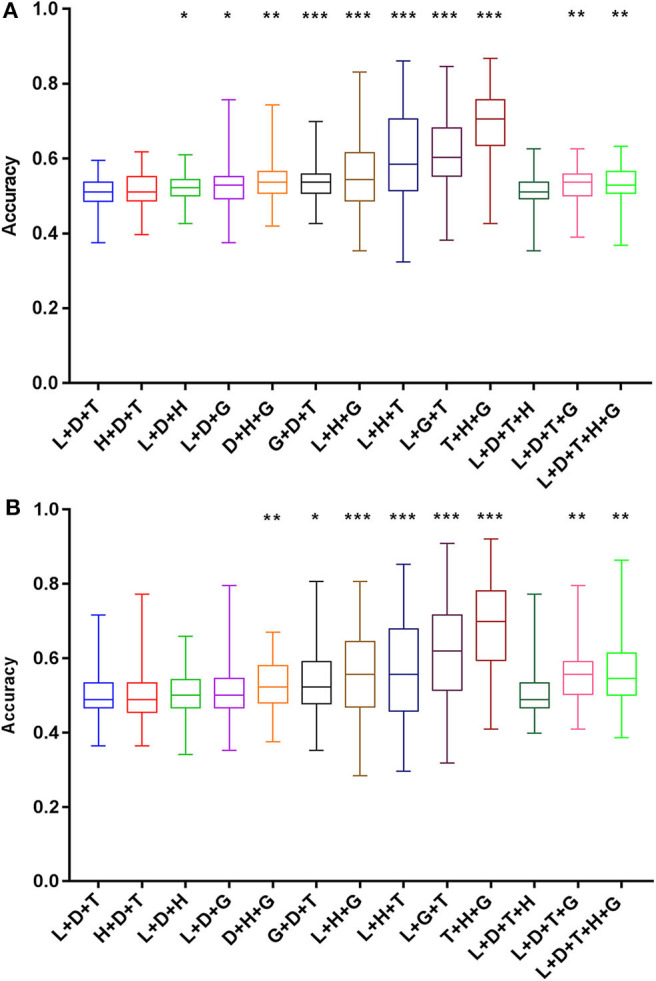
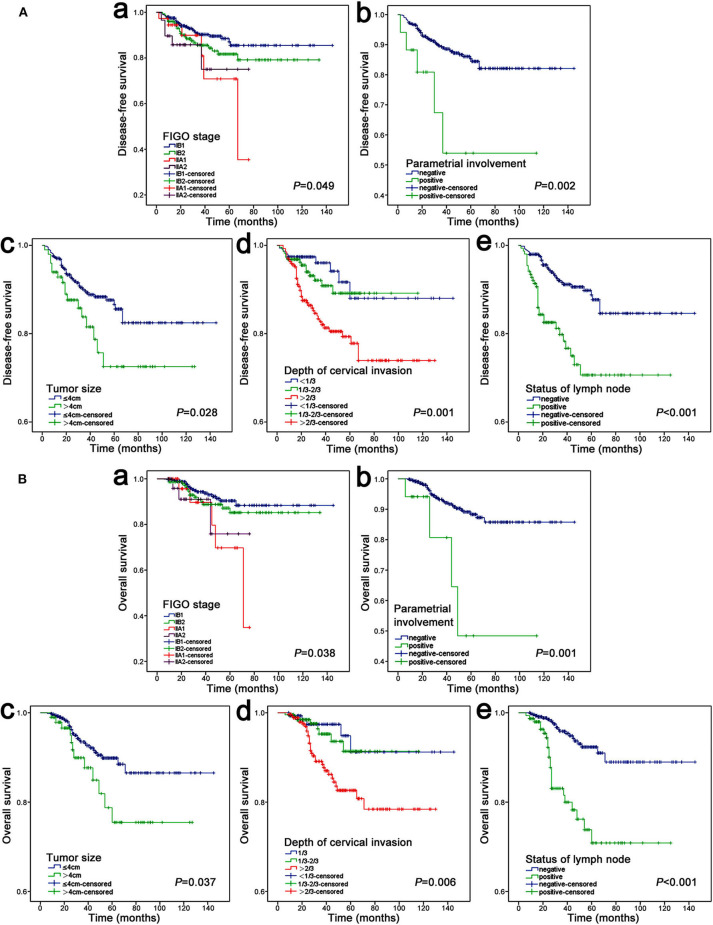
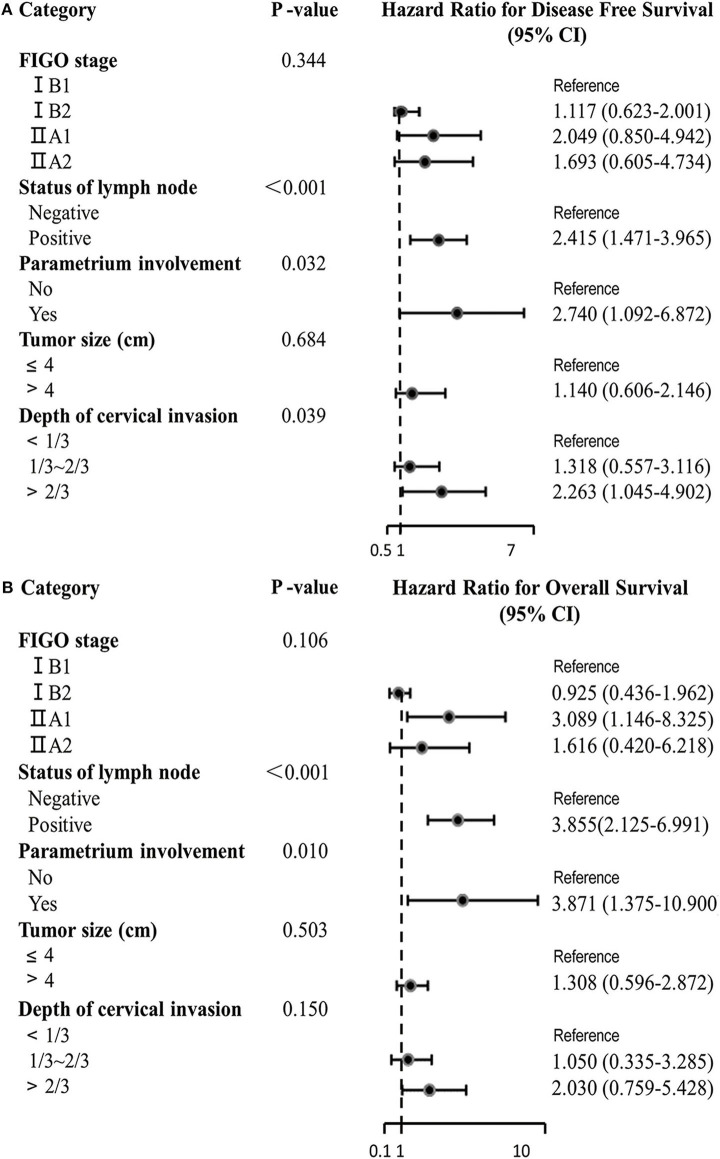
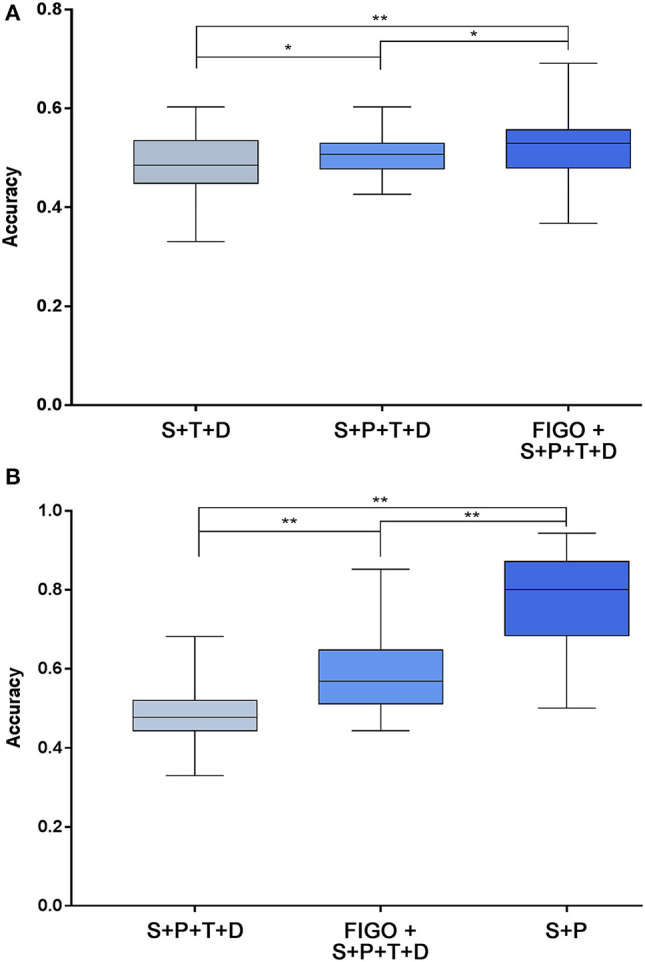
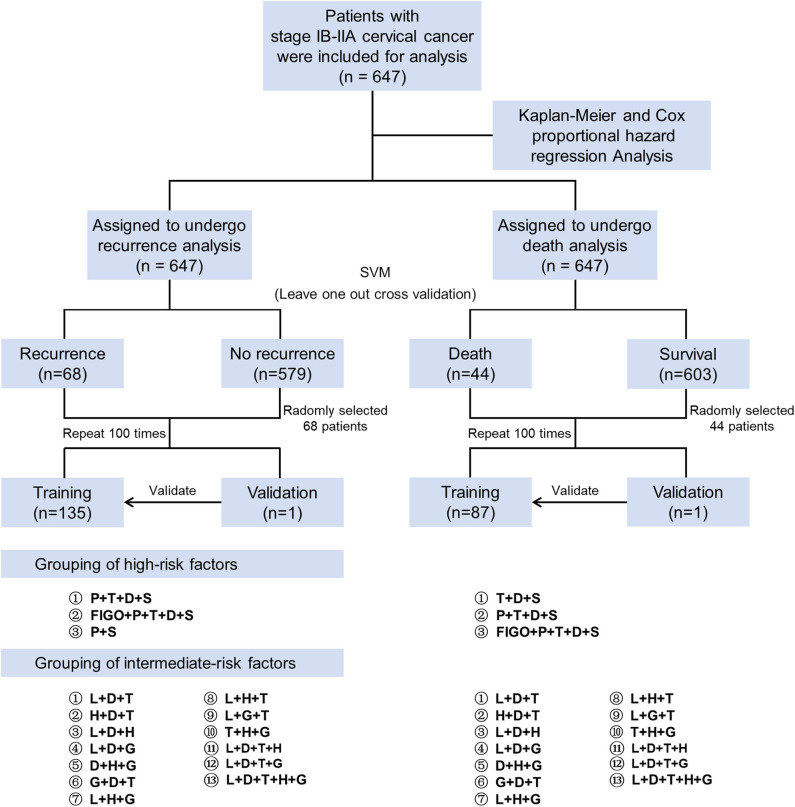
The International Federation of Gynecology and Obstetrics (FIGO) staging system is considered the most powerful prognostic factor in patients with cervical cancer. In addition, other surgical-pathological risk factors have been demonstrated to have significance in predicting the prognosis of patients. Therefore, the purpose of this study was to investigate the effects of the FIGO staging system and surgical-pathological risk factors on the prognosis of cervical cancer patients. A retrospective study was performed on patients diagnosed with cervical cancer at FIGO stage IB1-IIA2. Kaplan-Meier, Cox proportional hazards regression analysis and the support vector machine (SVM) algorithm were used to assess and validate the high-risk factors related to recurrence and death. A total of 647 patients were included. Kaplan-Meier analysis showed that five high-risk factors, including FIGO stage, status of pelvic lymph node, parametrial involvement, tumor size, and depth of cervical cancer, had a significant effect on the prognosis of patients. In multivariate analysis, pelvic lymph node metastasis (hazard ratio [HR] 2.415, 95% confidence interval [CI] 1.471-3.965), parametrial involvement (HR 2.740, 95% CI 1.092-6.872) and >2/3 depth of cervical invasion (HR 2.263, 95% CI 1.045-4.902) were three independent risk factors of disease-free survival. Pelvic lymph node metastasis (HR 3.855, 95% CI 2.125-6.991) and parametrial involvement (HR 3.871, 95% CI 1.375-10.900) were two independent risk factors for overall survival. When all five high-risk factors were assembled and used for classification prediction through SVM, it achieved the highest prediction accuracy of recurrence (accuracy = 69.1%). The highest prediction accuracy for survival was 94.3% when only using the two independent predictors (the pathological status of lymph nodes and parametrium involvement) by SVM classifiers. Among the 13 groups of intermediate-risk factor, the combination of tumor size, histology and grade of differentiation was more accurate in predicting prognosis than the intermediate-risk factors in the Sedlis criteria (recurrence: 86.8% vs. 60.0%; death: 92.0% vs. 71.6%). The combination of FIGO stage and surgical-pathological risk factors can further enhance the prediction accuracy of the prognosis in patients with early-stage cervical cancer. Histology and grade of differentiation can further improve the prediction accuracy of intermediate-risk factors in the Sedlis criteria.

摘要

国际妇产科联盟(FIGO)分期系统被认为是宫颈癌患者最有力的预后因素。此外,其他手术病理危险因素已被证明对预测患者预后具有重要意义。因此,本研究的目的是探讨FIGO分期系统和手术病理危险因素对宫颈癌患者预后的影响。对FIGO分期为IB1-IIA2期的宫颈癌患者进行了一项回顾性研究。采用Kaplan-Meier法、Cox比例风险回归分析和支持向量机(SVM)算法评估和验证与复发和死亡相关的高危因素。共纳入647例患者。Kaplan-Meier分析显示,包括FIGO分期、盆腔淋巴结状态、宫旁组织受累情况、肿瘤大小和宫颈癌浸润深度在内的五个高危因素对患者预后有显著影响。多因素分析中,盆腔淋巴结转移(风险比[HR]2.415,95%置信区间[CI]1.471-3.965)、宫旁组织受累(HR 2.740,95%CI 1.092-6.872)和宫颈癌浸润深度>2/3(HR 2.263,95%CI 1.045-4.902)是无病生存的三个独立危险因素。盆腔淋巴结转移(HR 3.855,95%CI 2.125-6.991)和宫旁组织受累(HR 3.871,95%CI 1.375-10.900)是总生存的两个独立危险因素。当将所有五个高危因素组合并通过SVM进行分类预测时,其复发预测准确率最高(准确率=69.1%)。当仅使用两个独立预测因素(淋巴结和宫旁组织的病理状态)通过SVM分类器进行生存预测时,最高预测准确率为94.3%。在13组中危因素中,肿瘤大小、组织学类型和分化程度的组合在预测预后方面比Sedlis标准中的中危因素更准确(复发:86.8%对60.0%;死亡:92.0%对71.6%)。FIGO分期和手术病理危险因素的组合可进一步提高早期宫颈癌患者预后的预测准确率。组织学类型和分化程度可进一步提高Sedlis标准中危因素的预测准确率。
https://cdn.ncbi.nlm.nih.gov/pmc/blobs/0ccf/7419674/2366a34628ad/fonc-10-01353-g0005.jpg
https://cdn.ncbi.nlm.nih.gov/pmc/blobs/0ccf/7419674/3dbb17db2ecc/fonc-10-01353-g0001.jpg
https://cdn.ncbi.nlm.nih.gov/pmc/blobs/0ccf/7419674/379150b30eb0/fonc-10-01353-g0002.jpg
https://cdn.ncbi.nlm.nih.gov/pmc/blobs/0ccf/7419674/82a0f91c0c73/fonc-10-01353-g0003.jpg
https://cdn.ncbi.nlm.nih.gov/pmc/blobs/0ccf/7419674/f43b9fc48cb4/fonc-10-01353-g0004.jpg
https://cdn.ncbi.nlm.nih.gov/pmc/blobs/0ccf/7419674/2366a34628ad/fonc-10-01353-g0005.jpg
https://cdn.ncbi.nlm.nih.gov/pmc/blobs/0ccf/7419674/3dbb17db2ecc/fonc-10-01353-g0001.jpg
https://cdn.ncbi.nlm.nih.gov/pmc/blobs/0ccf/7419674/379150b30eb0/fonc-10-01353-g0002.jpg
https://cdn.ncbi.nlm.nih.gov/pmc/blobs/0ccf/7419674/82a0f91c0c73/fonc-10-01353-g0003.jpg
https://cdn.ncbi.nlm.nih.gov/pmc/blobs/0ccf/7419674/f43b9fc48cb4/fonc-10-01353-g0004.jpg
https://cdn.ncbi.nlm.nih.gov/pmc/blobs/0ccf/7419674/2366a34628ad/fonc-10-01353-g0005.jpg

相似文献

1
Prognostic Assessment of Cervical Cancer Patients by Clinical Staging and Surgical-Pathological Factor: A Support Vector Machine-Based Approach.基于临床分期和手术病理因素的宫颈癌患者预后评估:一种基于支持向量机的方法
Front Oncol. 2020 Aug 5;10:1353. doi: 10.3389/fonc.2020.01353. eCollection 2020.
2
[Long-term oncological outcomes after laparoscopic versus abdominal radical hysterectomy in stage I a2- II a2 cervical cancer: a matched cohort study].[I a2-II a2期宫颈癌腹腔镜与开腹根治性子宫切除术后的长期肿瘤学结局:一项配对队列研究]
Zhonghua Fu Chan Ke Za Zhi. 2015 Dec;50(12):894-901.
3
Para-aortic lymph node involvement revisited in the light of the revised 2018 FIGO staging system for cervical cancer.重新审视宫颈癌 2018 年 FIGO 分期系统修订版中的腹主动脉旁淋巴结受累情况。
Arch Gynecol Obstet. 2019 Sep;300(3):675-682. doi: 10.1007/s00404-019-05232-7. Epub 2019 Jul 1.
4
Pretreatment Lymph Node Metastasis as a Prognostic Significance in Cervical Cancer: Comparison between Disease Status.治疗前淋巴结转移作为宫颈癌的预后意义:疾病状态之间的比较。
Cancer Res Treat. 2020 Apr;52(2):516-523. doi: 10.4143/crt.2019.328. Epub 2019 Oct 29.
5
Does the New FIGO 2018 Staging System Allow Better Prognostic Differentiation in Early Stage Cervical Cancer? A Dutch Nationwide Cohort Study.2018年国际妇产科联盟(FIGO)新分期系统能否更好地区分早期宫颈癌的预后?一项荷兰全国性队列研究。
Cancers (Basel). 2022 Jun 27;14(13):3140. doi: 10.3390/cancers14133140.
6
A model for prediction of parametrial involvement and feasibility of less radical resection of parametrium in patients with FIGO stage IB1 cervical cancer.预测 FIGO 分期 IB1 期宫颈癌患者宫旁侵犯及行局限性宫旁切除术可行性的模型。
Gynecol Oncol. 2012 Jul;126(1):82-6. doi: 10.1016/j.ygyno.2012.04.016. Epub 2012 Apr 17.
7
Preoperative platelet count improves the prognostic prediction of the FIGO staging system for operable cervical cancer patients.术前血小板计数可改善 FIGO 分期系统对可手术宫颈癌患者的预后预测。
Clin Chim Acta. 2017 Oct;473:198-203. doi: 10.1016/j.cca.2016.11.008. Epub 2016 Nov 9.
8
Parametrial involvement in FIGO stage IB1 cervical carcinoma diagnostic impact of tumor diameter in preoperative magnetic resonance imaging.术前磁共振成像中肿瘤直径对 FIGO 分期 IB1 期宫颈癌的宫旁浸润的诊断影响。
Int J Gynecol Cancer. 2011 Feb;21(2):349-54.
9
[Clinical significance of serum squamous cell carcinoma antigen in patients with early cervical squamous cell carcinoma].[血清鳞状细胞癌抗原在早期宫颈鳞状细胞癌患者中的临床意义]
Zhonghua Zhong Liu Za Zhi. 2019 May 23;41(5):357-362. doi: 10.3760/cma.j.issn.0253-3766.2019.05.007.
10
Prognostic value of the 2018 FIGO staging system for cervical cancer patients with surgical risk factors.2018年国际妇产科联盟(FIGO)分期系统对具有手术风险因素的宫颈癌患者的预后价值。
Cancer Manag Res. 2019 Jun 13;11:5473-5480. doi: 10.2147/CMAR.S203059. eCollection 2019.

引用本文的文献

1
Downregulation of and its prognostic significance in squamous cell carcinoma of the cervix: a bioinformatics analysis based on public datasets.在子宫颈鳞状细胞癌中[具体基因或因子名称]的下调及其预后意义:基于公共数据集的生物信息学分析
Transl Cancer Res. 2025 Jul 30;14(7):4034-4045. doi: 10.21037/tcr-2025-307. Epub 2025 Jul 25.
2
Development and validation of prognostic prediction models for early-stage cervical cancer patients based on pathological intermediate-risk factors.基于病理中间风险因素的早期宫颈癌患者预后预测模型的开发与验证
Ther Adv Med Oncol. 2025 Jul 24;17:17588359251359461. doi: 10.1177/17588359251359461. eCollection 2025.
3

本文引用的文献

1
How to Select Early-Stage Cervical Cancer Patients Still Suitable for Laparoscopic Radical Hysterectomy: a Propensity-Matched Study.如何选择仍适合腹腔镜根治性子宫切除术的早期宫颈癌患者:一项倾向匹配研究。
Ann Surg Oncol. 2020 Jun;27(6):1947-1955. doi: 10.1245/s10434-019-08162-5. Epub 2020 Jan 2.
2
Prognostic Model for Survival and Recurrence in Patients with Early-Stage Cervical Cancer: A Korean Gynecologic Oncology Group Study (KGOG 1028).早期宫颈癌患者生存和复发的预后模型:韩国妇科肿瘤学组研究(KGOG 1028)。
Cancer Res Treat. 2020 Jan;52(1):320-333. doi: 10.4143/crt.2019.124. Epub 2019 Aug 5.
3
Survival after Minimally Invasive Radical Hysterectomy for Early-Stage Cervical Cancer.
Imaging-Based AI for Predicting Lymphovascular Space Invasion in Cervical Cancer: Systematic Review and Meta-Analysis.
基于影像学的人工智能预测宫颈癌淋巴管间隙浸润:系统评价与荟萃分析
J Med Internet Res. 2025 Jun 16;27:e71091. doi: 10.2196/71091.
4
Prognostic Factors for Cervical Cancer in Asian Populations: A Scoping Review of Research From 2013 to 2023.亚洲人群宫颈癌的预后因素:2013年至2023年研究的范围综述
Cureus. 2024 Oct 13;16(10):e71359. doi: 10.7759/cureus.71359. eCollection 2024 Oct.
5
Artificial intelligence methods available for cancer research.人工智能方法可用于癌症研究。
Front Med. 2024 Oct;18(5):778-797. doi: 10.1007/s11684-024-1085-3. Epub 2024 Aug 8.
6
Society for Immunotherapy of Cancer (SITC) clinical practice guideline on immunotherapy for the treatment of gynecologic cancer.癌症免疫治疗学会(SITC)妇科肿瘤免疫治疗临床实践指南。
J Immunother Cancer. 2023 Jun;11(6). doi: 10.1136/jitc-2022-006624.
7
Single-nucleus RNA sequencing and deep tissue proteomics reveal distinct tumour microenvironment in stage-I and II cervical cancer.单细胞 RNA 测序和深度组织蛋白质组学揭示了Ⅰ期和Ⅱ期宫颈癌中不同的肿瘤微环境。
J Exp Clin Cancer Res. 2023 Jan 23;42(1):28. doi: 10.1186/s13046-023-02598-0.
8
Caerin 1.1/1.9 Enhances Antitumour Immunity by Activating the IFN-α Response Signalling Pathway of Tumour Macrophages.Caerin 1.1/1.9 通过激活肿瘤巨噬细胞的 IFN-α 反应信号通路增强抗肿瘤免疫。
Cancers (Basel). 2022 Nov 24;14(23):5785. doi: 10.3390/cancers14235785.
9
Application of synthetic magnetic resonance imaging and DWI for evaluation of prognostic factors in cervical carcinoma: a prospective preliminary study.合成磁共振成像和 DWI 在宫颈癌预后因素评估中的应用:一项前瞻性初步研究。
Br J Radiol. 2023 Jan 1;96(1141):20220596. doi: 10.1259/bjr.20220596. Epub 2022 Dec 7.
10
Time to death from cervical cancer and predictors among cervical cancer patients in Felege Hiwot Comprehensive Specialized Hospital, North West Ethiopia: Facility-based retrospective follow-up study.从死亡时间到在埃塞俄比亚西北费莱吉比绍特综合专科医院的宫颈癌患者的预测因素:基于设施的回顾性随访研究。
PLoS One. 2022 Jun 24;17(6):e0269576. doi: 10.1371/journal.pone.0269576. eCollection 2022.
早期宫颈癌微创根治性子宫切除术的生存情况。
N Engl J Med. 2018 Nov 15;379(20):1905-1914. doi: 10.1056/NEJMoa1804923. Epub 2018 Oct 31.
4
Cancer of the cervix uteri.子宫颈癌。
Int J Gynaecol Obstet. 2018 Oct;143 Suppl 2:22-36. doi: 10.1002/ijgo.12611.
5
Comparison of Different Surgical Approaches for Stage IB1 Cervical Cancer Patients: A Multi-institution Study and a Review of the Literature.不同手术入路治疗ⅠB1 期宫颈癌患者的比较:多中心研究和文献复习。
Int J Gynecol Cancer. 2018 Jun;28(5):1020-1028. doi: 10.1097/IGC.0000000000001254.
6
Is there a revision needed of the current FIGO staging system?当前的国际妇产科联盟(FIGO)分期系统是否需要修订?
Acta Obstet Gynecol Scand. 2017 Oct;96(10):1159-1161. doi: 10.1111/aogs.13193. Epub 2017 Aug 14.
7
Can We Define the Risk of Lymph Node Metastasis in Early-Stage Cervical Cancer Patients? A Large-Scale, Retrospective Study.能否为早期宫颈癌患者定义淋巴结转移风险?一项大规模回顾性研究。
Ann Surg Oncol. 2017 Aug;24(8):2311-2318. doi: 10.1245/s10434-017-5917-0. Epub 2017 Jun 12.
8
Prognostic Parameters for Patients with Cervical Cancer FIGO Stages IA2-IIB: A Long-Term Follow-Up.宫颈癌国际妇产科联盟(FIGO)分期IA2-IIB期患者的预后参数:长期随访
Oncology. 2017;93(2):106-114. doi: 10.1159/000471766. Epub 2017 May 3.
9
Development and validation of a surgical-pathologic staging and scoring system for cervical cancer.子宫颈癌手术病理分期及评分系统的开发与验证
Oncotarget. 2016 Apr 12;7(15):21054-63. doi: 10.18632/oncotarget.8245.
10
Cancer statistics in China, 2015.《中国癌症统计数据 2015》
CA Cancer J Clin. 2016 Mar-Apr;66(2):115-32. doi: 10.3322/caac.21338. Epub 2016 Jan 25.