Department of Parasitology, Faculty of Medical Sciences, Tarbiat Modares University, Tehran, Iran.
Blood Transfusion Research Center, High Institute for Research and Education in Transfusion Medicine, Tehran, Iran.
Front Cell Infect Microbiol. 2020 Jul 31;10:387. doi: 10.3389/fcimb.2020.00387. eCollection 2020.
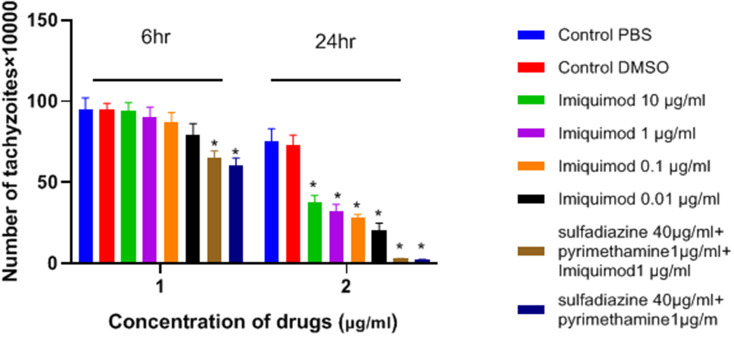
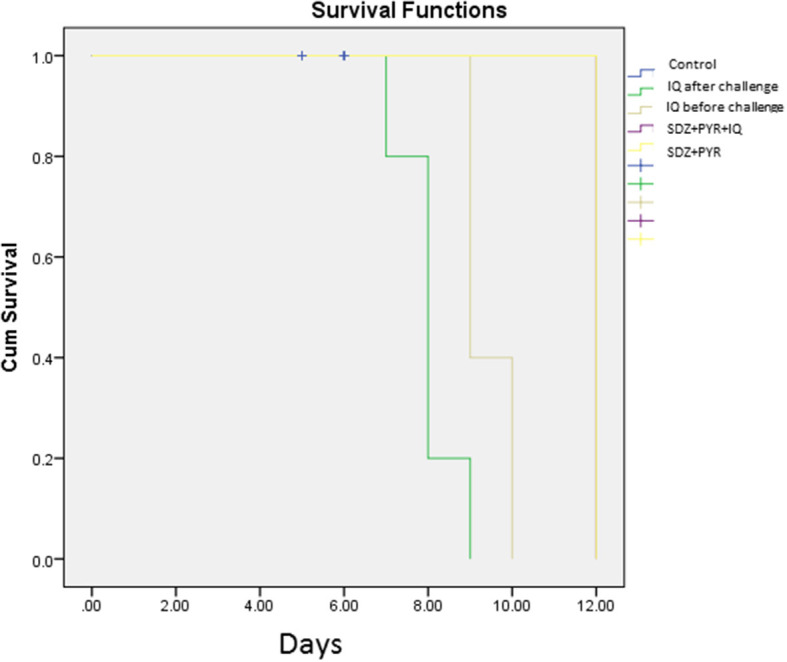
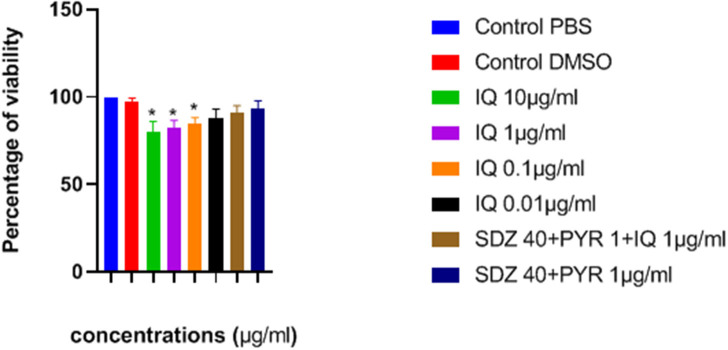
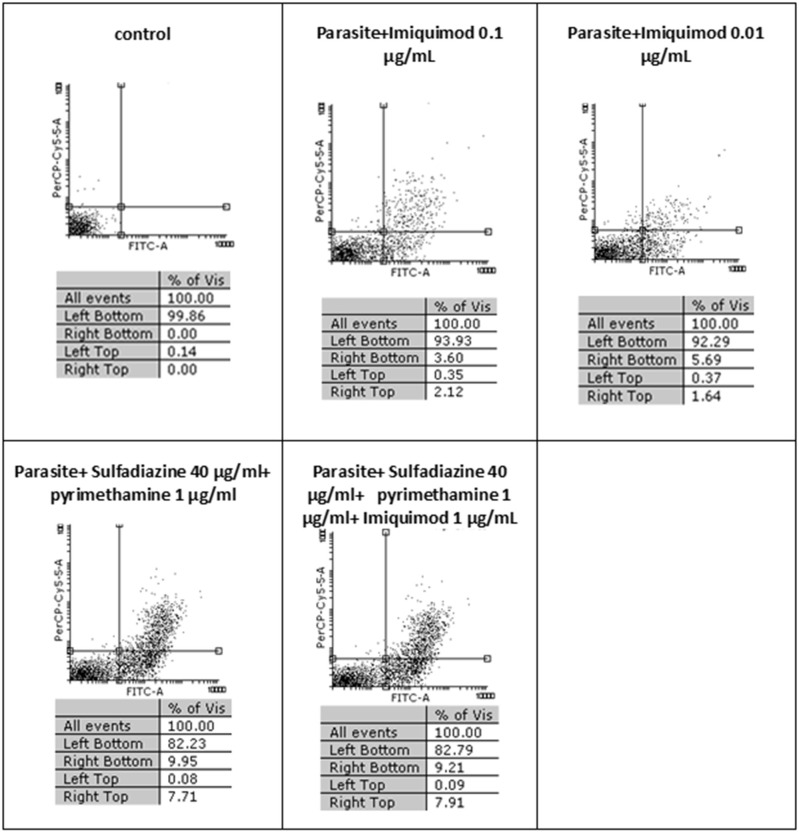
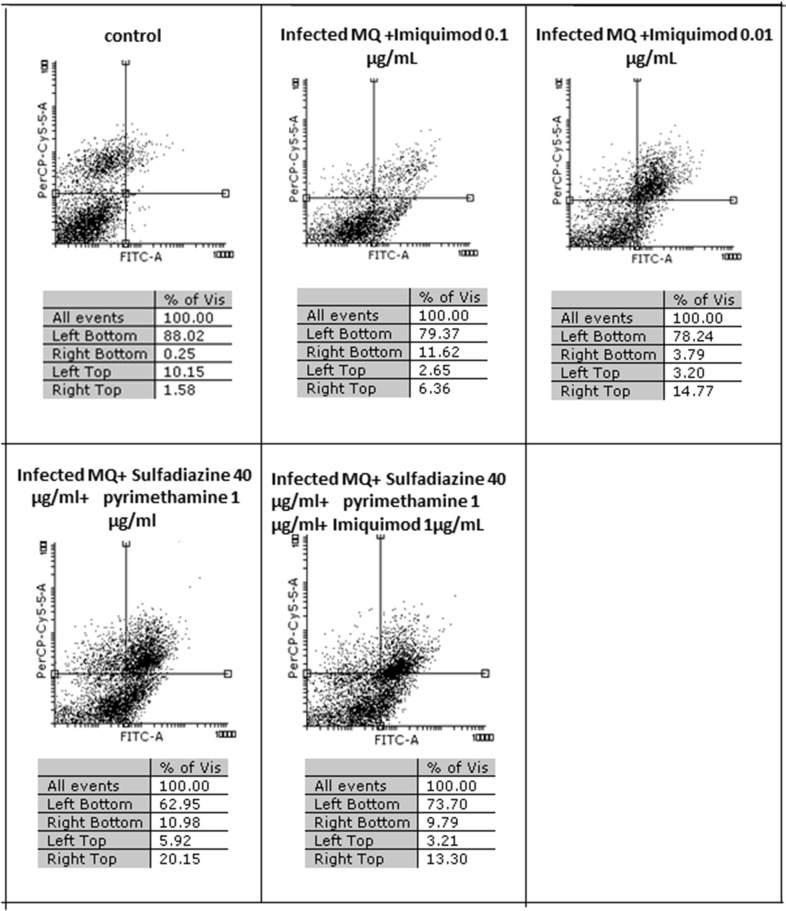
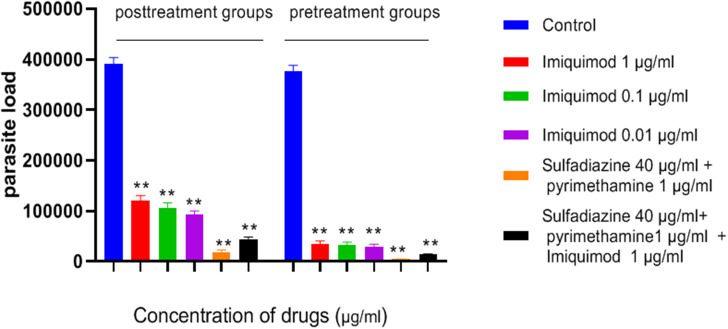
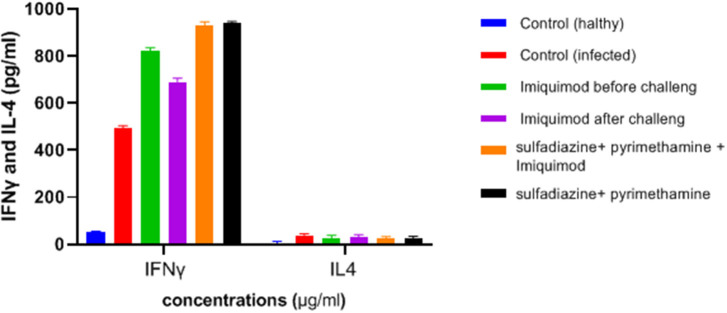
Treatment for toxoplasmosis is not completely successful because of their unwanted side effects, and new treatments are needed. Imiquimod has ability to moderate immune response and used to treat a wide variety of infections and tumors. The aim of the present study was to evaluate the effect of imiquimod on the tachyzoites of and infected macrophages and in BALB/c mice. The viability of was assessed in the presence of various concentrations of imiquimod by direct counting after 6 and 24 h. The MTT assay was used to identify the viability of uninfected macrophages. The apoptotic effects were determined with flow cytometry on the tachyzoites and infected macrophages. For evaluation of parasite load in pre-treatment or post-treatment of macrophages Quantitative real time PCR (qPCR) was performed. For experiments, BALB/c mice received imiquimod before and after challenge with parasites. The mortality rate of mice, parasite numbers in spleen, and the INF-γ and IL-4 cytokine levels in spleen lymphocytes were evaluated. Imiquimod demonstrated anti- effects by reducing the number of tachyzoites. The results of flow cytometry for drug-treated tachyzoites showed that apoptosis did not rise significantly relative to the control group ( < 0.05). Moreover, apoptosis was enhanced in infected macrophages as the concentration of imiquimod was reduced. The parasitic burden in imiquimod pretreated macrophages was significantly lower than those treated after infection ( < 0.01). A marked reduction was observed in survival rate, parasite load and INF-γ level in BALB/c mice that received imiquimod before parasitic challenge relative to those received drug after parasitic challenge ( < 0.01). Overall, imiquimod in the pretreated group had greater anti- effects than imiquimod in posttreated group and . imiquimod may be considered as a candidate for use against Toxoplasmosis both therapeutically and prophylactically.
弓形虫病的治疗并不完全成功,因为其存在不良反应,需要新的治疗方法。咪喹莫特具有调节免疫反应的能力,用于治疗多种感染和肿瘤。本研究旨在评估咪喹莫特对速殖子和感染巨噬细胞的影响,并在 BALB/c 小鼠中进行研究。通过在不同浓度的咪喹莫特存在下直接计数 6 和 24 小时后评估 的活力。MTT 测定法用于确定未感染巨噬细胞的活力。通过流式细胞术确定速殖子和感染巨噬细胞的凋亡作用。为了评估巨噬细胞预处理或后处理时寄生虫载量,进行了定量实时 PCR(qPCR)。对于 实验,BALB/c 小鼠在寄生虫攻击前后接受咪喹莫特治疗。评估小鼠死亡率、脾内寄生虫数量以及脾淋巴细胞中 INF-γ和 IL-4 细胞因子水平。咪喹莫特通过减少速殖子数量表现出抗虫作用。药物处理速殖子的流式细胞术结果表明,与对照组相比,凋亡率没有显著升高(<0.05)。此外,随着咪喹莫特浓度的降低,感染巨噬细胞中的凋亡作用增强。与感染后处理组相比,预先用咪喹莫特处理的巨噬细胞中的寄生虫负荷显著降低(<0.01)。与寄生虫攻击后接受药物治疗的小鼠相比,接受寄生虫攻击前接受咪喹莫特治疗的 BALB/c 小鼠的存活率、寄生虫负荷和 INF-γ水平明显降低(<0.01)。总体而言,预处理组中的咪喹莫特比后处理组具有更强的抗虫作用。咪喹莫特可能被认为是治疗和预防弓形虫病的候选药物。