Peña Moira, Ng Yvonne, Ripat Jacquie, Anagnostou Evdokia
Holland Bloorview Kids Rehabilitation Hospital, 150 Kilgour Road, Toronto, ON, Canada.
Department of Occupational Science & Occupational Therapy, University of Toronto, Toronto, ON, Canada.
J Autism Dev Disord. 2021 Jun;51(6):2109-2114. doi: 10.1007/s10803-020-04644-8.
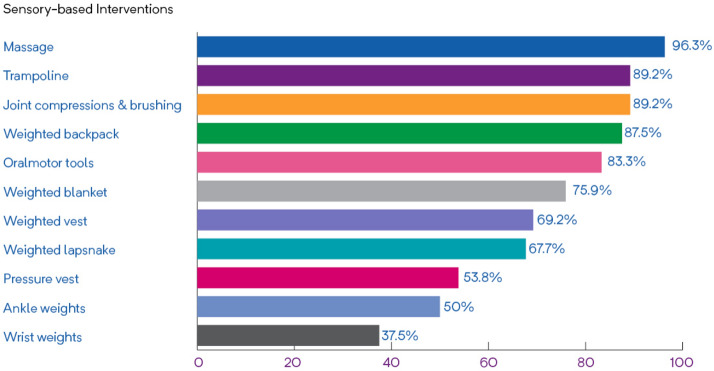
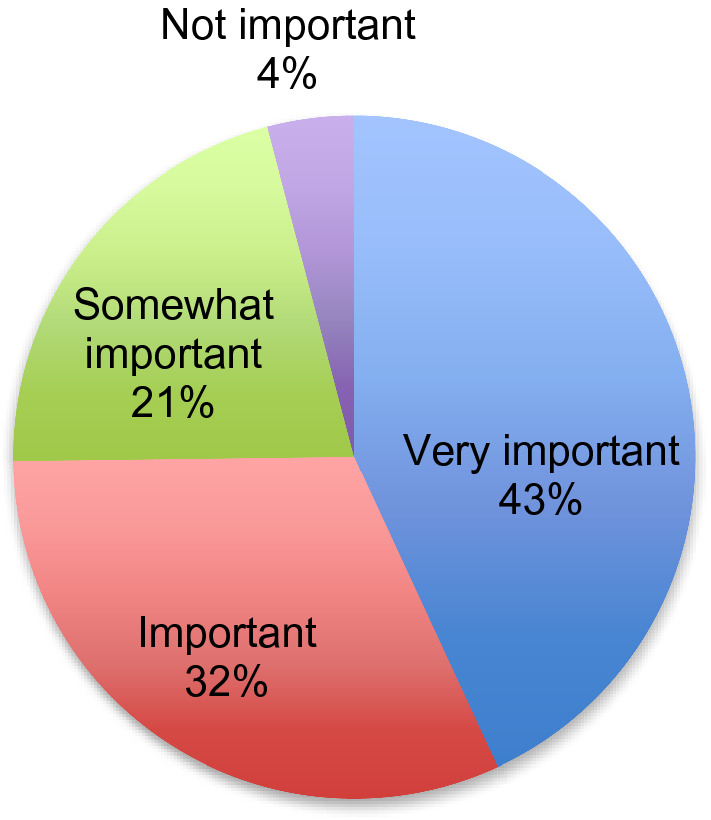
Sensory-Based Interventions (SBIs) are often recommended to enable function/participation in children with ASD. Still, there are limited studies to evaluate their effectiveness. Acceptability studies are an important step towards establishing effective interventions. We examined parents' perceptions of the uptake and acceptability of such interventions. An online survey was sent to 399 families; response rate was 39%. The most frequently therapist-recommended interventions were trampoline (54.6%), massage (47.8%), and oral-motor tools (43.8%). Highest use was reported for massage (96.3%), trampoline (89.2%) and joint compressions and brushing (89.2%). The majority of parents viewed these interventions to be very important /important, (74.8%) but barriers to their use were identified. High acceptability of SBIs was reported by parents of children with ASD.
基于感觉的干预措施(SBIs)通常被推荐用于帮助自闭症谱系障碍(ASD)儿童实现功能/参与。然而,评估其有效性的研究有限。可接受性研究是建立有效干预措施的重要一步。我们调查了家长对这类干预措施的采用情况和可接受性的看法。向399个家庭发送了在线调查问卷;回复率为39%。治疗师最常推荐的干预措施是蹦床(54.6%)、按摩(47.8%)和口腔运动工具(43.8%)。报告使用频率最高的是按摩(96.3%)、蹦床(89.2%)以及关节按压和刷擦(89.2%)。大多数家长认为这些干预措施非常重要/重要(74.8%),但也发现了使用这些措施的障碍。ASD儿童的家长报告了对SBIs的高接受度。