Jiangsu Provincial Key Laboratory of Drug Metabolism and Pharmacokinetics, State Key Laboratory of Natural Medicines, China Pharmaceutical University, Nanjing, 210009, Jiangsu, China; School of Pharmacy, China Pharmaceutical University, Nanjing, 210009, Jiangsu, China; Pharmacy Department, Shenzhen Luohu People's Hospital, Youyi Road No. 47, Shenzhen, 518000, China.
School of Pharmacy, China Pharmaceutical University, Nanjing, 210009, Jiangsu, China.
Redox Biol. 2020 Sep;36:101685. doi: 10.1016/j.redox.2020.101685. Epub 2020 Aug 13.
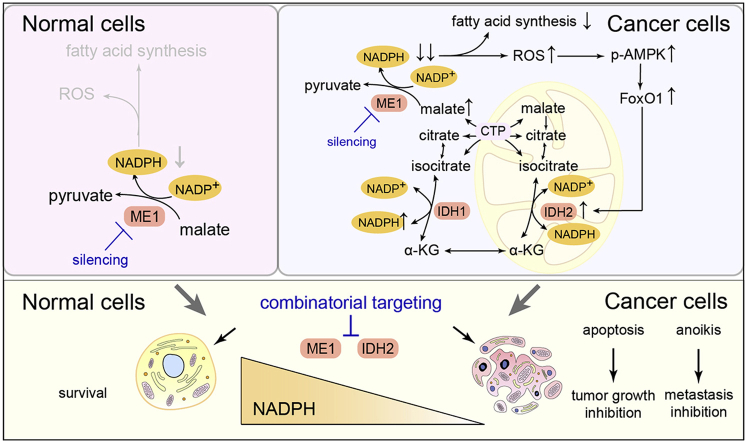
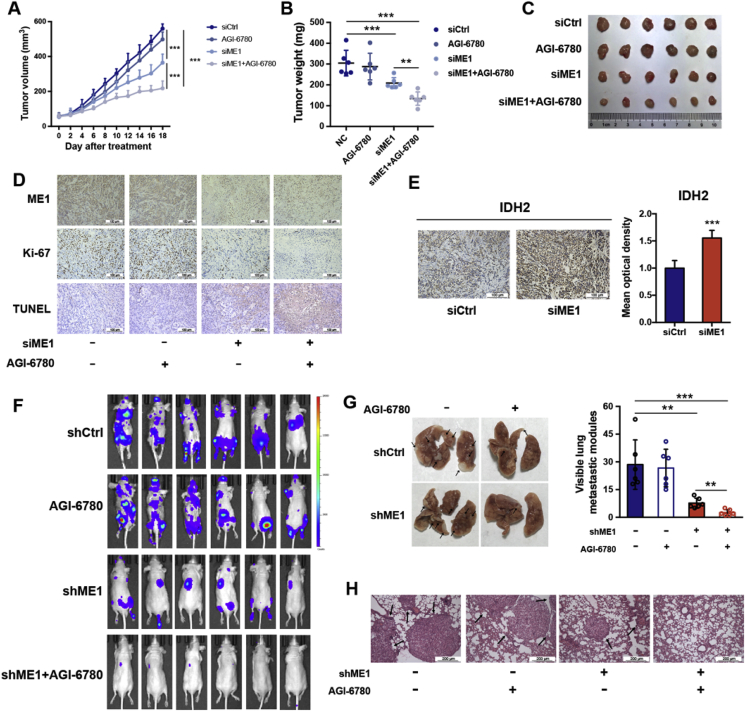
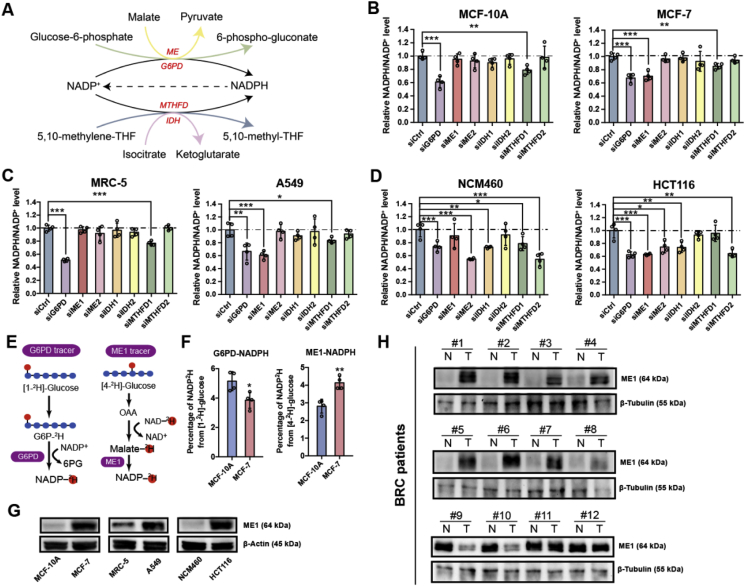
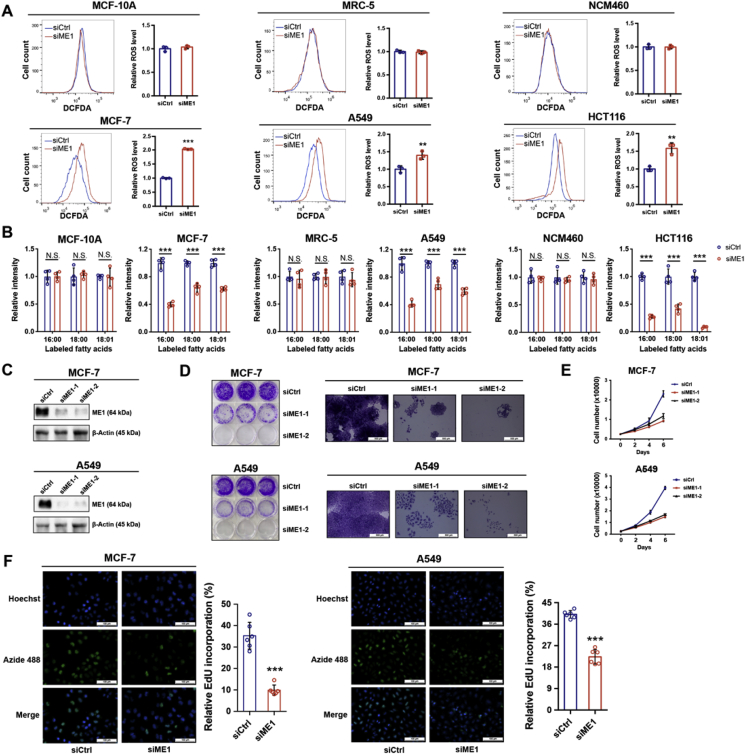
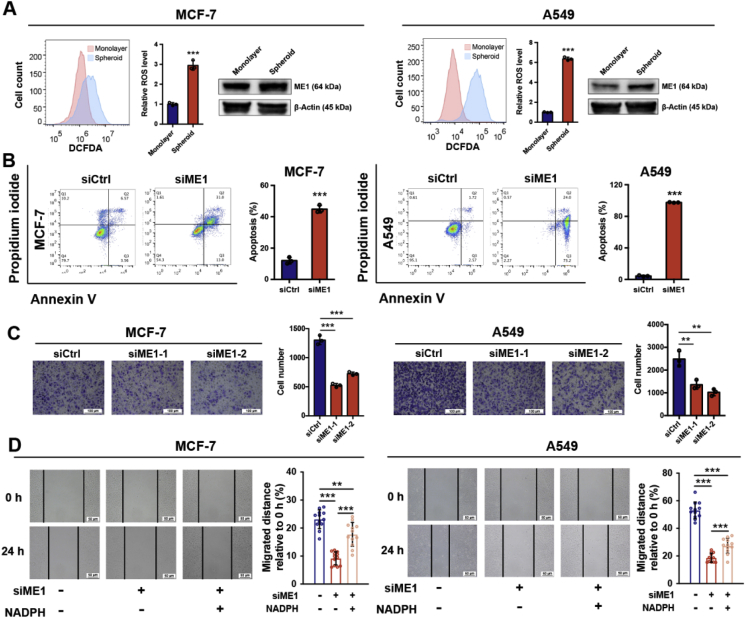
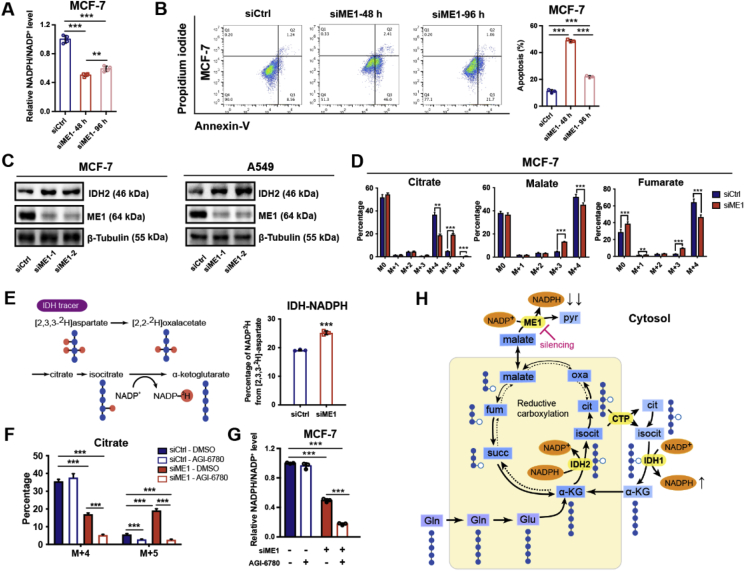
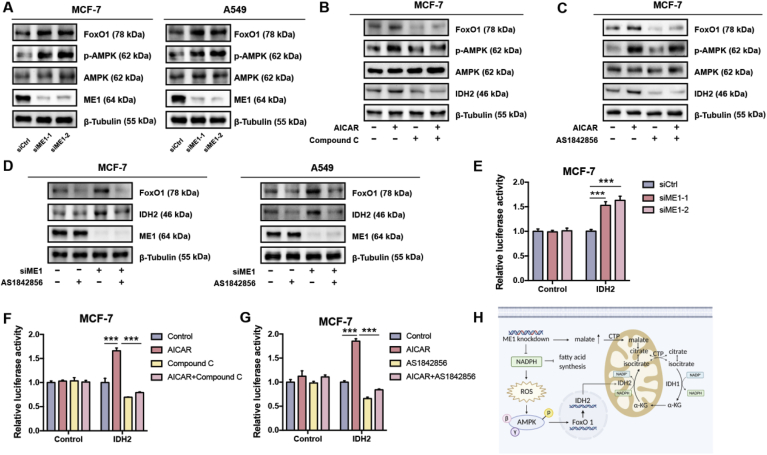
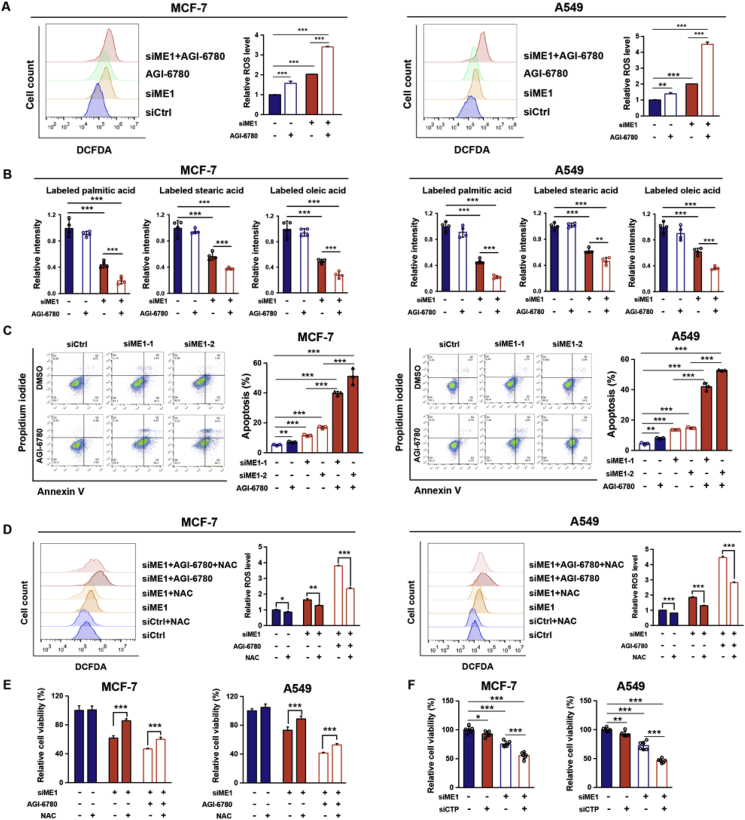
NADPH is a pivotal cofactor that maintains redox homeostasis and lipogenesis in cancer cells and interference with NADPH production is a promising approach for treating cancer. However, how normal and cancer cells differentially exploit NADPH-producing pathways is unclear, and selective approaches to targeting NADPH are lacking. Here, we show that the assayed cancer cell lines preferentially depend on ME1-mediated NADPH production. ME1 knockdown increases intracellular ROS levels and impairs lipogenesis in cancer cells, leading to retarded proliferation and increased anoikis, while sparing normal cells. Notably, ME1 interference ultimately resulted in adaptive upregulation of mitochondrial IDH2 dependent of AMPK-FoxO1 activation to replenish the NADPH pool and mitigate cytosolic ROS. Combining ME1 ablation and IDH2 inhibition drastically reduces intracellular NADPH and prevents resistance to ME1 interference, resulting in increased apoptosis and impeded tumor growth and metastasis. This study demonstrates that cytosolic ME1 integrated with mitochondrial IDH2 is essential for tumor growth and metastasis, thereby highlighting the blockade of metabolic compensation by disrupting mitochondrial-cytosol NADPH transport as a promising approach to selectively targeting NADPH in cancer cells that rely on NADPH-driven antioxidant systems.
NADPH 是一种关键的辅助因子,可维持癌细胞的氧化还原平衡和脂肪生成,干扰 NADPH 的产生是治疗癌症的一种有前途的方法。然而,正常细胞和癌细胞如何不同地利用 NADPH 产生途径尚不清楚,也缺乏针对 NADPH 的选择性方法。在这里,我们表明,所检测的癌细胞系优先依赖 ME1 介导的 NADPH 产生。ME1 敲低会增加细胞内 ROS 水平并损害癌细胞的脂肪生成,导致增殖迟缓并增加非贴壁细胞凋亡,而正常细胞则不受影响。值得注意的是,ME1 干扰最终导致 AMPK-FoxO1 激活依赖性线粒体 IDH2 上调,以补充 NADPH 池并减轻细胞质 ROS。ME1 消融和 IDH2 抑制的联合作用可显著降低细胞内 NADPH,并防止对 ME1 干扰的耐药性,从而增加细胞凋亡并阻碍肿瘤生长和转移。这项研究表明,细胞质 ME1 与线粒体 IDH2 结合对于肿瘤生长和转移是必不可少的,从而强调通过破坏线粒体-细胞质 NADPH 转运来阻断代谢补偿作为一种有前途的方法,可选择性地针对依赖 NADPH 驱动的抗氧化系统的癌细胞中的 NADPH。