Northern School of Anaesthesia and Intensive Care Medicine, South Tees Hospitals NHS Foundation Trust, Marton Road, Middlesbrough, TS4 3BW, UK.
Department of Anaesthesia, York Teaching Hospital NHS Foundation Trust, Wigginton Road, York, YO31 8HE, UK.
BMC Geriatr. 2020 Aug 27;20(1):311. doi: 10.1186/s12877-020-01715-4.
Frailty refers to the reduction in homeostatic reserve resulting from an accumulation of physiological deficits over a lifetime. Frailty is common in older patients undergoing surgery and is an independent risk factor for post-operative mortality, morbidity and increased length of hospital stay. In frail individuals, stressors, such as surgery, can precipitate an acute deterioration in health, manifesting as delirium, falls, reduction in mobility or continence, rendering these individuals at an increased risk of adverse perioperative outcomes. However, little is known about how frailty affects the patient experience, functional ability and quality of life (QoL) after surgery. In addition, the distribution of frailty in this population is unknown.
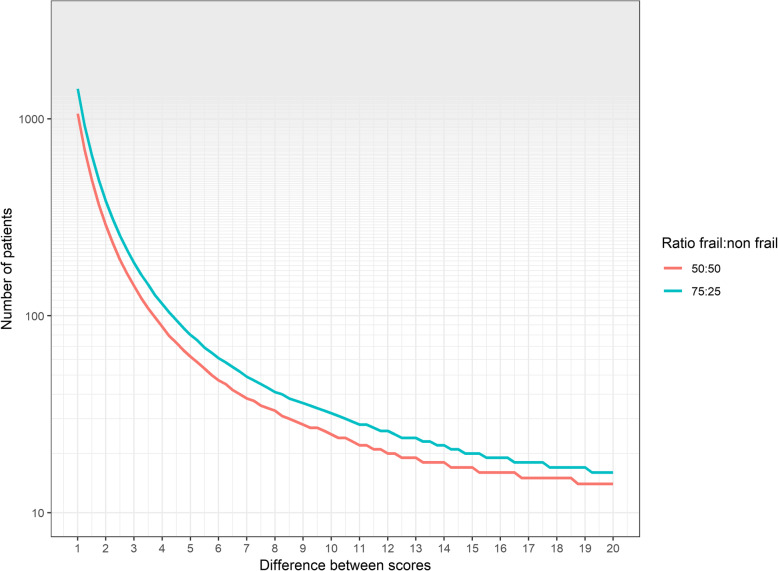
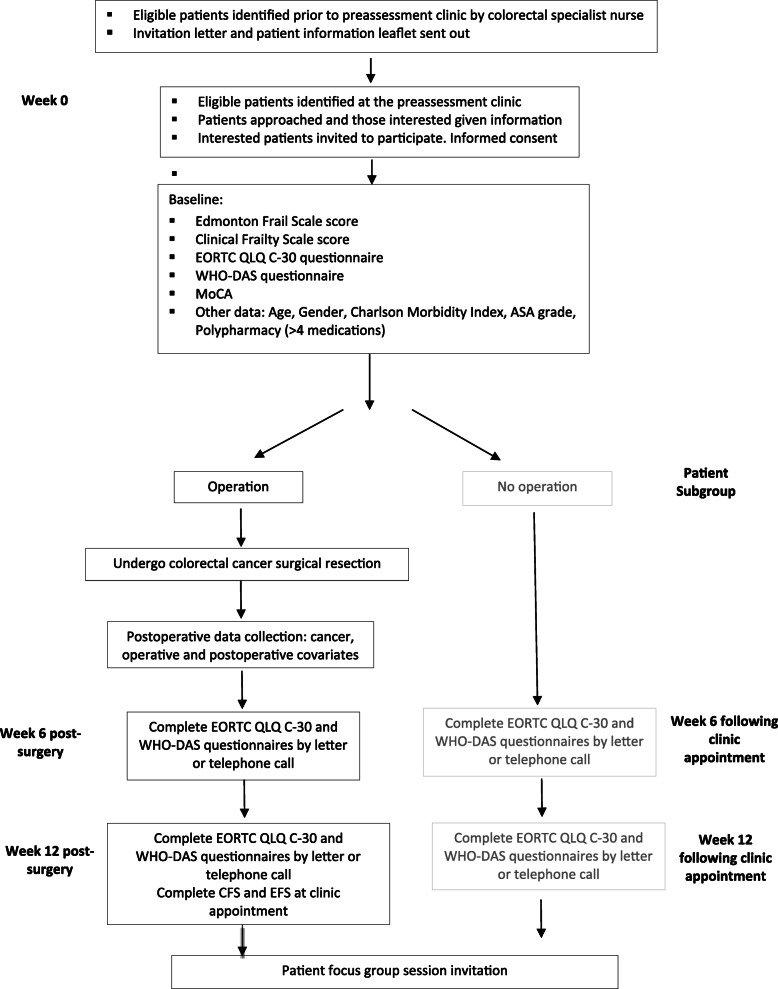
We will conduct a multi-centre observational trial to investigate the relationship between patient reported outcome measures and preoperative frailty. We aim to recruit approximately two-hundred patients with operable, potentially curative colorectal cancer. Eligible patients will be identified at three hospital sites. QoL and functional ability (measured using EORTC QLQ-C30 and WHO-DAS 2.0 respectively) will be recorded at the pre-operative assessment clinic, and at 6 and 12 weeks postoperatively. Frailty scores including the Edmonton Frail Scale (EFS) and Rockwood clinical frailty scale (CFS) will be calculated both preoperatively, and at 12 weeks post-operatively. Secondary outcome measures including post-operative morbidity and mortality will be measured using Clavien Dindo classification and 90-day mortality.
This observational feasibility study seeks to define the prevalence of frailty in older (> 65 years) colorectal cancer patients and understand how frailty impacts on patient reported outcome measures. This information will help to inform larger studies relating to treatment decision algorithms and promote shared decision making in this population.
衰弱是指由于一生中生理缺陷的积累导致体内平衡储备减少。衰弱在接受手术的老年患者中很常见,是术后死亡率、发病率和住院时间延长的独立危险因素。在虚弱个体中,手术等应激源可导致健康急性恶化,表现为谵妄、跌倒、活动能力或大小便失禁减少,使这些个体面临不良围手术期结局的风险增加。然而,对于衰弱如何影响患者术后的体验、功能能力和生活质量(QoL),人们知之甚少。此外,该人群中衰弱的分布情况尚不清楚。
我们将开展一项多中心观察性试验,以研究患者报告的结局测量指标与术前衰弱之间的关系。我们旨在招募大约 200 名可手术治疗、有治愈可能的结直肠癌患者。在三个医院地点识别符合条件的患者。在术前评估诊所和术后 6 周和 12 周时,将记录 QoL 和功能能力(分别使用 EORTC QLQ-C30 和 WHO-DAS 2.0 进行测量)。在术前和术后 12 周时,将计算包括埃德蒙顿衰弱量表(EFS)和 Rockwood 临床衰弱量表(CFS)在内的衰弱评分。使用 Clavien Dindo 分类和 90 天死亡率来衡量包括术后发病率和死亡率在内的次要结局。
这项观察性可行性研究旨在确定老年(>65 岁)结直肠癌患者衰弱的患病率,并了解衰弱对患者报告结局测量指标的影响。这些信息将有助于为更大的研究提供信息,这些研究涉及治疗决策算法,并促进该人群中的共同决策。