Centro de Biotecnología y Genómica de Plantas, Universidad Politécnica de Madrid - Instituto Nacional de Investigación y Tecnología Agraria y Alimentaria, Madrid, Spain.
Departamento de Biotecnología-Biología Vegetal, Escuela Técnica Superior de Ingeniería Agronómica, Alimentaria y de Biosistemas, Universidad Politécnica de Madrid, Madrid, Spain.
BMC Plant Biol. 2020 Aug 27;20(1):397. doi: 10.1186/s12870-020-02584-0.
The model species Tetranychus urticae produces important plant injury and economic losses in the field. The current accepted method for the quantification of the spider mite damage in Arabidopsis whole rosettes is time consuming and entails a bottleneck for large-scale studies such as mutant screening or quantitative genetic analyses. Here, we describe an improved version of the existing method by designing an automatic protocol. The accuracy, precision, reproducibility and concordance of the new enhanced approach are validated in two Arabidopsis accessions with opposite damage phenotypes. Results are compared to the currently available manual method.
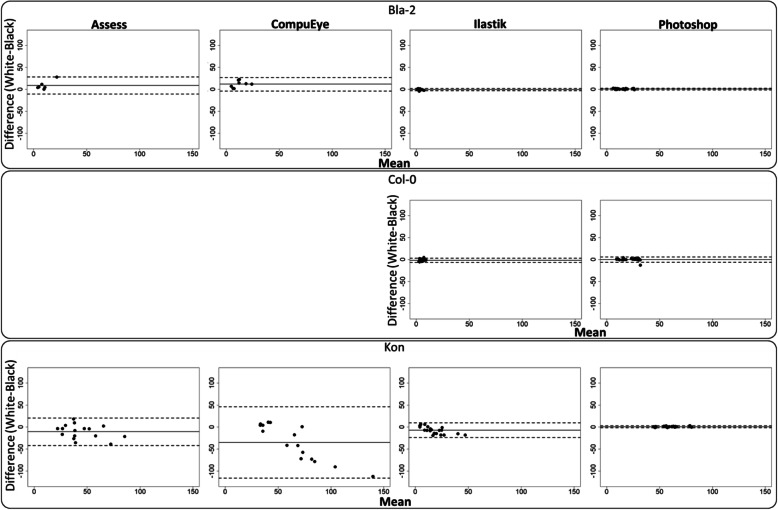
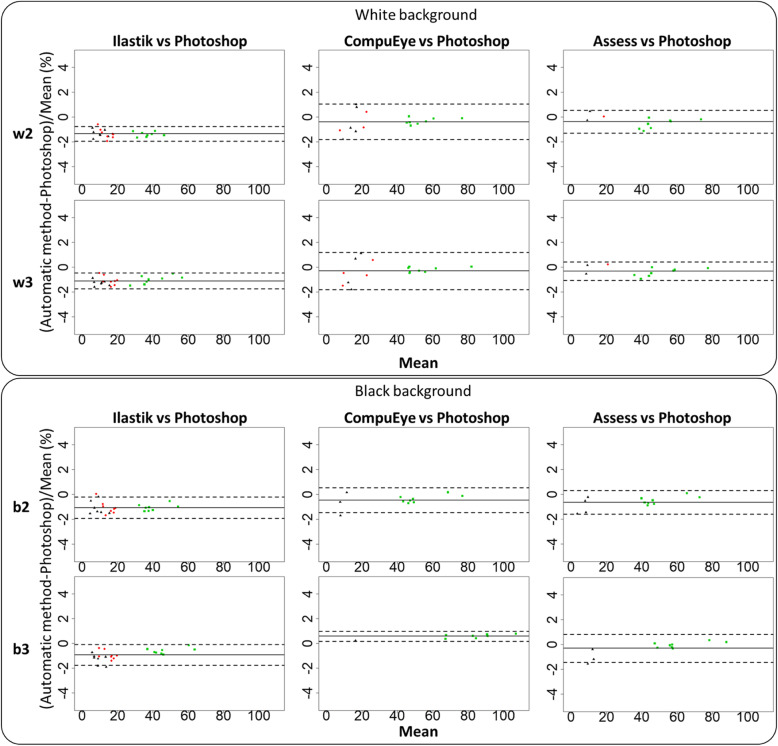
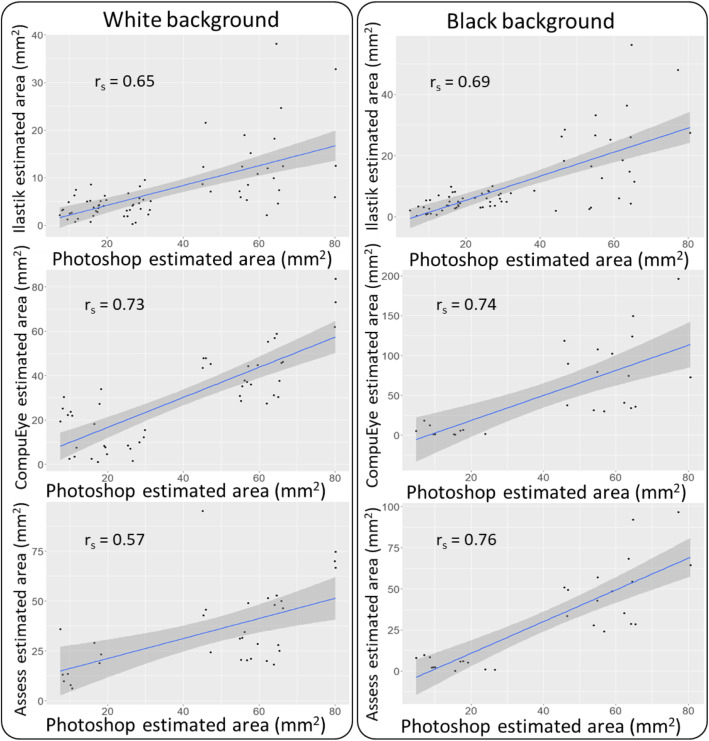
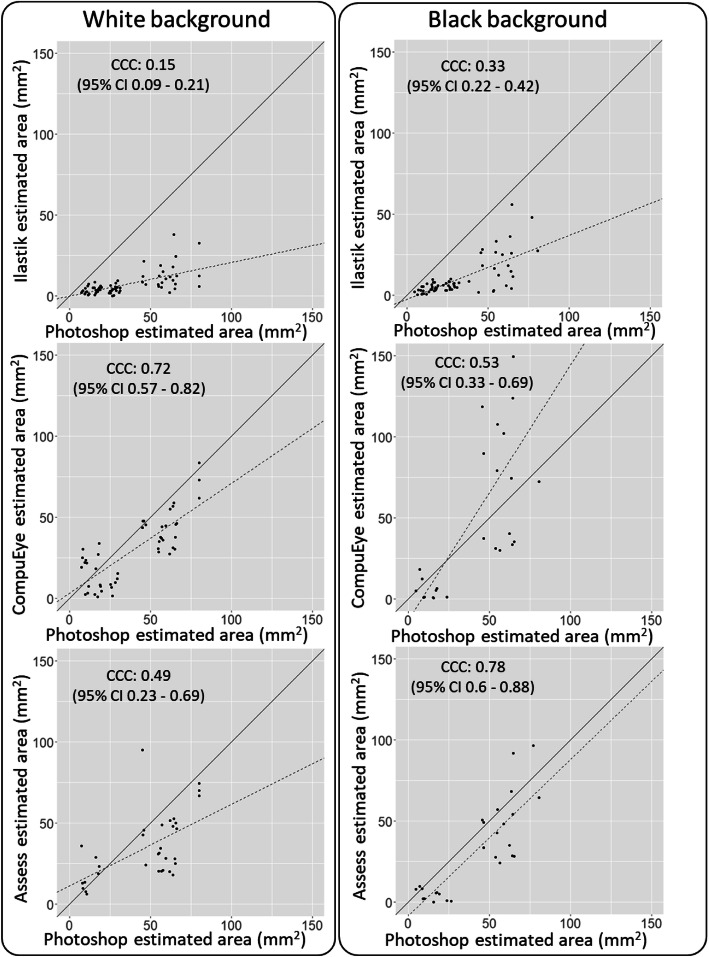
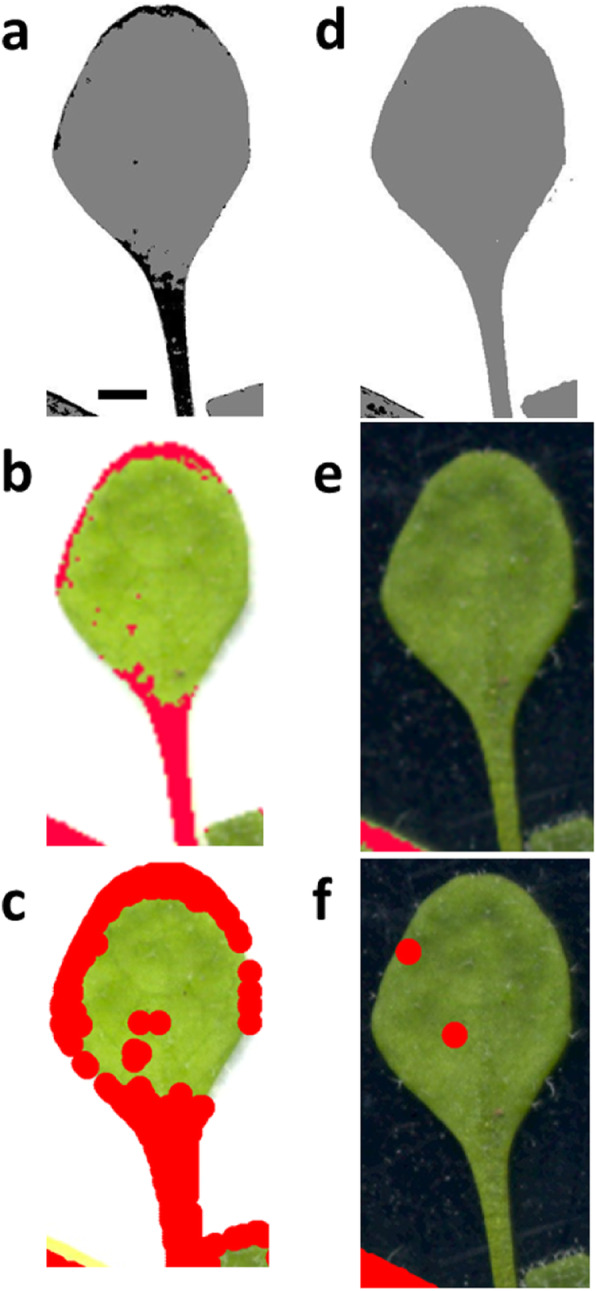
Image acquisition experiments revealed that the automatic settings plus 10 values of brightness and the black background are the optimal conditions for a specific recognition of spider mite damage by software programs. Among the different tested methods, the Ilastik-Fiji tandem based on machine learning was the best procedure able to quantify the damage maintaining the differential range of damage between accessions. In addition, the Ilastik-Fiji tandem method showed the lowest variability within a set of conditions and the highest stability under different lighting or background surroundings. Bland-Altman concordance results pointed out a negative value for Ilastik-Fiji, which implies a minor estimation of the damage when compared to the manual standard method.
The novel approach using Ilastik and Fiji programs entails a great improvement for the quantification of the specific spider mite damage in Arabidopsis whole rosettes. The automation of the proposed method based on interactive machine learning eliminates the subjectivity and inter-rater-variability of the previous manual protocol. Besides, this method offers a robust tool for time saving and to avoid the damage overestimation observed with other methods.
模式物种桃蚜在田间会造成严重的植物损伤和经济损失。目前,量化拟南芥整株叶片上的螨虫损伤的公认方法耗时且在大规模研究(如突变体筛选或定量遗传分析)中存在瓶颈。在这里,我们通过设计自动方案改进了现有的方法。在具有相反损伤表型的两个拟南芥品系中验证了新增强方法的准确性、精密度、重现性和一致性。结果与现有的手动方法进行了比较。
图像采集实验表明,自动设置加 10 个亮度值和黑色背景是软件程序对螨虫损伤进行特定识别的最佳条件。在不同测试的方法中,基于机器学习的 Ilastik-Fiji 串联是能够量化损伤且保持品系间损伤差异范围的最佳程序。此外,Ilastik-Fiji 串联方法在一组条件下具有最低的变异性,在不同的照明或背景环境下具有最高的稳定性。Bland-Altman 一致性结果表明,对于 Ilastik-Fiji,其值为负,这意味着与手动标准方法相比,它对损伤的估计较小。
使用 Ilastik 和 Fiji 程序的新方法极大地改进了拟南芥整株叶片上特定螨虫损伤的量化。基于交互式机器学习的提议方法的自动化消除了之前手动方案的主观性和评分者间变异性。此外,该方法还提供了一个节省时间和避免其他方法观察到的损伤高估的可靠工具。