Department of Psychology, Department of Biomedical Sciences, Florida State University, Tallahassee, Florida, USA.
Department of Psychological and Brain Sciences, University of Delaware, Newark, Delaware, USA.
Hum Brain Mapp. 2020 Dec;41(17):5032-5056. doi: 10.1002/hbm.25177. Epub 2020 Aug 28.
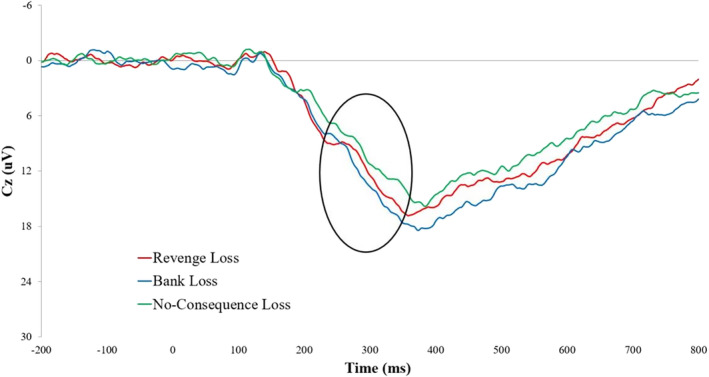
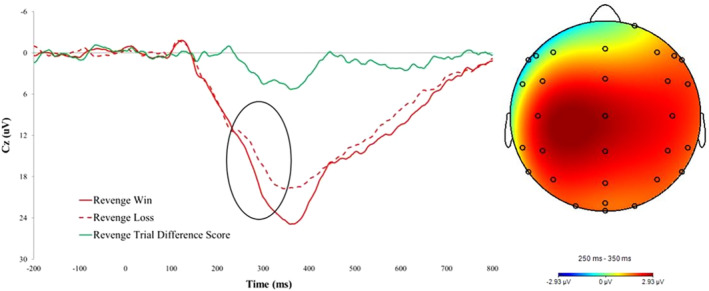
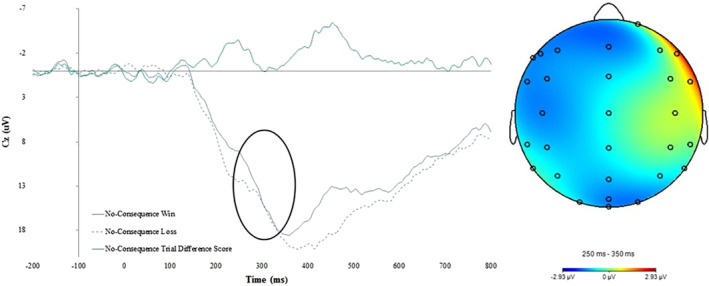
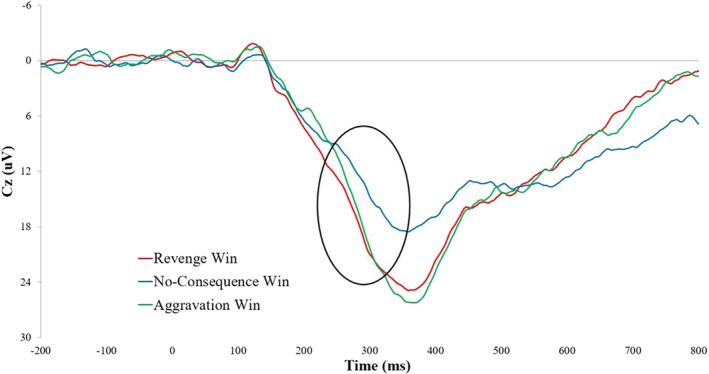
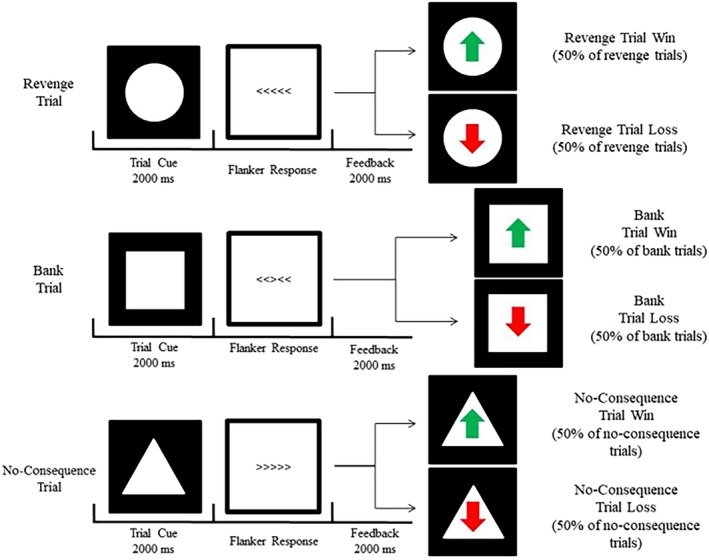
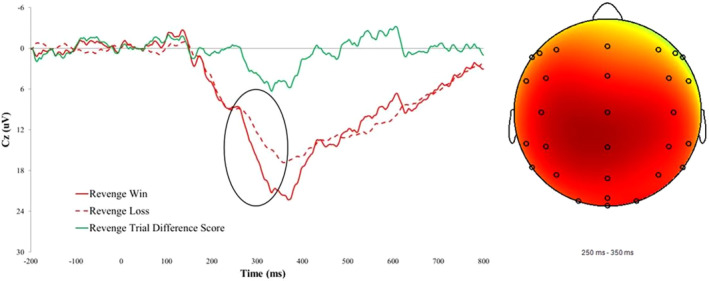
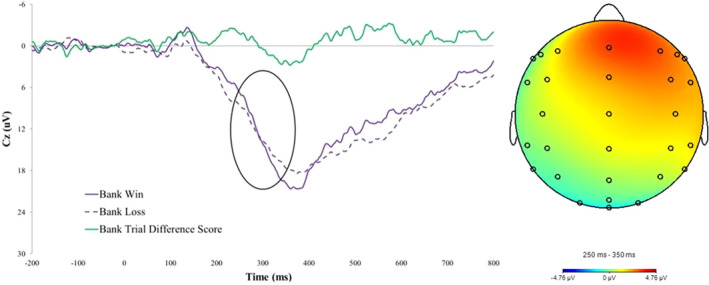
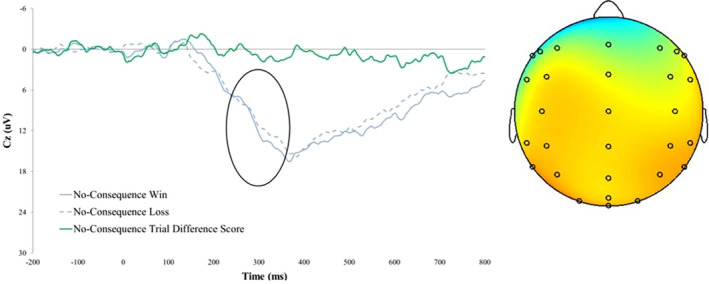
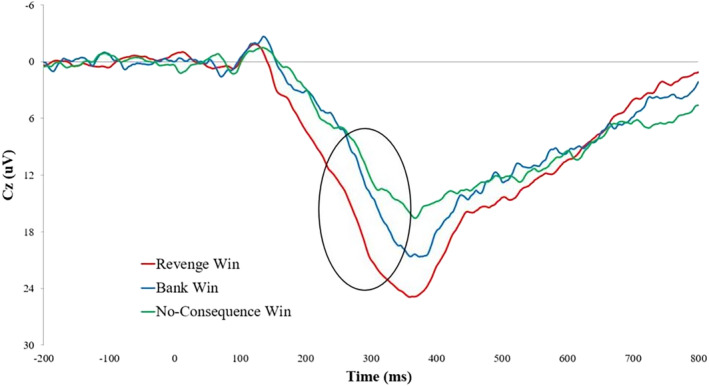
Past research has found that neural activity associated with feedback processing is enhanced by positive approach-motivated states. However, no past work has examined how reward processing changes in the context of revenge. Using a novel aggression paradigm, we sought to explore the influence of approach-motivated anger on neural responses to feedback indicating the opportunity to seek revenge against an offending opponent by examining the reward positivity (RewP), an event-related potential indexing performance feedback. In Experiment 1, after receiving insulting feedback from an opponent, participants played a reaction time game with three trial types: revenge trials, aggravation trials, and no-consequence trials. Results revealed that RewP amplitudes were larger to revenge trial win feedback than no-consequence trial win feedback or revenge trial loss feedback. RewP amplitudes were larger to both aggravation trial win and loss feedback than on no-consequence trials. Experiment 2 examined the influence of approach-motivated anger during the acquisition of rewards on the RewP without the possibility of retribution from the offending individual. Participants played a reaction time game similar to Experiment 1, except instead of giving or receiving noise blasts, participants could win money from the insulter (revenge trials) or a neutral-party (e.g., bank). Results indicated that revenge wins elicited larger RewP amplitudes than bank wins. These results suggest that anger enhances revenge-related RewP amplitudes to obtaining revenge opportunities and further aggravation wins or losses. Anger appears to enhance the pleasurable feelings of revenge.
过去的研究发现,与反馈处理相关的神经活动会受到积极的趋近动机状态的增强。然而,过去的研究并没有考察在报复的背景下奖励处理是如何变化的。使用一种新的攻击范式,我们试图通过检查奖励正波(RewP)来探索趋近动机愤怒对反馈指示有机会通过报复攻击对手的神经反应的影响,RewP 是一种与绩效反馈相关的事件相关电位。在实验 1 中,参与者在受到对手的侮辱性反馈后,进行了三种试次类型的反应时游戏:报复试次、加剧试次和无后果试次。结果表明,报复试次获胜反馈的 RewP 振幅大于无后果试次获胜反馈或报复试次失败反馈。报复试次获胜和失败反馈的 RewP 振幅均大于无后果试次。实验 2 考察了在没有来自冒犯者报复的可能性的情况下,在获得奖励期间,趋近动机愤怒对 RewP 的影响。参与者进行了类似于实验 1 的反应时游戏,只是参与者可以从侮辱者(报复试次)或中立方(例如银行)那里赢得钱,而不是给予或接受噪音爆炸。结果表明,报复获胜引发的 RewP 振幅大于银行获胜。这些结果表明,愤怒增强了与复仇相关的 RewP 振幅,以获得复仇机会,并进一步加剧了胜利或失败。愤怒似乎增强了复仇的愉悦感。