Department of Dental hygiene, Jeonju Kijeon College, Jeonju, Republic of Korea.
Department of Medical Laboratory Science, Faculty of Allied Health Sciences, University of Peradeniya, Peradeniya, Sri Lanka.
Asian Pac J Cancer Prev. 2020 Aug 1;21(8):2447-2452. doi: 10.31557/APJCP.2020.21.8.2447.
Oral submucous fibrosis (OSF) is the premalignant disorder associated with fibrosis and epithelial atrophy. Areca Nut (AN) is the most significant risk factors for OSF. However, the molecular mechanism behind AN induced OSF remains unclear, and there exists no effective treatment for the malignant disorder. We aimed to investigate whether AN-extract causes epithelial-mesenchymal transition (EMT) in oral keratinocytes, and evaluated the therapeutic potential of antioxidants.
The HPV16 E6/E7-transfected immortalized human oral keratinocytes (IHOK) were employed in the present study. For the preparation of AN-extract, dried AN was dissolved in distilled water overnight. The solution was centrifuged and the supernatant was collected for further use. For the determination of change in cytokine levels, ELISA was performed. To investigate EMT-related protein expression and phenotype, immunoblot and immunofluorescence were performed.
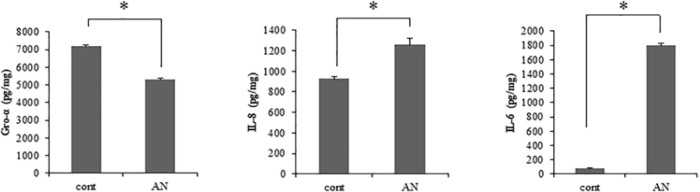
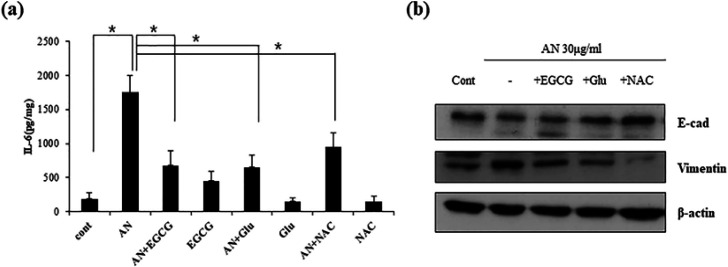
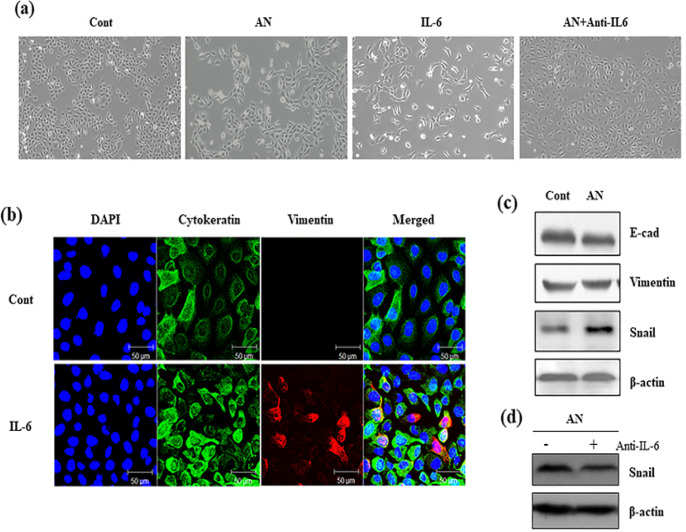
Among tumor-promoting cytokines (Gro-α, IL-6 and IL-8), IL-6 was remarkably increased by AN in IHOK. AN-extract induced EMT phenotypes, such as cell elongation, up-regulation of vimentin and snail. After treatment with neutralizing antibody of IL-6, AN-induced snail expression was reduced remarkably. Collectively, AN-extract induced IL-6 expression and mediated EMT. The use of antioxidants (EGCG, glutathione and NAC) significantly reduced IL-6 expression in AN-treated IHOK. Also, AN-decreased E-cadherin and increased vimentin were reversed by antioxidants, indicating that the effectiveness of antioxidants in inhibiting IL-6-induced EMT by AN.
AN promotes EMT and antioxidants interrupt AN-induced-EMT in oral keratinocytes. Consequently, it is proposed that antioxidants could prevent AN-induced carcinogenesis and function as a prototype for developing therapeutic interventions of OSF.
.
口腔黏膜下纤维化为一种与纤维化和上皮萎缩相关的癌前病变,槟榔是口腔黏膜下纤维化的最主要的危险因素。然而,槟榔诱导口腔黏膜下纤维化的分子机制尚不清楚,且目前也没有有效的治疗方法。本研究旨在探讨槟榔提取物是否会引起口腔角质细胞上皮间质转化,并评估抗氧化剂的治疗潜力。
本研究采用 HPV16 E6/E7 转染的永生化人口腔角质细胞(IHOK)。将干燥的槟榔溶解于蒸馏水中,过夜孵育,然后离心收集上清液作为槟榔提取物。采用 ELISA 法检测细胞因子水平的变化,通过免疫印迹和免疫荧光法检测 EMT 相关蛋白表达和表型的变化。
在促进肿瘤发生的细胞因子(Gro-α、IL-6 和 IL-8)中,IL-6 是槟榔诱导 IHOK 中表达水平显著增加的细胞因子。槟榔提取物可诱导 EMT 表型,如细胞伸长、波形蛋白和 snail 的上调。用 IL-6 的中和抗体处理后,槟榔诱导的 snail 表达明显减少。总之,槟榔提取物诱导了 IL-6 的表达,并介导了 EMT。抗氧化剂(EGCG、谷胱甘肽和 NAC)的使用显著降低了槟榔处理的 IHOK 中 IL-6 的表达。此外,抗氧化剂还逆转了槟榔导致的 E-钙黏蛋白减少和波形蛋白增加,表明抗氧化剂在抑制槟榔诱导的 EMT 方面的有效性。
槟榔促进 EMT,抗氧化剂可阻断槟榔诱导的口腔角质细胞 EMT。因此,我们提出抗氧化剂可以预防槟榔诱导的癌变,并为开发口腔黏膜下纤维化的治疗干预措施提供一个原型。