Department of Anesthesiology and Perioperative Medicine, Mayo Clinic, Rochester, MN. Electronic address: https://twitter.com/DrMJoyner.
Department of Cardiovascular Medicine, Mayo Clinic, Jacksonville, FL.
Mayo Clin Proc. 2020 Sep;95(9):1888-1897. doi: 10.1016/j.mayocp.2020.06.028. Epub 2020 Jul 19.
To provide an update on key safety metrics after transfusion of convalescent plasma in hospitalized coronavirus 2019 (COVID-19) patients, having previously demonstrated safety in 5000 hospitalized patients.
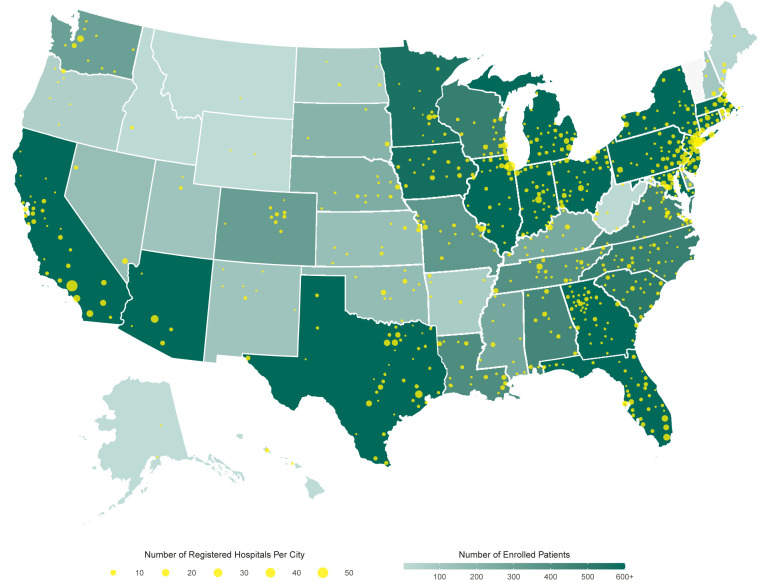
From April 3 to June 2, 2020, the US Food and Drug Administration Expanded Access Program for COVID-19 convalescent plasma transfused a convenience sample of 20,000 hospitalized patients with COVID-19 convalescent plasma.
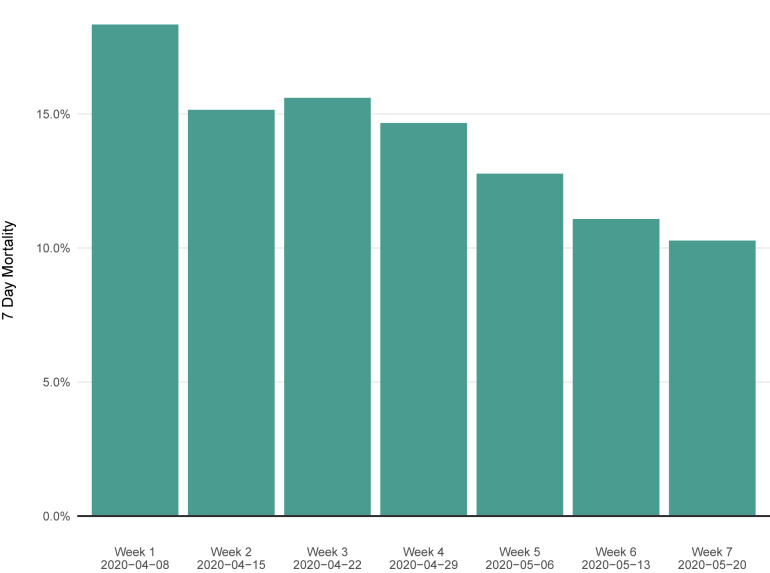
The incidence of all serious adverse events was low; these included transfusion reactions (n=78; <1%), thromboembolic or thrombotic events (n=113; <1%), and cardiac events (n=677, ~3%). Notably, the vast majority of the thromboembolic or thrombotic events (n=75) and cardiac events (n=597) were judged to be unrelated to the plasma transfusion per se. The 7-day mortality rate was 13.0% (12.5%, 13.4%), and was higher among more critically ill patients relative to less ill counterparts, including patients admitted to the intensive care unit versus those not admitted (15.6 vs 9.3%), mechanically ventilated versus not ventilated (18.3% vs 9.9%), and with septic shock or multiple organ dysfunction/failure versus those without dysfunction/failure (21.7% vs 11.5%).
These updated data provide robust evidence that transfusion of convalescent plasma is safe in hospitalized patients with COVID-19, and support the notion that earlier administration of plasma within the clinical course of COVID-19 is more likely to reduce mortality.
提供在住院的 2019 年冠状病毒病(COVID-19)患者中输注恢复期血浆后的关键安全性指标的最新情况,此前已在 5000 例住院患者中证明了其安全性。
从 2020 年 4 月 3 日至 6 月 2 日,美国食品和药物管理局(FDA)COVID-19 恢复期血浆扩大准入计划为 20000 例住院的 COVID-19 恢复期血浆输注了方便抽样的患者。
所有严重不良事件的发生率均较低;其中包括输血反应(n=78;<1%)、血栓栓塞或血栓形成事件(n=113;<1%)和心脏事件(n=677,约 3%)。值得注意的是,绝大多数血栓栓塞或血栓形成事件(n=75)和心脏事件(n=597)被认为与血浆输注本身无关。7 天死亡率为 13.0%(12.5%,13.4%),与病情较轻的患者相比,病情较重的患者死亡率较高,包括入住重症监护病房与未入住重症监护病房的患者(15.6%比 9.3%)、需要机械通气与未机械通气的患者(18.3%比 9.9%)以及有脓毒症休克或多器官功能/衰竭与无功能/衰竭的患者(21.7%比 11.5%)。
这些更新的数据提供了有力的证据,证明在 COVID-19 住院患者中输注恢复期血浆是安全的,并且支持在 COVID-19 病程早期输注血浆更有可能降低死亡率的观点。