Department of Dermatology, Feinberg School of Medicine, Northwestern University, Chicago, IL, USA.
Robert H. Lurie Cancer Center, Feinberg School of Medicine, Northwestern University, Chicago, IL, USA.
Mod Pathol. 2021 Feb;34(2):348-357. doi: 10.1038/s41379-020-00658-w. Epub 2020 Aug 29.
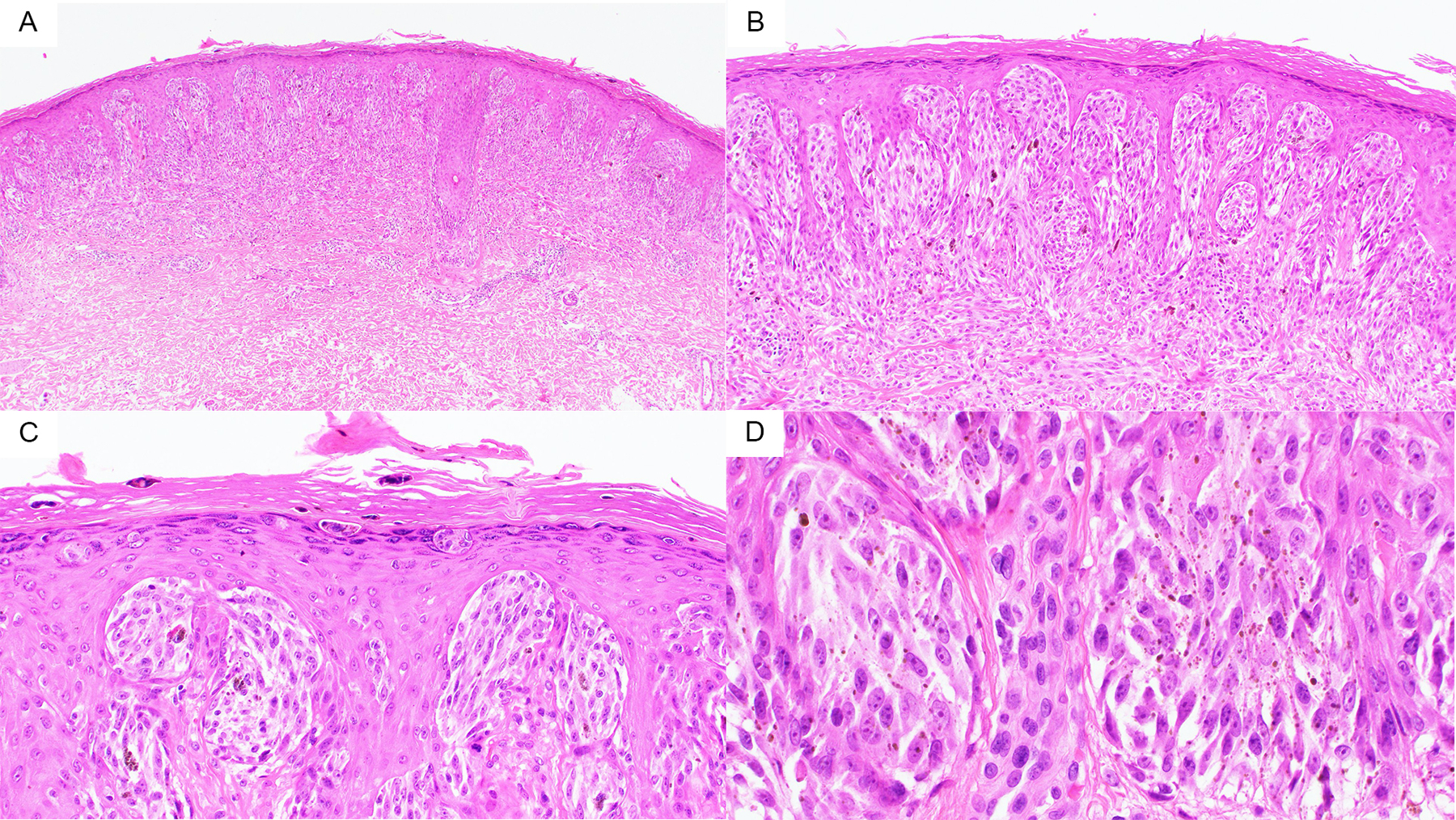
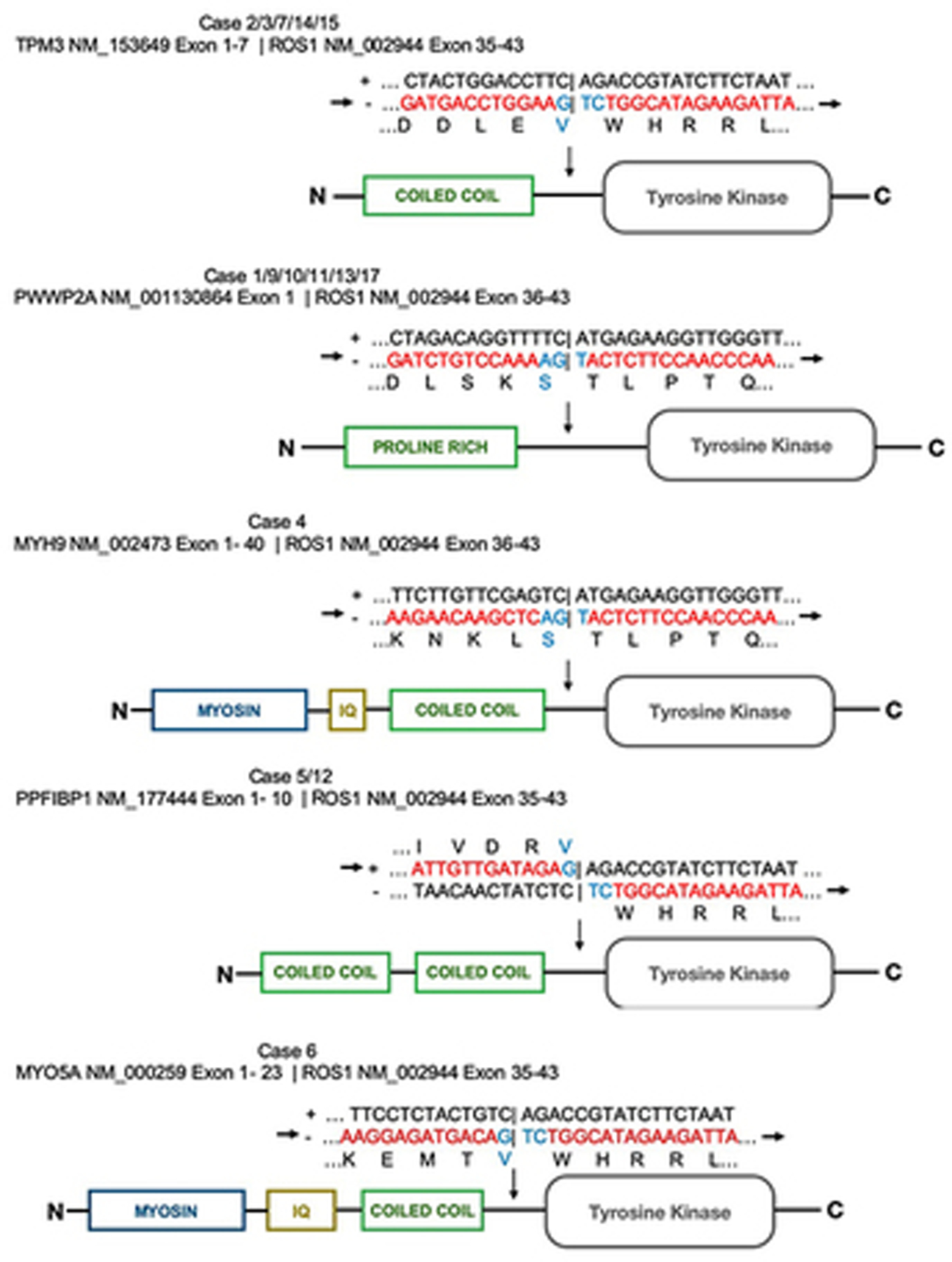
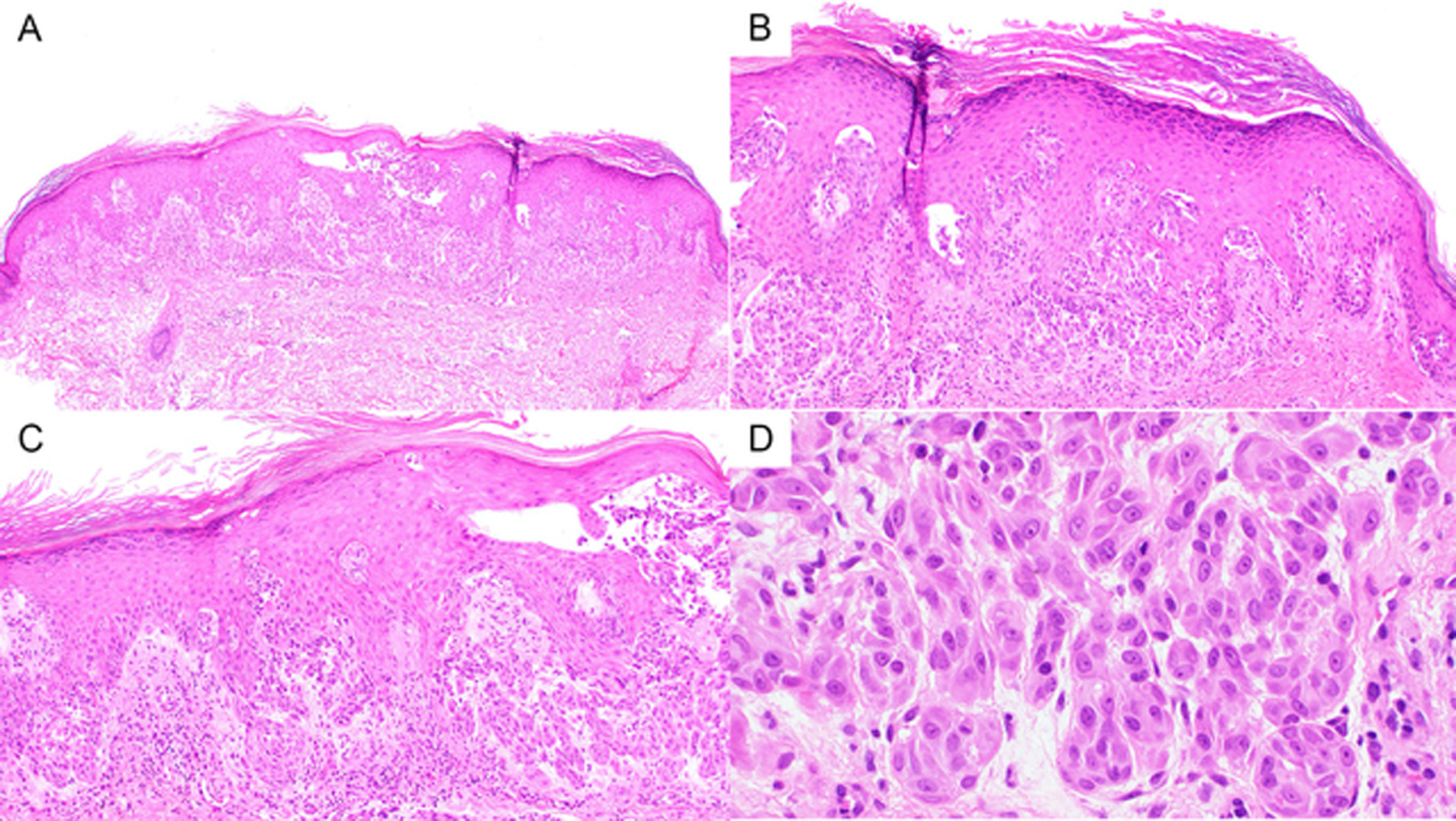
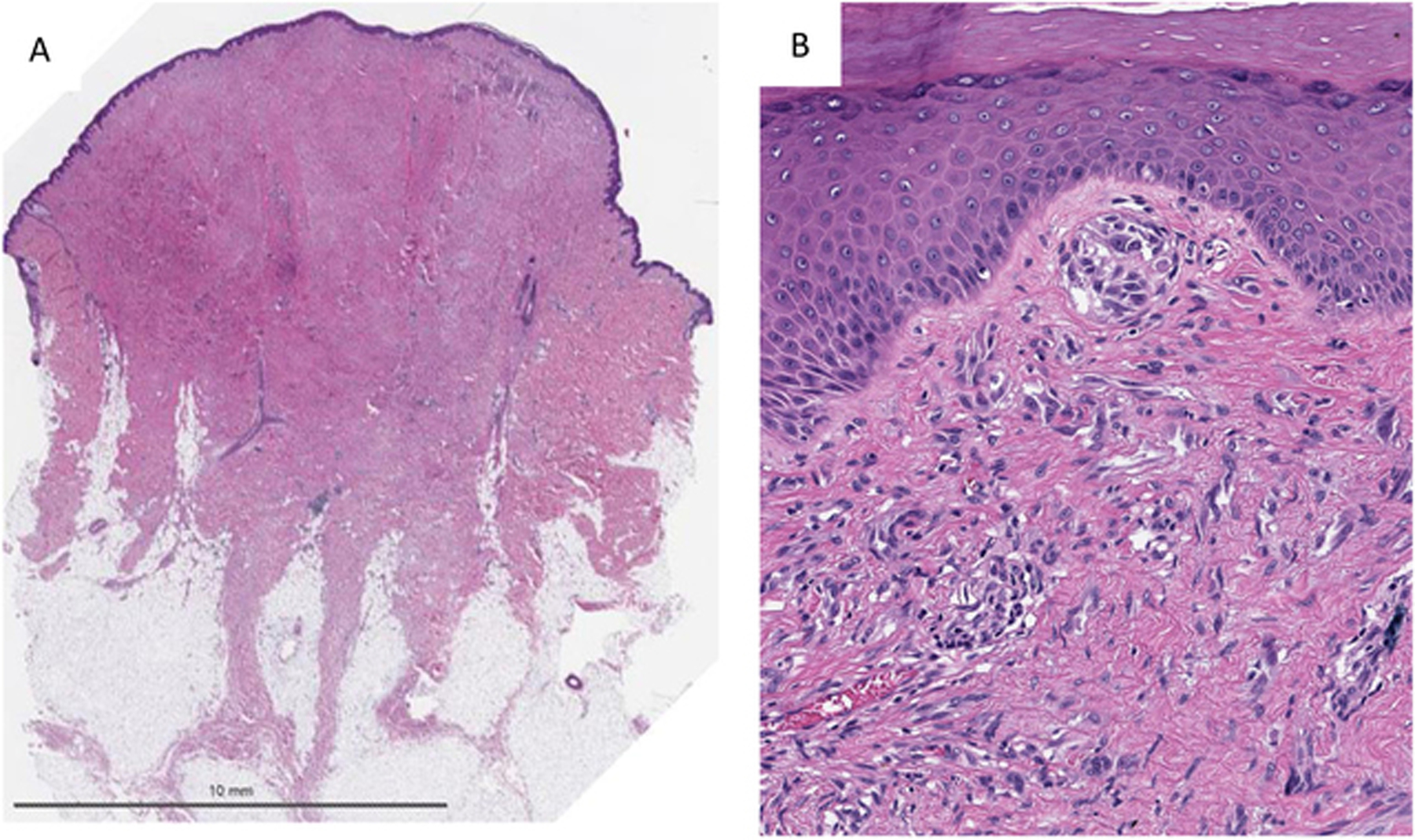
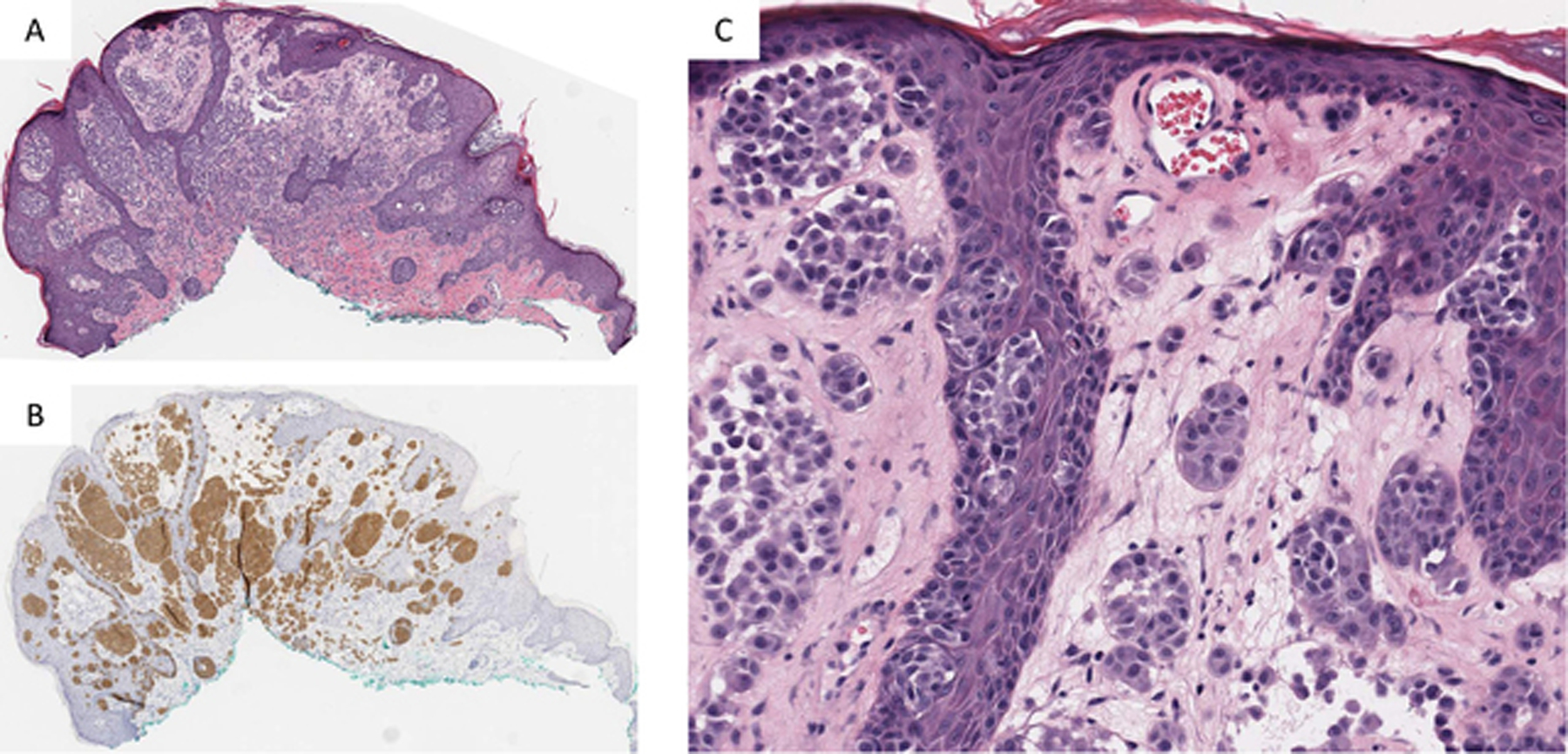
The presence of a characteristic chimeric fusion as the initiating genomic event is one defining feature of Spitz neoplasms. Characterization of specific subtypes of Spitz neoplasms allows for better recognition facilitating diagnosis. Data on clinical outcomes of the specific tumor types may help in predicting behavior. In this study we present the largest series to date on ROS1 fusion Spitz neoplasms. We present the clinical, morphologic, and genomic features of 17 cases. We compared the morphologic features of these 17 cases to a cohort of 99 other non-ROS1 Spitz neoplasms to assess for features that may have high specificity for ROS1 fusions. These tumors consisted of ten Spitz nevi and seven Spitz tumors. None of the cases met criteria for a diagnosis of Spitz melanoma. Morphologically, the ROS1 fusion tumors of this series were characterized by a plaque-like or nodular silhouette, often densely cellular intraepidermal melanocyte proliferation, frequent pagetosis, tendency toward spindle cell cytomorphology, low grade nuclear atypia, and floating nests with occasional transepidermal elimination. However, there was a significant range in microscopic appearances, including two cases with morphologic features of a desmoplastic Spitz nevus. Different binding partners to ROS1 were identified with PWWP2A and TPM3 being the most common. No case had a recurrence or metastasis. Our findings document that most ROS1 fusion Spitz neoplasms have some typical characteristic microscopic features, while a small proportion will have features overlapping with other genomic subtypes of Spitz neoplasms. Preliminary evidence suggests that they tend to be indolent or low grade neoplasms.
特征性嵌合融合作为起始基因组事件的存在是 Spitz 肿瘤的一个定义特征。Spitz 肿瘤特定亚型的特征有助于更好地识别,从而促进诊断。特定肿瘤类型的临床结果数据可能有助于预测行为。在本研究中,我们报告了迄今为止关于 ROS1 融合 Spitz 肿瘤的最大系列。我们介绍了 17 例病例的临床、形态学和基因组特征。我们将这 17 例病例的形态学特征与 99 例其他非 ROS1 Spitz 肿瘤的病例进行比较,以评估可能对 ROS1 融合具有高特异性的特征。这些肿瘤包括 10 例 Spitz 痣和 7 例 Spitz 肿瘤。没有一例符合 Spitz 黑色素瘤的诊断标准。形态上,本系列的 ROS1 融合肿瘤的特征是斑块状或结节状轮廓,常伴有密集的表皮内黑素细胞增殖、频繁的 pagetosis、倾向于梭形细胞细胞学形态、低度核异型性和漂浮巢,偶尔伴有跨表皮消除。然而,微观表现存在显著差异,包括两例具有促结缔组织增生性 Spitz 痣的形态特征。与 ROS1 结合的不同结合伙伴被鉴定为 PWWP2A 和 TPM3 是最常见的。没有病例复发或转移。我们的研究结果表明,大多数 ROS1 融合 Spitz 肿瘤具有一些典型的特征性微观特征,而一小部分病例具有与 Spitz 肿瘤其他基因组亚型重叠的特征。初步证据表明,它们倾向于惰性或低度肿瘤。