Department of Orthodontics, State Key Laboratory of Oral Disease, National Clinical Research Center for Oral Disease, West China Hospital of Stomatology, Sichuan University, Chengdu, Sichuan, China.
State Key Laboratory of Oral Disease, National Clinical Research Center for Oral Disease, West China Hospital of Stomatology, Sichuan University, Chengdu, Sichuan, China.
Am J Orthod Dentofacial Orthop. 2020 Dec;158(6):824-833.e1. doi: 10.1016/j.ajodo.2020.07.005. Epub 2020 Jul 10.
The ongoing coronavirus disease 2019 (COVID-19) outbreak impacts the mental health of patients, health workers, and the public. The level of impact on the mental health of orthodontic patients in treatment is unknown. The objective of the study was to evaluate the mental health of orthodontic patients in China during the early stage of the pandemic.
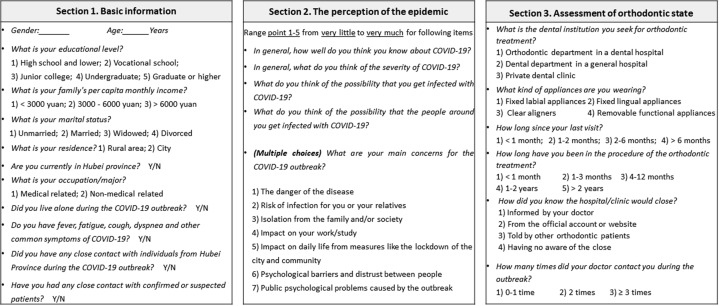
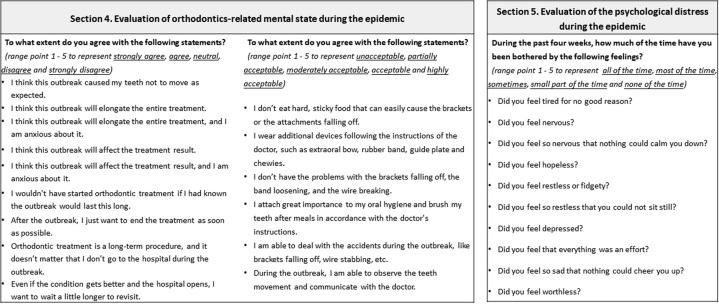
An online survey was conducted on a convenience sample of anonymous participants. The questionnaire, in Chinese (Mandarin), comprised 5 sections. Sections 1-3 included demographic, epidemical, and orthodontic status of the patients. Section 4 assessed mental health-related to orthodontics. Section 5 was the Kessler-10 Mental Distress Scale. A total of 48 orthodontists were invited to distribute the questionnaires to their patients. Descriptive statistics, principal component analysis, K-means cluster analysis, and bivariate logistics regression analysis were performed with significance set at P <0.05.
Questionnaires were collected from 558 patients (104 males, 354 females; mean age 24.78 ± 6.33 years). The prevalence of mental distress was 38% (174/458). Higher odds ratios were associated with female participants, missed appointments, and Hubei residence. The type of orthodontic appliance was associated with the anxiety of prolonged treatment duration. The manner of communication with patients regarding the postponement of appointments was associated with patients' concerns of prolonged treatment duration. The frequency of contact from dentists was associated with patients' independence.
Over one-third of orthodontic patients experienced mental distress during the pandemic. Multiple factors affected the level of anxiety of orthodontic patients, such as the type of orthodontic appliance, time since last dental visit, manner of communication with the orthodontist, and the localities of the pandemic progression.
当前的 2019 冠状病毒病(COVID-19)疫情对患者、医护人员和公众的心理健康产生了影响。但尚不清楚疫情对正在接受正畸治疗的患者心理健康的影响程度。本研究旨在评估中国正畸患者在疫情早期的心理健康状况。
采用便利抽样方法对匿名参与者进行在线调查。问卷为中文(普通话),共分为 5 个部分。第 1-3 部分包括患者的人口统计学、流行病学和正畸状况。第 4 部分评估了与正畸相关的心理健康状况。第 5 部分是 Kessler-10 精神困扰量表。共邀请 48 位正畸医生向其患者分发问卷。采用描述性统计分析、主成分分析、K-均值聚类分析和双变量逻辑回归分析,以 P<0.05 为差异有统计学意义。
共收集了 558 名患者(104 名男性,354 名女性;平均年龄 24.78±6.33 岁)的问卷。精神困扰的患病率为 38%(174/458)。女性、失约和湖北居住与较高的比值比相关。正畸矫治器类型与延长治疗时间的焦虑有关。与患者沟通推迟预约的方式与患者对延长治疗时间的担忧有关。与牙医接触的频率与患者的独立性有关。
疫情期间,超过三分之一的正畸患者经历了精神困扰。多种因素影响了正畸患者的焦虑程度,例如正畸矫治器的类型、上次就诊时间、与正畸医生沟通的方式以及疫情进展的地点。