Carretero Gómez J, Mafé Nogueroles M C, Garrachón Vallo F, Escudero Álvarez E, Maciá Botejara E, Miramontes González J P
Servicio de Medicina Interna. Hospital Comarcal de Zafra, Badajoz, España.
Servicio de Medicina Interna. Hospital de Atención a Pacientes Crónicos y de Larga Estancia La Pedrera, Denia, Alicante, España.
Rev Clin Esp (Barc). 2020 Nov;220(8):511-517. doi: 10.1016/j.rce.2020.07.007. Epub 2020 Aug 24.
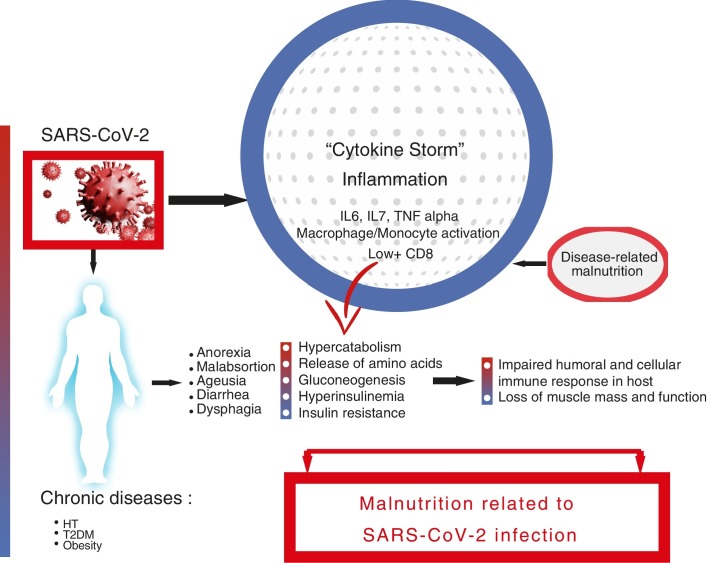
SARS-CoV-2 infection is associated with a high risk of malnutrition, mainly due to increased nutritional requirements and the presence of a severe and universal inflammatory state. Associated symptoms contribute to hyporexia, which perpetuates the negative nutritional balance. Furthermore, dysphagia, especially post-intubation, worsens, and makes intake unsafe. This risk is greater in elderly and multimorbid patients. Inflammation to varying degrees is the common link between COVID-19 and the onset of malnutrition, and it is more correct to refer to disease-related malnutrition (DRM). DRM worsens the poor prognosis of SARS-CoV-2 infection, especially in the most severe cases. Therefore, it is necessary to identify and treat people at risk early, avoiding overexposure and direct contact with the patient. We cannot forget the role that a healthy diet plays in both prevention and recovery after discharge.
新型冠状病毒2型(SARS-CoV-2)感染与营养不良的高风险相关,主要原因是营养需求增加以及存在严重且普遍的炎症状态。相关症状会导致食欲减退,从而使负性营养平衡持续存在。此外,吞咽困难,尤其是插管后的吞咽困难会加重,并且使进食不安全。这种风险在老年和患有多种疾病的患者中更大。不同程度的炎症是2019冠状病毒病(COVID-19)与营养不良发生之间的共同联系,将其称为疾病相关营养不良(DRM)更为恰当。DRM会使SARS-CoV-2感染的不良预后恶化,尤其是在最严重的病例中。因此,有必要尽早识别和治疗有风险的人群,避免过度暴露以及与患者直接接触。我们不能忽视健康饮食在预防和出院后康复中所起的作用。