State key Laboratory of Cancer Biology and National Clinical Research Center for Digestive Diseases, Xijing Hospital of Digestive Diseases, Fourth Military Medical University, Xi'an, 710032, China.
Lab of Tissue Engineering, Faculty of Life Science, Northwest University, Xi'an, 710032, China.
Theranostics. 2020 Aug 2;10(21):9830-9842. doi: 10.7150/thno.45161. eCollection 2020.
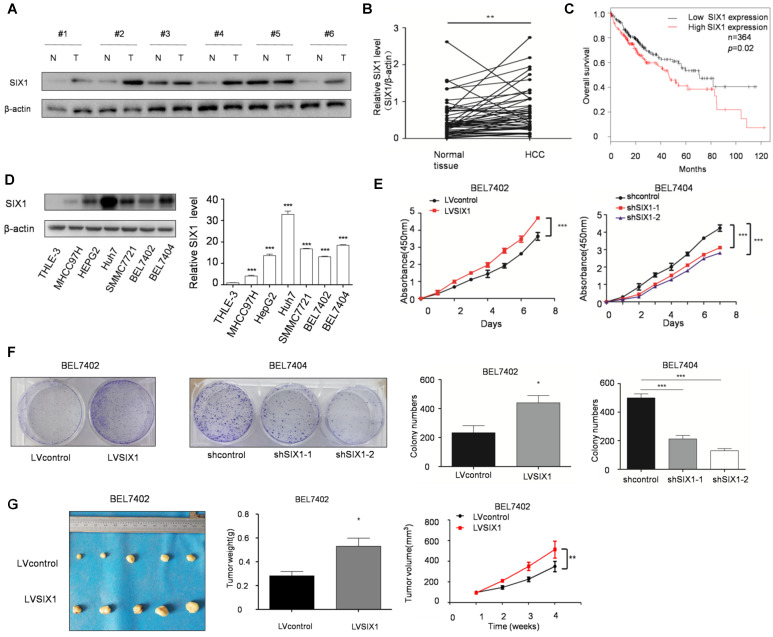
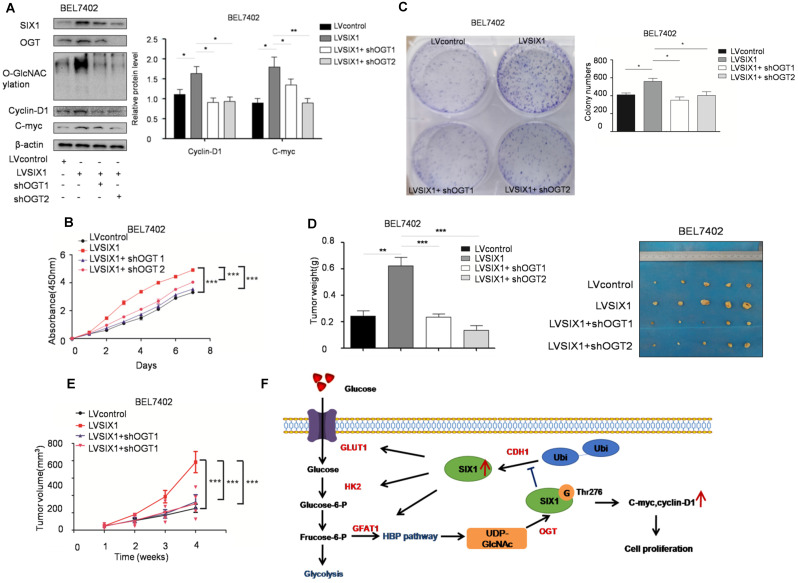
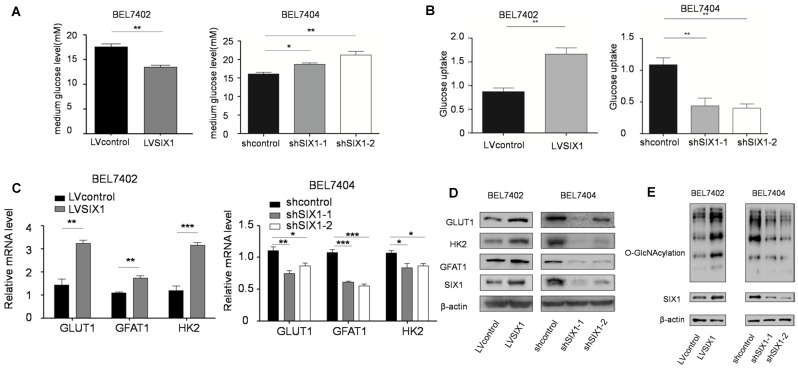
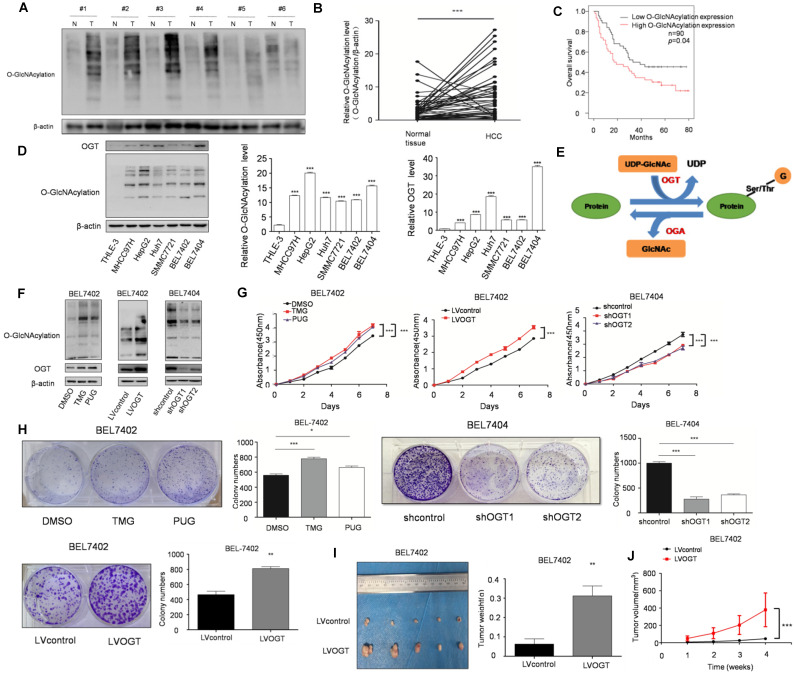
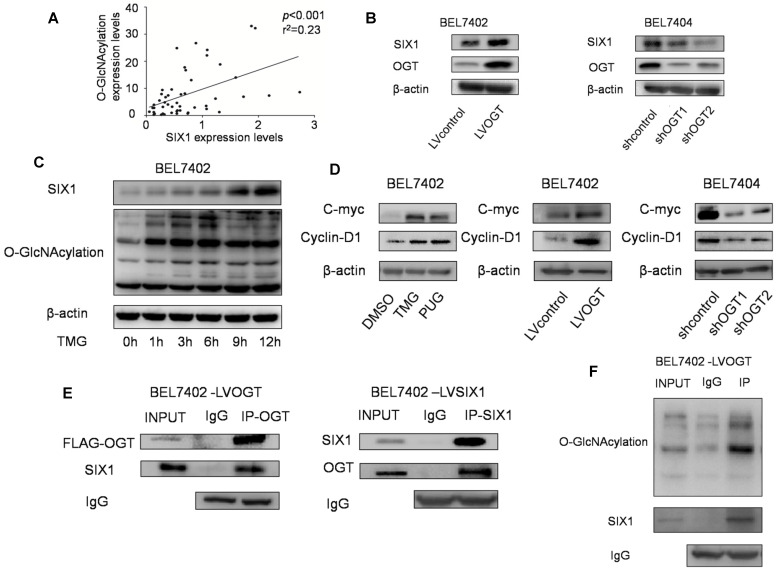
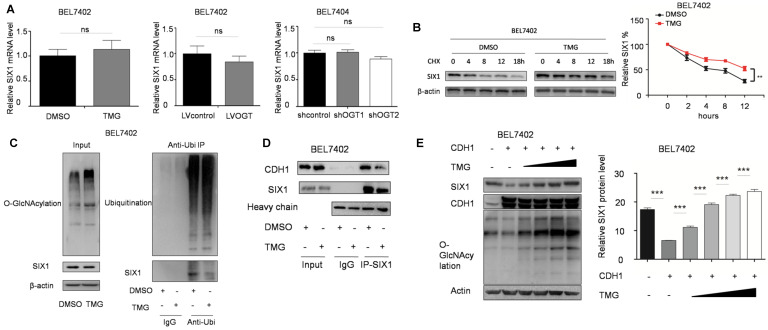
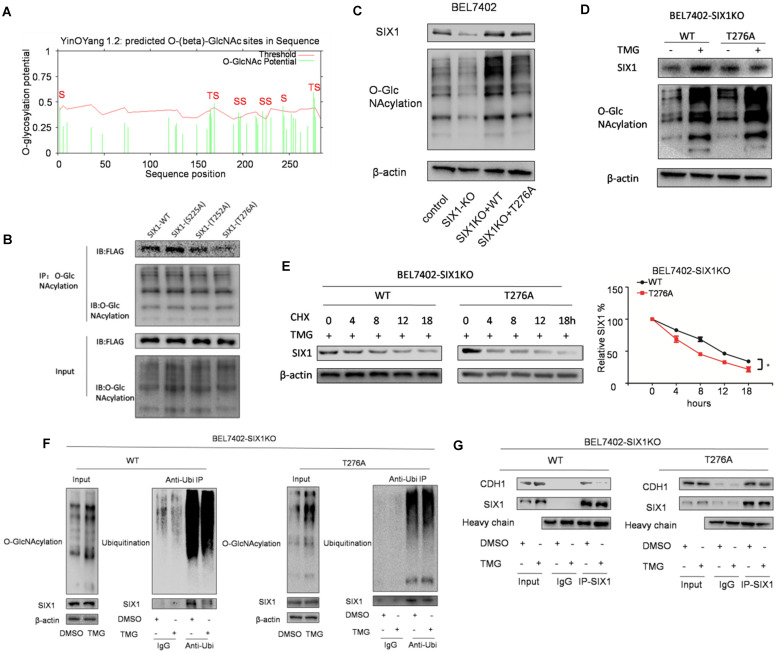
It is universally accepted that aberrant metabolism facilitates tumor growth. However, how cancer cells coordinate glucose metabolism and tumor proliferation is largely unknown. Sine oculis homeobox homolog 1 (SIX1) is a transcription factor that belongs to the SIX family and is believed to play an important role in the regulation of the Warburg effect in tumors. However, whether the role of SIX1 and the molecular mechanisms that regulate its activity are similar in hepatocellular carcinoma (HCC) still needs further investigation. Western blotting was performed to determine the levels of SIX1 and O-linked β-N-acetylglucosaminylation (O-GlcNAcylation) in HCC tissues. Cell Counting Kit 8 (CCK8), colony formation and mouse tumor model assays were used to establish the role of SIX1 and O-GlcNAcylation in HCC processes. Mass spectrometry, immunoprecipitation and site-directed mutagenesis were performed to confirm the O-GlcNAcylation of SIX1. Here, we demonstrated that SIX1, the key transcription factor regulating the Warburg effect in cancer, promotes HCC growth and . Furthermore, we revealed that SIX1 could also enhance the levels of a posttranslational modification called O-GlcNAcylation. Importantly, we found that SIX1 was also highly modified by O-GlcNAcylation and that O-GlcNAcylation inhibited the ubiquitination degradation of SIX1. In addition, site-directed mutagenesis at position 276 (T276A) decreased the O-GlcNAcylation level and reversed the protumor effect of SIX1. We conclude that O-GlcNAcylation of SIX1 enhances its stability and promotes HCC proliferation. Our findings illustrate a novel feedback loop of SIX1 and O-GlcNAcylation and show that O-GlcNAcylation of SIX1 is an important way to coordinate glucose metabolism and tumor progression.
普遍认为,代谢异常促进肿瘤生长。然而,癌细胞如何协调葡萄糖代谢和肿瘤增殖在很大程度上尚不清楚。小眼畸形相关转录因子 1(SIX1)是一种转录因子,属于 SIX 家族,被认为在肿瘤的沃伯格效应调节中发挥重要作用。然而,SIX1 的作用及其调节其活性的分子机制在肝细胞癌(HCC)中是否相似仍需要进一步研究。 采用 Western blot 法检测 HCC 组织中 SIX1 和 O-连接β-N-乙酰氨基葡萄糖(O-GlcNAc)化的水平。采用细胞计数试剂盒 8(CCK8)、集落形成和小鼠肿瘤模型实验来建立 SIX1 和 O-GlcNAc 化在 HCC 过程中的作用。采用质谱分析、免疫沉淀和定点突变来确认 SIX1 的 O-GlcNAc 化。 在这里,我们证明了作为癌症中沃伯格效应关键转录因子的 SIX1 促进 HCC 生长和转移。此外,我们还发现 SIX1 还可以增强一种称为 O-GlcNAc 化的翻译后修饰水平。重要的是,我们发现 SIX1 也高度被 O-GlcNAc 化修饰,并且 O-GlcNAc 化抑制了 SIX1 的泛素化降解。此外,位置 276(T276A)的定点突变降低了 O-GlcNAc 化水平并逆转了 SIX1 的促肿瘤作用。 我们得出结论,SIX1 的 O-GlcNAc 化增强了其稳定性并促进了 HCC 的增殖。我们的研究结果说明了 SIX1 和 O-GlcNAc 化的一个新的反馈回路,并表明 SIX1 的 O-GlcNAc 化是协调葡萄糖代谢和肿瘤进展的重要途径。