Department of Gynecology and Obstetrics, Xijing Hospital, Fourth Military Medical University, Xi'an, Shaanxi 710032, China.
State Key Laboratory of Military Stomatology & National Clinical Research Center for Oral Diseases & Shaanxi International Joint Research Center for Oral Diseases, Center for Tissue Engineering, School of Stomatology, Fourth Military Medical University, Xi'an, Shaanxi 710032, China.
Theranostics. 2018 Oct 6;8(19):5200-5212. doi: 10.7150/thno.27806. eCollection 2018.
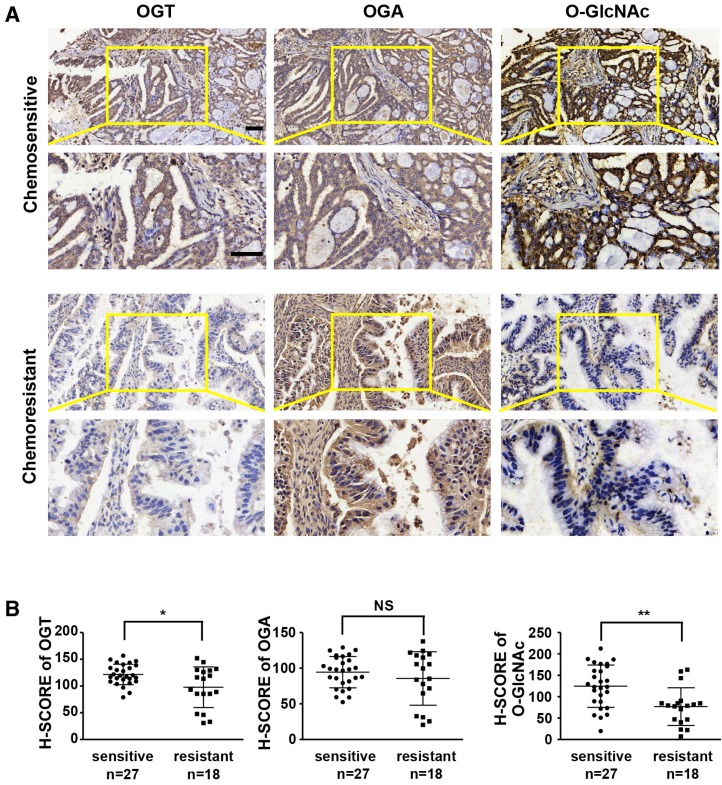
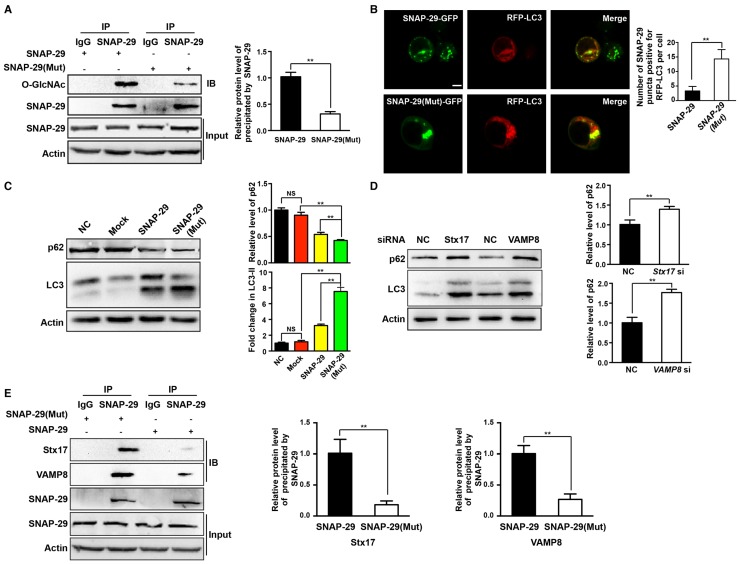
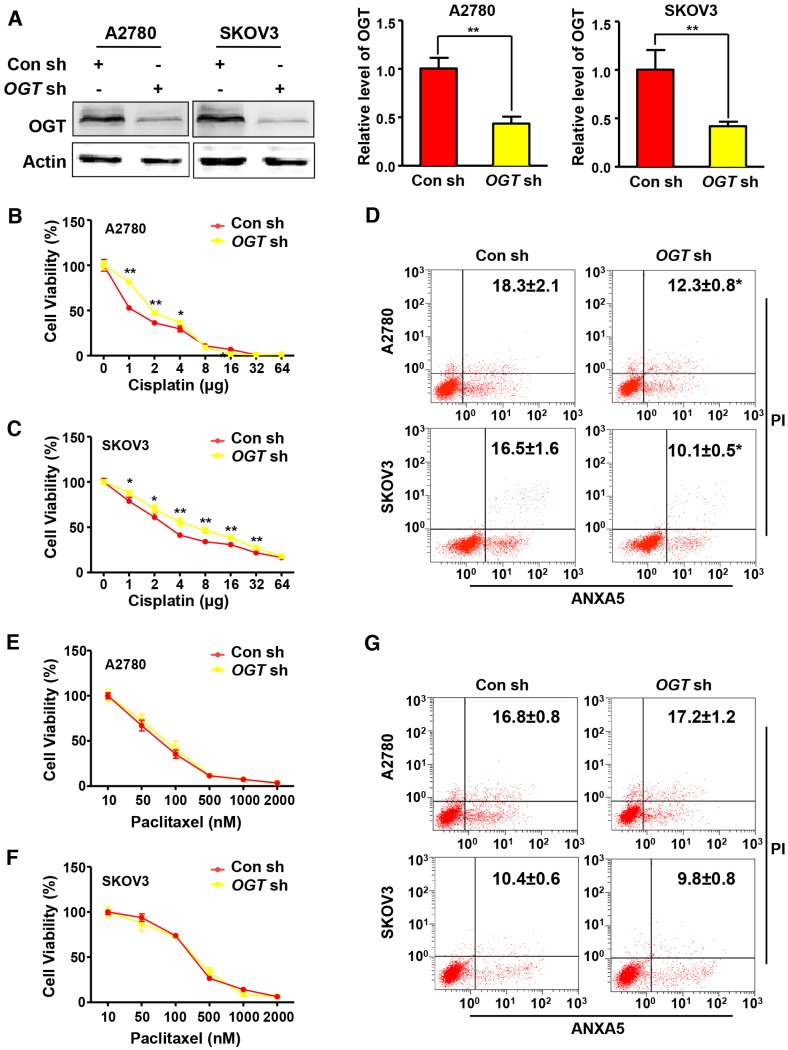
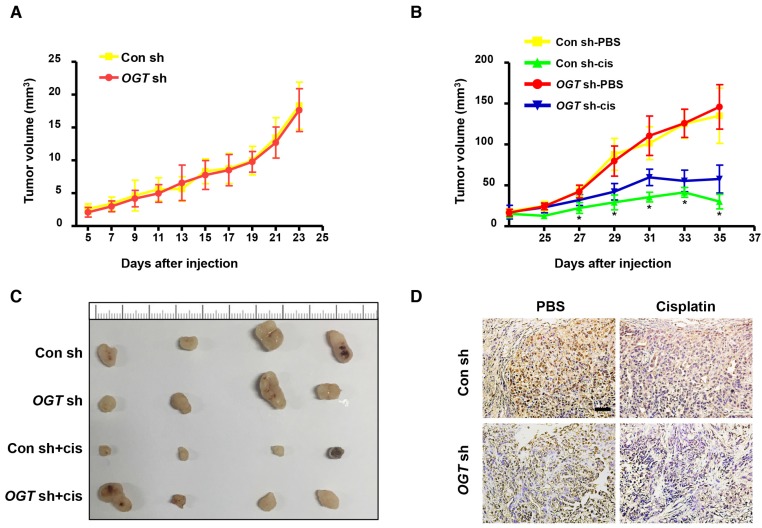
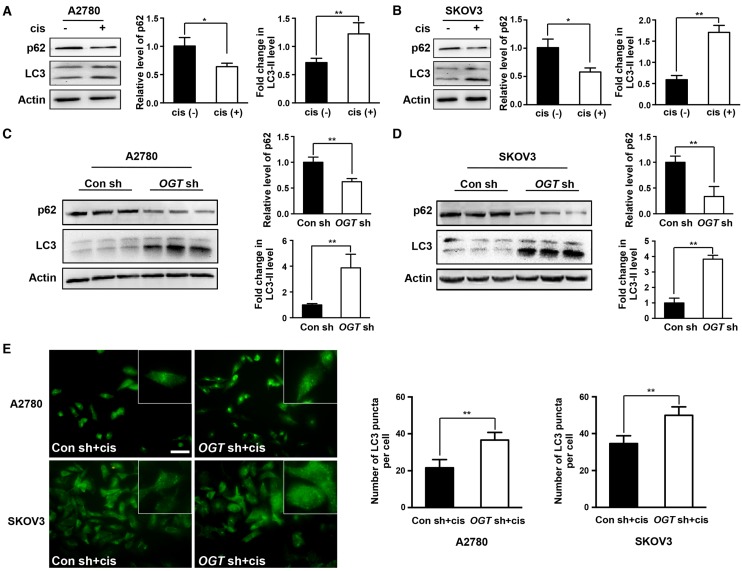
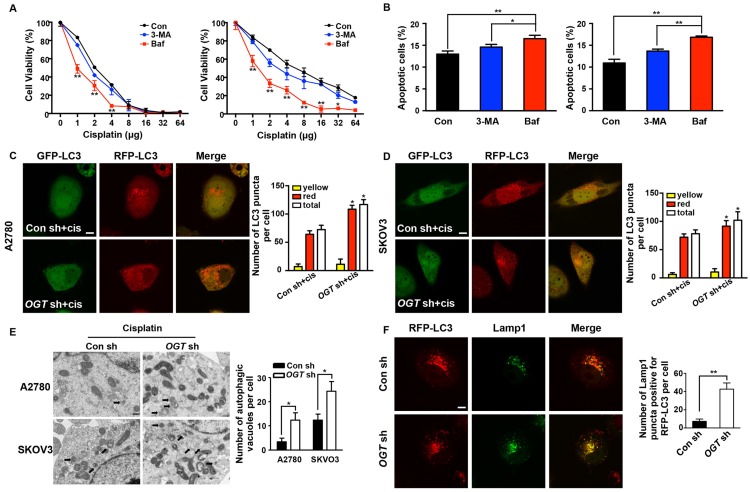
Cisplatin resistance significantly affects the survival rate of patients with ovarian cancer. However, the main mechanism underlying cisplatin resistance in ovarian cancer remains unclear. Immunohistochemistry was used to determine the expression of OGT, OGA and -GlcNAc in chemoresistant and chemosensitive ovarian cancer tissues. Functional analyses (in vitro and in vivo) were performed to confirm the role of OGT in cisplatin resistance. Autophagy-related proteins were tested by western blot. Transmission electron microscopy and mRFP-GFP-LC3 adenovirus reporter were used for autophagy flux analysis. Immunoprecipitation assay was utilized to detect protein-protein interactions. We found that -GlcNAc and -GlcNAc transferase (OGT) levels were significantly lower in chemoresistant ovarian cancer tissues than in chemosensitive tissues, whereas -GlcNAcase (OGA) levels did not differ. The down-regulation of OGT increased cisplatin resistance in ovarian cancer cells but had no effect on the efficacy of paclitaxel. The down-regulation of OGT improved tumor resistance to cisplatin in a mouse xenograft tumor model. OGT knockdown enhanced cisplatin-induced autophagy, which reduced apoptotic cell death induced by cisplatin, and promoted autolysosome formation. A reduction in -GlcNAcylated SNAP-29 levels caused by the down-regulation of OGT promoted the formation of the SNARE complex and autophagic flux. Our findings suggest that down-regulation of OGT enhances cisplatin-induced autophagy via SNAP-29, resulting in cisplatin-resistant ovarian cancer. OGT may represent a novel target for overcoming cisplatin resistance in ovarian cancer.
顺铂耐药显著影响卵巢癌患者的生存率。然而,卵巢癌顺铂耐药的主要机制仍不清楚。免疫组织化学法用于测定耐化疗和化疗敏感卵巢癌组织中 OGT、OGA 和 β-GlcNAc 的表达。进行功能分析(体外和体内)以确认 OGT 在顺铂耐药中的作用。通过 Western blot 检测自噬相关蛋白。透射电子显微镜和 mRFP-GFP-LC3 腺病毒报告基因用于自噬流分析。免疫沉淀实验用于检测蛋白-蛋白相互作用。我们发现,β-GlcNAc 和 β-GlcNAc 转移酶(OGT)水平在耐药卵巢癌组织中明显低于化疗敏感组织,而β-GlcNAcase(OGA)水平没有差异。OGT 的下调增加了卵巢癌细胞对顺铂的耐药性,但对紫杉醇的疗效没有影响。OGT 的下调在小鼠异种移植肿瘤模型中提高了肿瘤对顺铂的耐药性。OGT 敲低增强了顺铂诱导的自噬,从而减少了顺铂诱导的凋亡细胞死亡,并促进了自噬溶酶体的形成。OGT 下调导致 SNAP-29 水平的 β-GlcNAc 化减少,促进了 SNARE 复合物和自噬流的形成。我们的研究结果表明,OGT 的下调通过 SNAP-29 增强了顺铂诱导的自噬,导致顺铂耐药性卵巢癌。OGT 可能成为克服卵巢癌顺铂耐药的新靶点。