Dieterich Andrew, Yohn Christine N, Samuels Benjamin Adam
Department of Psychology, Behavioral and Systems Neuroscience Area, The State University of New Jersey; Graduate Program in Neuroscience, Rutgers, The State University of New Jersey;
Department of Psychology, Behavioral and Systems Neuroscience Area, The State University of New Jersey.
J Vis Exp. 2020 Aug 13(162). doi: 10.3791/61548.
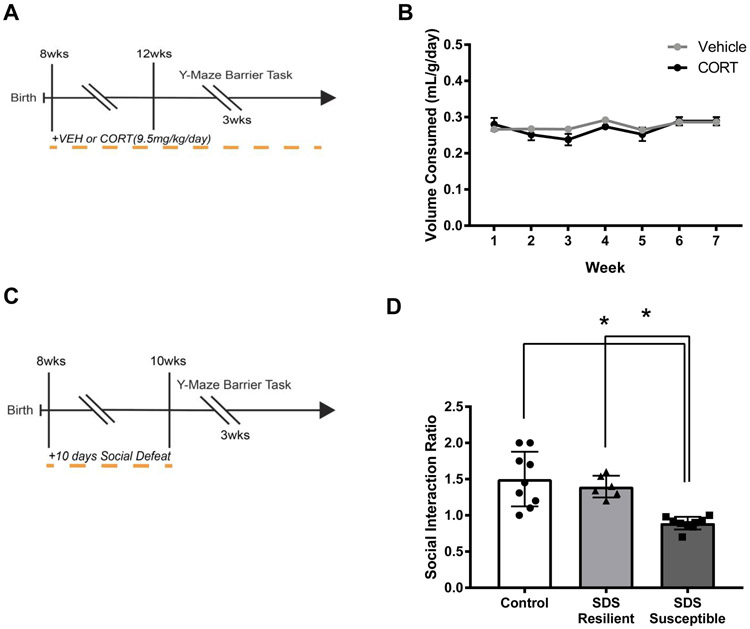
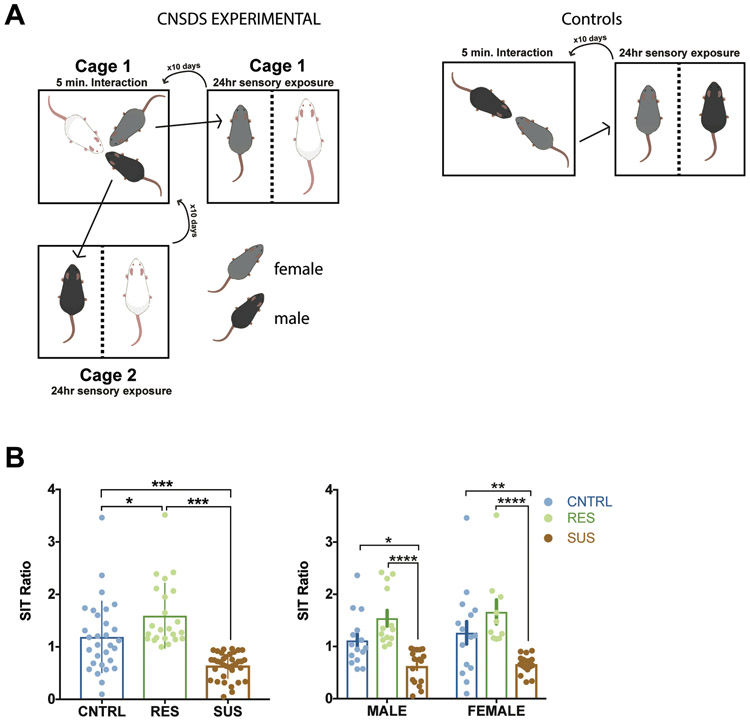
Mood disorders, including major depressive disorder, can be precipitated by chronic stress. The Y-maze barrier task is an effort-related choice test that measures motivation to expend effort and obtain reward. In mice, chronic stress exposure significantly impacts motivation to work for a higher value reward when a lesser value reward is freely available compared to unstressed mice. Here we describe the chronic corticosterone administration paradigm, which produces a shift in effortful responding in the Y-maze barrier task. In the Y-maze task, one arm contains 4 food pellets, while the other arm contains only 2 pellets. After mice learn to select the high reward arm, barriers with progressively increasing height are then introduced into the high reward arm over multiple test sessions. Unfortunately, most chronic stress paradigms (including corticosterone and social defeat) were developed in male mice and are less effective in female mice. Therefore, we also discuss chronic non-discriminatory social defeat stress (CNSDS), a stress paradigm we developed that is effective in both male and female mice. Repeating results with multiple distinct chronic stressors in male and female mice combined with increased usage of translationally relevant behavior tasks will help to advance the understanding of how chronic stress can precipitate mood disorders.
情绪障碍,包括重度抑郁症,可能由慢性应激引发。Y迷宫障碍任务是一种与努力相关的选择测试,用于衡量付出努力以获得奖励的动机。在小鼠中,与未受应激的小鼠相比,当有较低价值的奖励可自由获取时,慢性应激暴露会显著影响为更高价值奖励而工作的动机。在此,我们描述慢性皮质酮给药范式,该范式会使Y迷宫障碍任务中的努力反应发生转变。在Y迷宫任务中,一个臂中有4颗食物颗粒,而另一个臂中只有2颗颗粒。小鼠学会选择高奖励臂后,在多个测试环节中,逐渐增高的障碍会被引入高奖励臂。不幸的是,大多数慢性应激范式(包括皮质酮和社会挫败)是在雄性小鼠中建立的,对雌性小鼠效果较差。因此,我们还讨论了慢性非歧视性社会挫败应激(CNSDS),这是我们开发的一种应激范式,对雄性和雌性小鼠均有效。在雄性和雌性小鼠中用多种不同的慢性应激源重复实验结果,并增加与转化相关行为任务的使用,将有助于推进对慢性应激如何引发情绪障碍的理解。