Division of Nephrology, Department of Medicine, Fu Jen Catholic University Hospital, New Taipei City 24205, Taiwan.
School of Medicine, Fu Jen Catholic University, New Taipei City 24205, Taiwan.
Int J Mol Sci. 2020 Aug 27;21(17):6212. doi: 10.3390/ijms21176212.
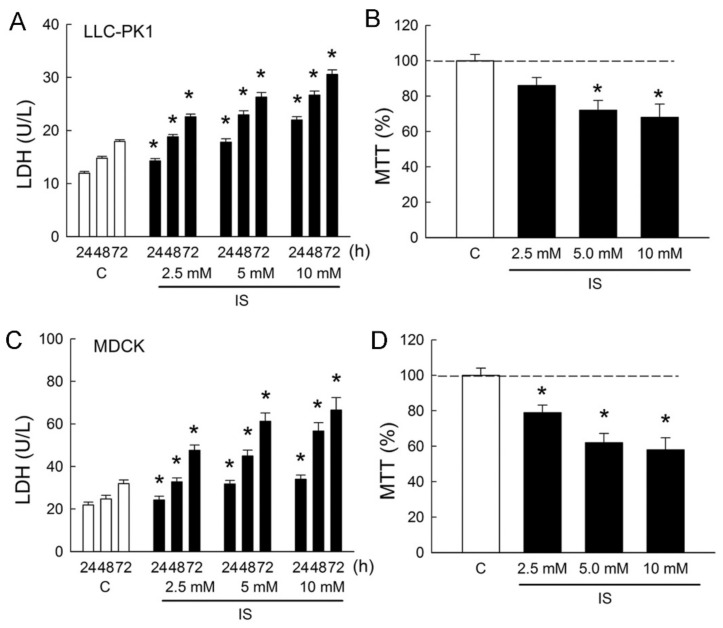
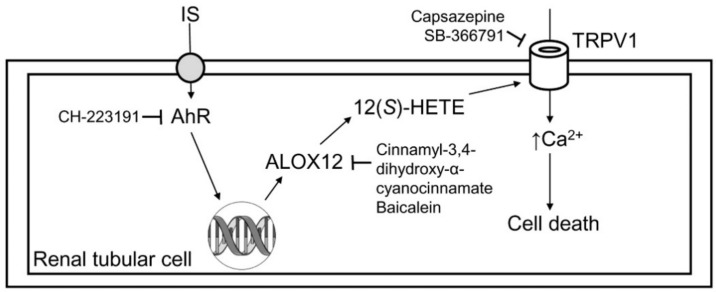
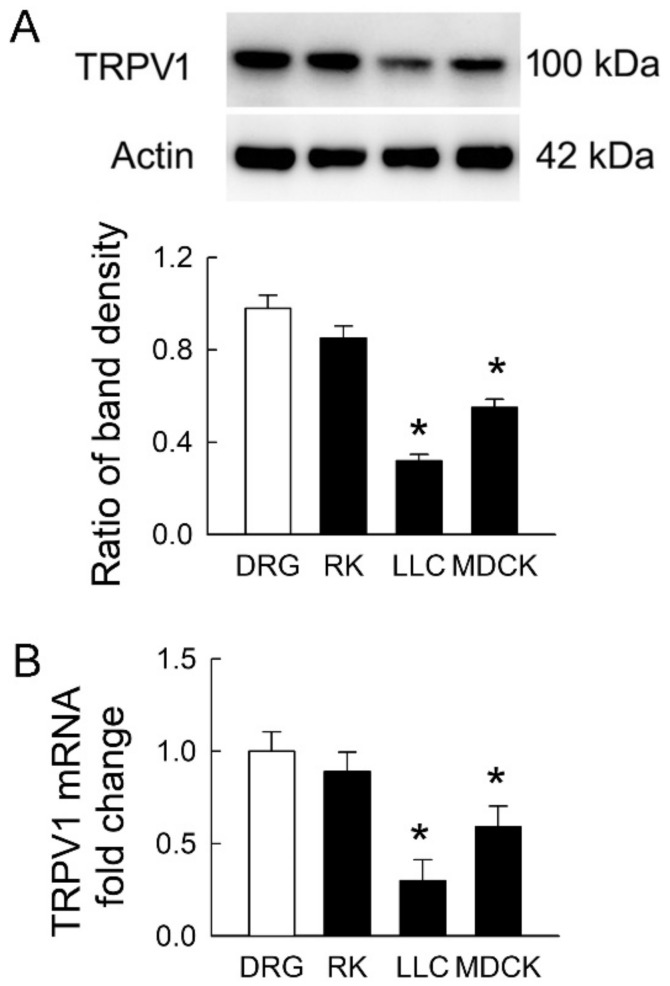
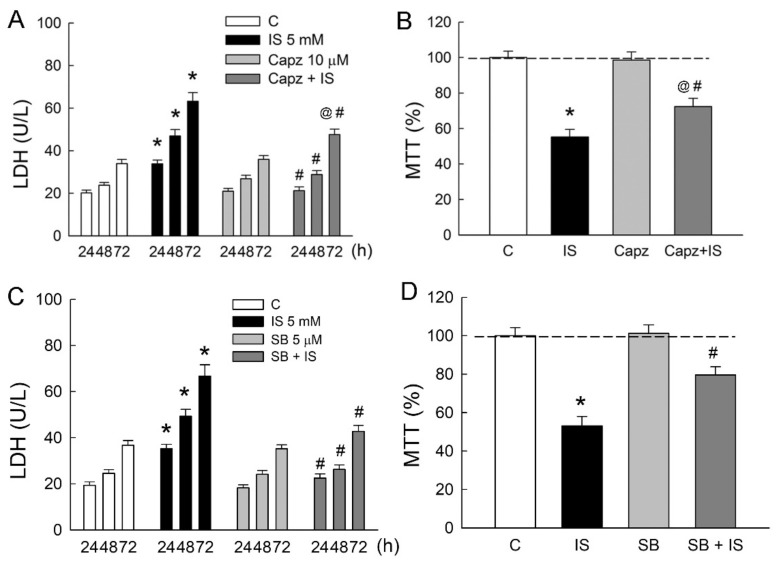
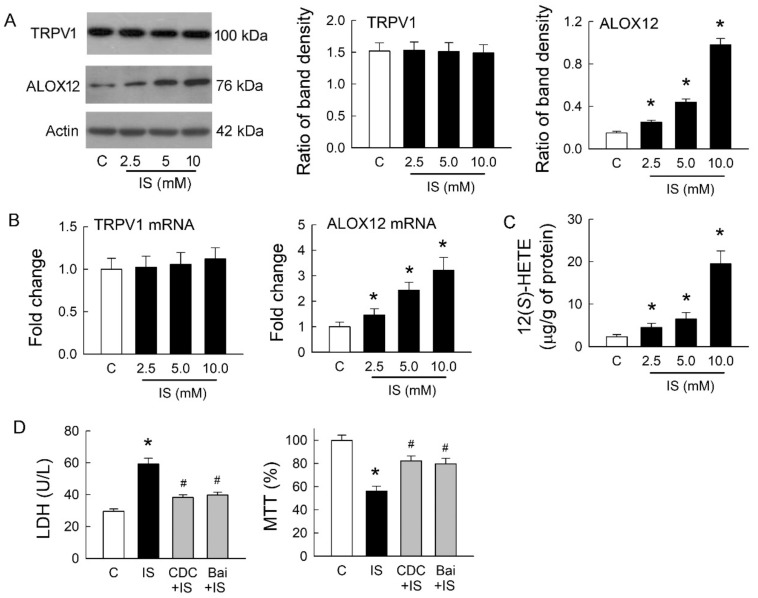
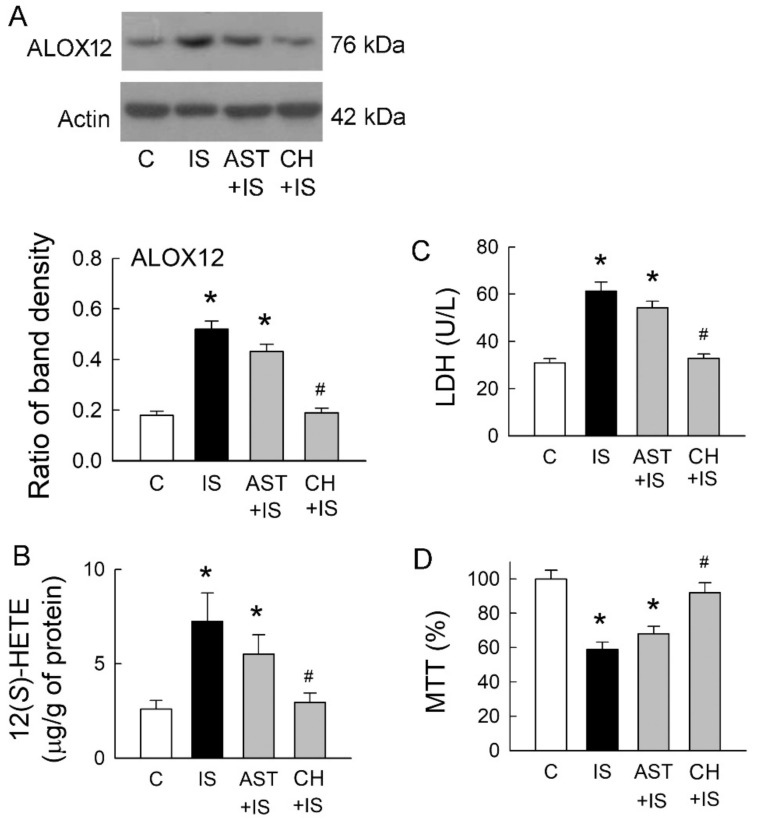
Indoxyl sulfate (IS) is accumulated during severe renal insufficiency and known for its nephrotoxic properties. Transient receptor potential vanilloid 1 (TRPV1) is present in the kidney and acts as a renal sensor. However, the mechanism underlying IS-mediated renal tubular damage in view of TRPV1 is lacking. Here, we demonstrated that TRPV1 was expressed in tubular cells of Lilly Laboratories cell-porcine kidney 1 (LLC-PK) and Madin-Darby canine kidney cells (MDCK). IS treatment in both cells exhibited tubular damage with increased LDH release and reduced cell viability in dose- and time-dependent manners. MDCK, however, was more vulnerable to IS. We, therefore, investigated MDCK cells to explore a more detailed mechanism. Interestingly, IS-induced tubular damage was markedly attenuated in the presence of selective TRPV1 blockers. IS showed no effect on TRPV1 expression but significantly increased arachidonate 12-lipoxygenase (ALOX12) protein, mRNA expression, and 12()-hydroxyeicosatetraenoic acid (12()-HETE) amounts in a dose-dependent manner, indicating that the ALOX12/12()-HETE pathway induced TRPV1 hyperfunction in IS-mediated tubulotoxicity. Blockade of ALOX12 by cinnamyl-3,4-dihydroxy-α-cyanocinnamate or baicalein attenuated the effects of IS. Since aryl hydrocarbon receptor (AhR) activation after IS binding is crucial in mediating cell death, here, we found that the AhR blockade not only ameliorated tubular damage but also attenuated ALOX12 expression and 12()-HETE production caused by IS. The uremic toxic adsorbent AST-120, however, showed little effect on ALOX12 and 12()-HETE, as well as IS-induced cell damage. These results clearly indicated that IS activated AhR and then upregulated ALOX12, and this induced endovanilloid 12()-HETE synthesis and contributed to TRPV1 hyperfunction in IS-treated tubular cells. Further study on TRPV1 may attenuate kidney susceptibility to the functional loss of end-stage kidney disease via IS.
硫酸吲哚酚(IS)在严重肾功能不全时积累,并具有肾毒性。瞬时受体电位香草醛 1 型(TRPV1)存在于肾脏中,作为肾脏传感器。然而,目前尚缺乏 IS 介导的 TRPV1 介导的肾小管损伤的机制。在这里,我们证明 TRPV1 在 Lilly Laboratories 细胞-猪肾 1 型(LLC-PK)和 Madin-Darby 犬肾细胞(MDCK)的管状细胞中表达。IS 处理这两种细胞均表现出剂量和时间依赖性的肾小管损伤,LDH 释放增加,细胞活力降低。然而,MDCK 对 IS 更为敏感。因此,我们研究了 MDCK 细胞以探索更详细的机制。有趣的是,在存在选择性 TRPV1 阻滞剂的情况下,IS 诱导的管状损伤明显减弱。IS 对 TRPV1 表达没有影响,但显著增加了花生四烯酸 12-脂氧合酶(ALOX12)蛋白、mRNA 表达和 12()-羟基二十碳四烯酸(12()-HETE)的量,呈剂量依赖性,表明 ALOX12/12()-HETE 途径在 IS 介导的肾小管毒性中诱导 TRPV1 超功能。Cinnamyl-3,4-dihydroxy-α-cyanocinnamate 或黄芩素通过阻断 ALOX12 减弱了 IS 的作用。由于 IS 结合后芳香烃受体(AhR)的激活在介导细胞死亡中至关重要,因此,我们发现 AhR 阻断不仅改善了管状损伤,而且还减弱了 IS 引起的 ALOX12 表达和 12()-HETE 产生。然而,尿毒症毒性吸附剂 AST-120 对 ALOX12 和 12()-HETE 以及 IS 诱导的细胞损伤几乎没有影响。这些结果清楚地表明,IS 激活了 AhR,然后上调了 ALOX12,这诱导了内香草素 12()-HETE 的合成,并有助于 IS 处理的管状细胞中 TRPV1 超功能。进一步研究 TRPV1 可能会通过 IS 减轻肾脏对终末期肾病功能丧失的易感性。