Takova Katerina, Koynarski Tsvetoslav, Minkov Ivan, Ivanova Zdravka, Toneva Valentina, Zahmanova Gergana
Department of Plant Physiology and Molecular Biology, University of Plovdiv, 4000 Plovdiv, Bulgaria.
Department of Animal Genetics, Faculty of Veterinary Medicine, Trakia University, 6000 Stara Zagora, Bulgaria.
Animals (Basel). 2020 Aug 28;10(9):1521. doi: 10.3390/ani10091521.
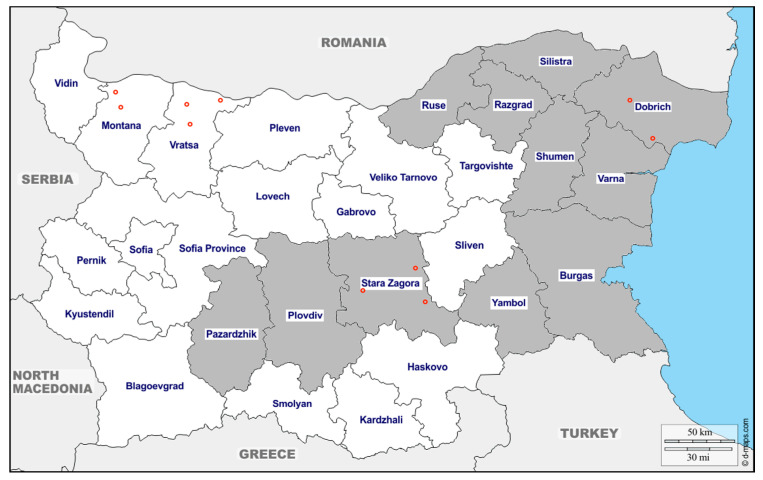
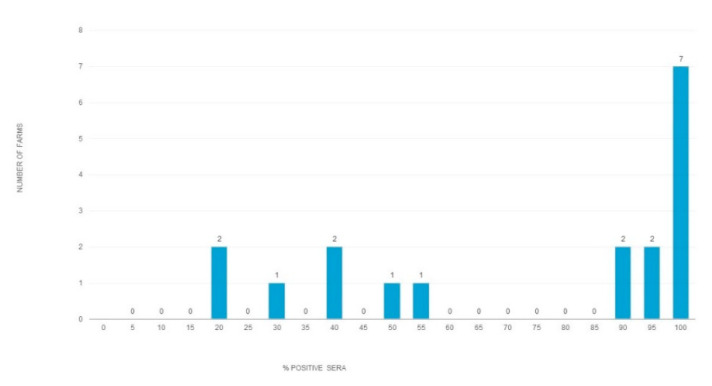
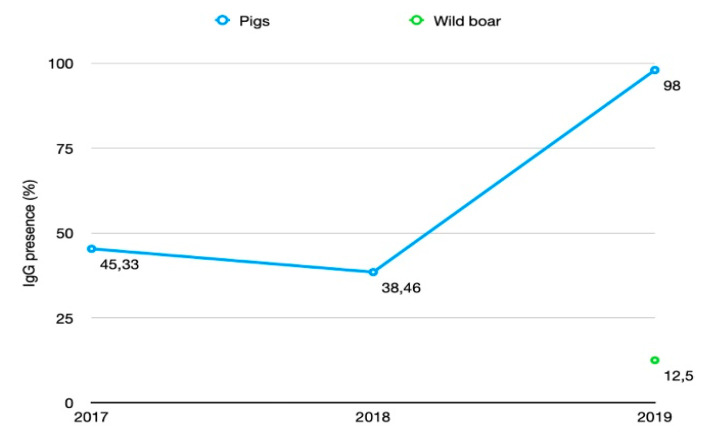
(1) Background: Hepatitis E virus (HEV) is a causative agent of acute viral hepatitis, predominantly transmitted by the fecal-oral route. In developed countries, HEV is considered to be an emerging pathogen since the number of autochthonous cases is rising. Hepatitis E is a viral disease with a proven zoonotic potential for some of its genotypes. The main viral reservoirs are domestic pigs and wild boar. Consumption of undercooked meat, as well as occupational exposure, are key factors for the spread of HEV. In order to evaluate the risks of future viral evolution, a detailed examination of the ecology and distribution of the virus is needed. The aim of the present study is to investigate the prevalence of anti-HEV IgG Ab in domestic pigs and wild boar in Bulgaria; (2) Methods: In this study, during the period of three years between 2017 and 2019, 433 serum samples from 19 different pig farms and 1 slaughterhouse were collected and analyzed. In addition, 32 samples from wild boar were also collected and analyzed during the 2018-2019 hunting season. All samples were analyzed by commercial indirect ELISA; (3) Results: Overall, HEV seroprevalence was 60% (95% CI 42.7-77.1) in domestic pigs and 12.5% (4/32) in wild boar. The observed seroprevalence of the slaughter-aged pigs was 73.65% (95% Cl 58.7-87.3). Prevalence in domestic pigs was significantly higher in the samples collected during 2019 (98% (95% Cl 96.1-99.9)) compared to those collected during 2017 (45.33% (95% CI 2.7-87.3)) and 2018 (38.46% (95% CI 29.1-49.7.); (4) Conclusions: Our findings suggest that domesticated pigs and wild boar might be the reason for the increased HEV transmission across Bulgaria. The genotypic characterization of HEV found in pigs, wild boar and humans will give a more accurate view of the zoonotic transmission of this virus.
(1)背景:戊型肝炎病毒(HEV)是急性病毒性肝炎的病原体,主要通过粪-口途径传播。在发达国家,由于本土病例数量不断上升,戊型肝炎被视为一种新兴病原体。戊型肝炎是一种病毒性疾病,其某些基因型具有人畜共患病的潜在可能性。主要病毒宿主是家猪和野猪。食用未煮熟的肉类以及职业暴露是戊型肝炎病毒传播的关键因素。为了评估未来病毒进化的风险,需要对该病毒的生态学和分布进行详细研究。本研究的目的是调查保加利亚家猪和野猪中抗HEV IgG抗体的流行情况;(2)方法:在本研究中,2017年至2019年的三年间,收集并分析了来自19个不同养猪场和1个屠宰场的433份血清样本。此外,在2018 - 2019年狩猎季节还收集并分析了32份野猪样本。所有样本均通过商业间接ELISA进行分析;(3)结果:总体而言,家猪中戊型肝炎病毒血清阳性率为60%(95%可信区间42.7 - 77.1),野猪中为12.5%(4/32)。屠宰年龄猪的观察血清阳性率为73.65%(95%可信区间58.7 - 87.3)。与2017年(45.33%(95%可信区间2.7 - 87.3))和2018年(38.46%(95%可信区间29.1 - 49.7))收集的样本相比,2019年收集的家猪样本中阳性率显著更高;(4)结论:我们的研究结果表明,家猪和野猪可能是保加利亚戊型肝炎病毒传播增加的原因。对猪、野猪和人类中发现的戊型肝炎病毒进行基因分型,将更准确地了解该病毒的人畜共患病传播情况。