Akku Radhika, Jayaprakash Thulasi Priya, Ogbue Olisaemeka D, Malhotra Parul, Khan Safeera
Internal Medicine, California Institute of Behavioral Neurosciences & Psychology, Fairfield, USA.
Medicine, California Institute of Behavioral Neurosciences & Psychology, Fairfield, USA.
Cureus. 2020 Jul 30;12(7):e9484. doi: 10.7759/cureus.9484.
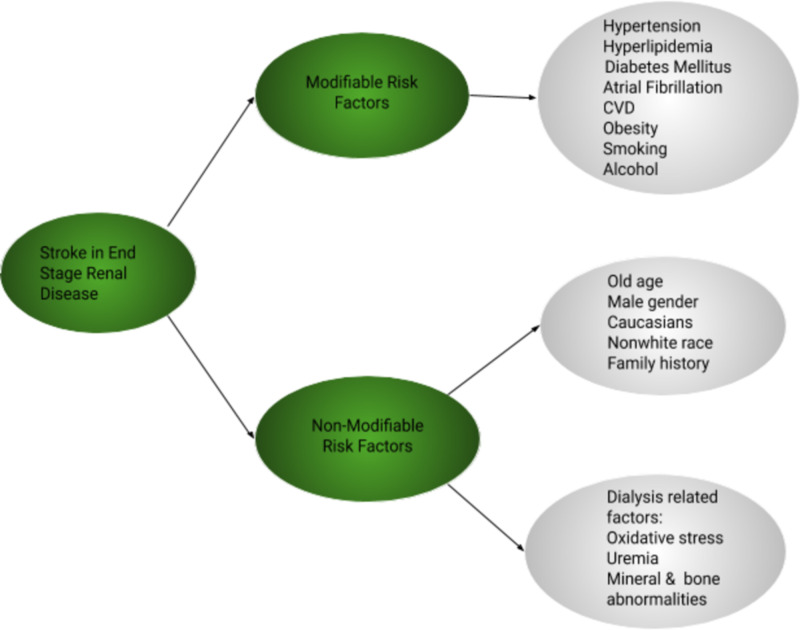
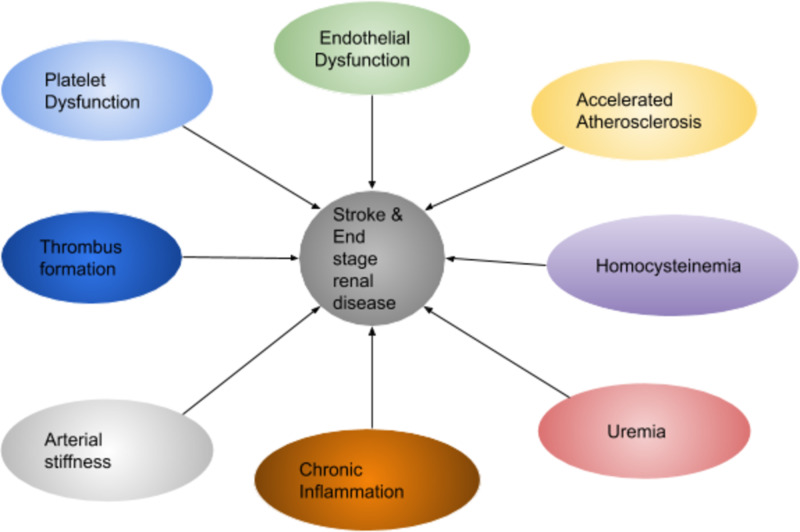
The relationship between end-stage renal disease (ESRD) and cerebral stroke is graded and cumulative, having a significant impact on morbidity and mortality. Ischemic stroke is more prevalent than hemorrhagic stroke and both stroke types have modifiable and non-modifiable risk factors. The presence of risk factors such as hypertension, diabetes, and atrial fibrillation (AF) before stroke occurrence in dialysis patients has a significant impact on the outcomes such as a discharge to rehabilitation, in-hospital mortality with the worst prognosis when compared to the general population. ESRD patients with either peritoneal or hemodialysis (HD) are at increased risk of stroke than the general population, with a high mortality rate at the commencement of dialysis and gradually decreases. Primary and secondary prevention of risk factors plays a significant role in this susceptible population and helps to mitigate better treatment and outcomes. Our review article focuses on the mechanisms, outcomes, treatment, and preventive aspects of stroke in the ESRD population.
终末期肾病(ESRD)与脑卒之间的关系具有分级性和累积性,对发病率和死亡率有重大影响。缺血性脑卒中比出血性脑卒中更为常见,且两种类型的脑卒中都有可改变和不可改变的危险因素。透析患者在脑卒中发生前存在高血压、糖尿病和心房颤动(AF)等危险因素,与普通人群相比,对诸如出院康复、住院死亡率等预后情况有重大影响,其中住院死亡率的预后最差。接受腹膜透析或血液透析(HD)的ESRD患者发生脑卒中的风险高于普通人群,在透析开始时死亡率较高,随后逐渐下降。对危险因素的一级和二级预防在这一易感人群中起着重要作用,有助于改善治疗效果和预后。我们的综述文章重点关注ESRD人群中脑卒中的机制、预后、治疗和预防方面。