Dar Shabir Ahmad, Bhat Bilal Ahmad, Khanam Aaliya, Wani Zaid Ahmad, Nabi Junaid, Sheikh Shanoo
Department of Psychiatry, Government Medical College, Srinagar, Jammu and Kashmir, India.
Department of Health and Rehabilitation, Princess Nourah Bint Abdulrahman University, Riyadh, Saudi Arabia.
J Med Ultrasound. 2020 Mar 26;28(2):104-110. doi: 10.4103/JMU.JMU_26_19. eCollection 2020 Apr-Jun.
Although lithium is known to cause thyroid dysfunction and increased thyroid gland volume, clinical examination and biochemical assessment are fundamental to thyroid workup of patients on lithium treatment. We aimed to determine thyroid gland volume and the Thyroid hormone levels of patients who have been receiving lithium treatment for affective disorders in comparison to voluntary healthy controls.
This was a cross-sectional, hospital-based observational study which was performed in 43 patients on long-term lithium treatment for bipolar disorder, major depressive and schizoaffective disorders. Patients with documented continuous and adequate serum lithium levels for more than or equal to 6 months recruited consecutively underwent the ultrasonographic examination of the thyroid gland. Ultrasonographic examinations were also done in all gender- and age-matched healthy controls. All cases and controls underwent biochemical thyroid function tests.
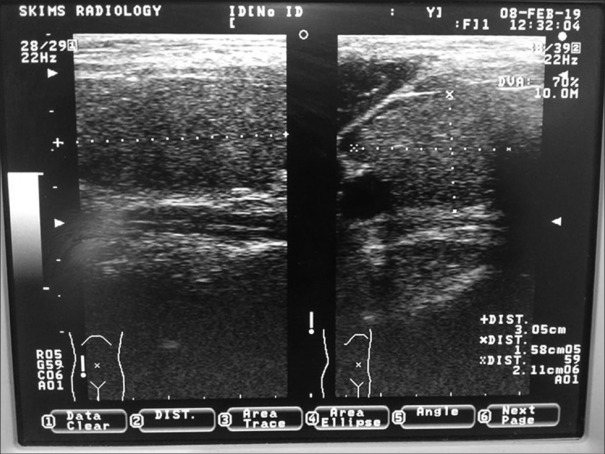
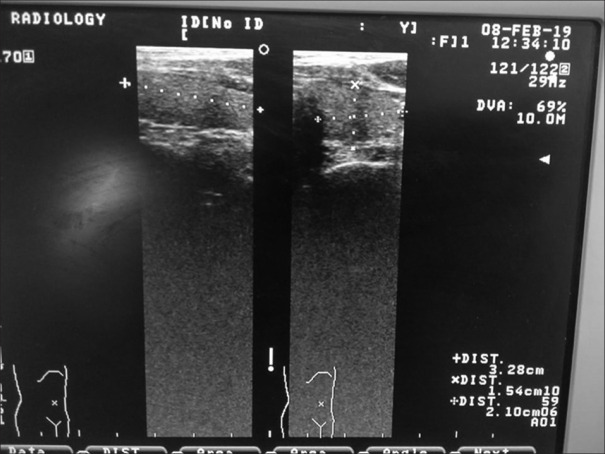
There were no statistically significant differences in gender ( = 0.198; Chi-square = 1.654) of cases and controls. Most of the cases were married, maximum number of them unemployed and belonged to the lower socioeconomic status. Total thyroid volume was significantly greater in the lithium-treated group than the controls (9.40 ± 1.41 vs. 4.79 ± 0.45). Clinical inspection and palpation only detected goiter in six ( = 6, 13.95%) of patients on lithium and none among controls. The mean triiodothyronine, mean thyroxine, and mean scores for thyroid-stimulating hormone were significantly increased in patients receiving lithium therapy as compared to controls.
It would seem wise from a clinical point of view to include ultrasonographic examination of the thyroid gland as part of the standard thyroid workup before initiating lithium treatment.
尽管已知锂会导致甲状腺功能障碍和甲状腺体积增大,但临床检查和生化评估对于接受锂治疗患者的甲状腺检查至关重要。我们旨在确定与自愿健康对照相比,接受锂治疗情感障碍患者的甲状腺体积和甲状腺激素水平。
这是一项基于医院的横断面观察性研究,对43例因双相情感障碍、重度抑郁和分裂情感性障碍接受长期锂治疗的患者进行。连续招募血清锂水平持续且充足≥6个月的患者,对其进行甲状腺超声检查。所有性别和年龄匹配的健康对照也进行了超声检查。所有病例和对照均进行了甲状腺功能生化检测。
病例组和对照组在性别方面无统计学显著差异(P = 0.198;卡方 = 1.654)。大多数病例已婚,其中失业人数最多,且属于社会经济地位较低者。锂治疗组的总甲状腺体积显著大于对照组(9.40±1.41 vs. 4.79±0.45)。临床检查和触诊仅在6例(n = 6,13.95%)接受锂治疗的患者中检测到甲状腺肿大,对照组中未检测到。与对照组相比,接受锂治疗的患者的平均三碘甲状腺原氨酸、平均甲状腺素和促甲状腺激素平均评分显著升高。
从临床角度来看,在开始锂治疗前,将甲状腺超声检查作为标准甲状腺检查的一部分似乎是明智的。