Global Neuroscience Institute, 1 Medical Center Blvd., Chester, PA, 19013, USA.
Pritzker School of Medicine, University of Chicago, Chicago, USA.
J Neurovirol. 2020 Oct;26(5):631-641. doi: 10.1007/s13365-020-00903-7. Epub 2020 Sep 2.
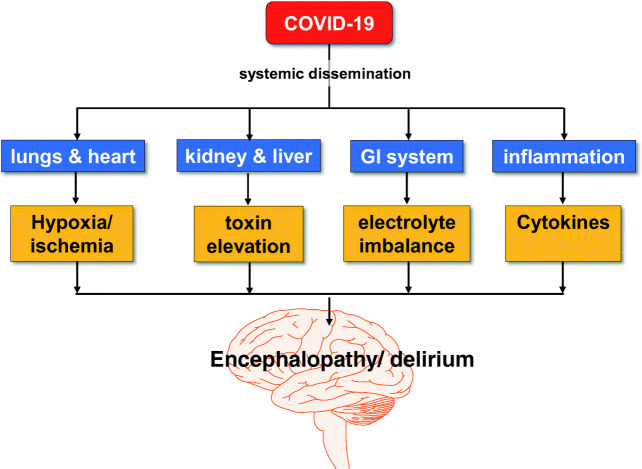
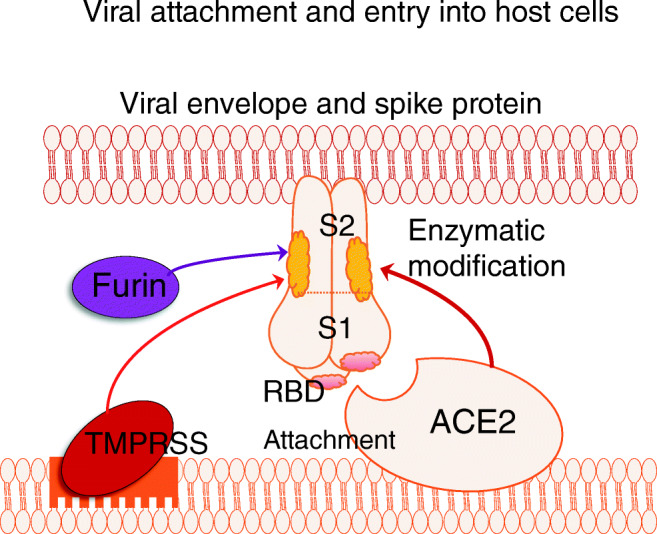
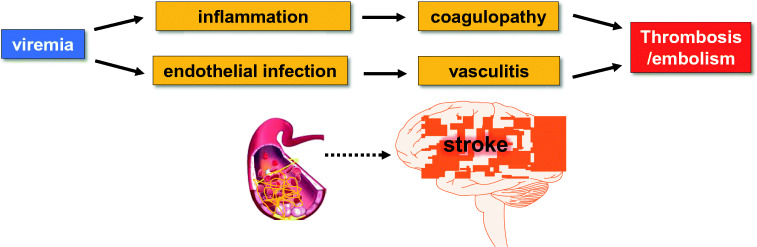
A subset of patients with coronavirus 2 disease (COVID-19) experience neurological complications. These complications include loss of sense of taste and smell, stroke, delirium, and neuromuscular signs and symptoms. The etiological agent of COVID-19 is SARS-CoV-2 (severe acute respiratory syndrome coronavirus 2), an RNA virus with a glycoprotein-studded viral envelope that uses ACE2 (angiotensin-converting enzyme 2) as a functional receptor for infecting the host cells. Thus, the interaction of the envelope spike proteins with ACE2 on host cells determines the tropism and virulence of SARS-CoV-2. Loss of sense of taste and smell is an initial symptom of COVID-19 because the virus enters the nasal and oral cavities first and the epithelial cells are the receptors for these senses. Stroke in COVID-19 patients is likely a consequence of coagulopathy and injury to cerebral vascular endothelial cells that cause thrombo-embolism and stroke. Delirium and encephalopathy in acute and post COVID-19 patients are likely multifactorial and secondary to hypoxia, metabolic abnormalities, and immunological abnormalities. Thus far, there is no clear evidence that coronaviruses cause inflammatory neuromuscular diseases via direct invasion of peripheral nerves or muscles or via molecular mimicry. It appears that most of neurologic complications in COVID-19 patients are indirect and as a result of a bystander injury to neurons.
一部分新型冠状病毒 2 型疾病(COVID-19)患者出现神经系统并发症。这些并发症包括味觉和嗅觉丧失、中风、谵妄以及神经肌肉体征和症状。COVID-19 的病原体是 SARS-CoV-2(严重急性呼吸综合征冠状病毒 2),这是一种带有糖蛋白刺突的 RNA 病毒,其病毒包膜使用 ACE2(血管紧张素转换酶 2)作为感染宿主细胞的功能性受体。因此,包膜刺突蛋白与宿主细胞上的 ACE2 的相互作用决定了 SARS-CoV-2 的亲嗜性和毒力。味觉和嗅觉丧失是 COVID-19 的初始症状,因为病毒首先进入鼻腔和口腔,而上皮细胞是这些感觉的受体。COVID-19 患者的中风可能是凝血功能障碍和脑血管内皮细胞损伤的结果,导致血栓形成和中风。急性和 COVID-19 后患者的谵妄和脑病可能是多因素的,继发于缺氧、代谢异常和免疫异常。到目前为止,没有明确的证据表明冠状病毒通过直接侵犯周围神经或肌肉或通过分子模拟导致炎症性神经肌肉疾病。似乎 COVID-19 患者的大多数神经系统并发症是间接的,是神经元旁观者损伤的结果。