Laboratory of Plant Physiology, Wageningen University and Research, Droevendaalsesteeg 1, Wageningen 6708 PB, The Netherlands.
Netherlands Metabolomics Centre, Einsteinweg 55, Leiden 2333 CC, The Netherlands.
J Agric Food Chem. 2020 Oct 21;68(42):11612-11630. doi: 10.1021/acs.jafc.0c04274. Epub 2020 Sep 17.
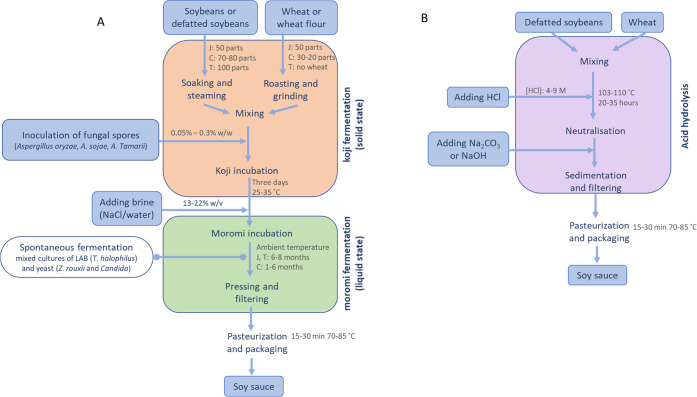
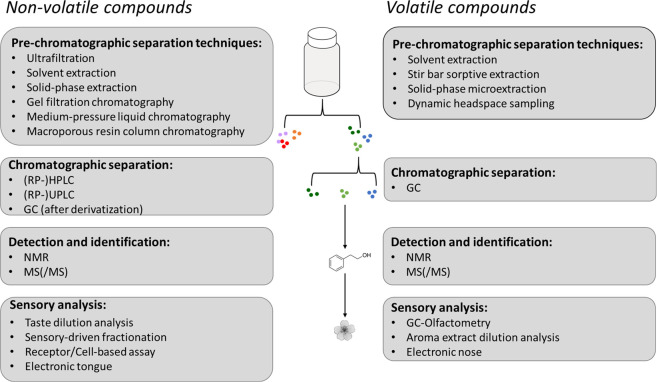
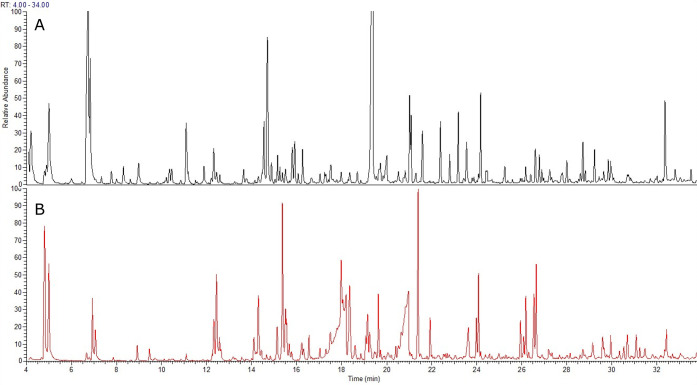
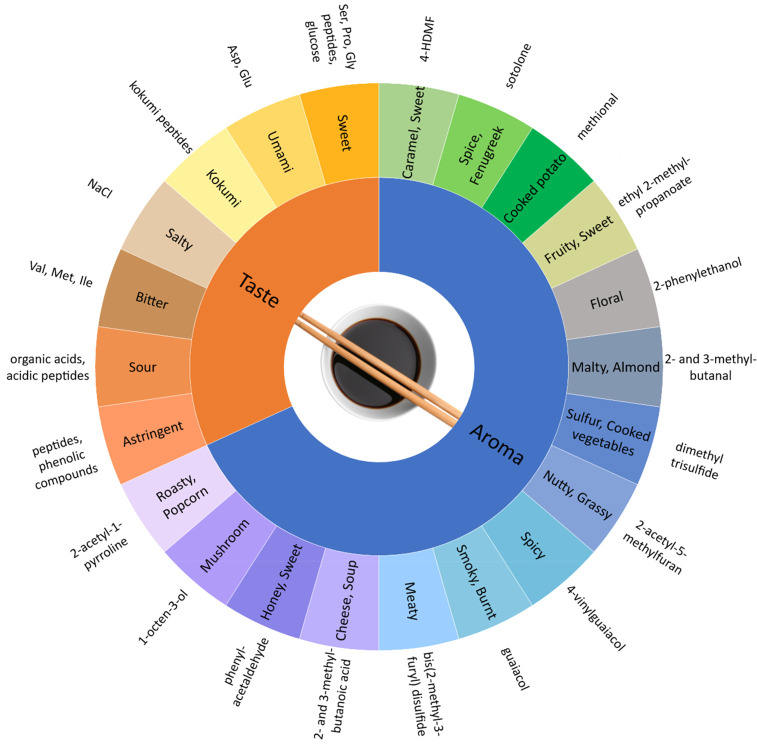
Soy sauce is a fermented product, and its flavor is a complex mixture of individual senses which, in combination, create a strong palatable condiment for many Eastern and Western dishes. This Review focuses on our existing knowledge of the chemical compounds present in soy sauce and their potential relevance to the flavor profile. Taste is dominated by umami and salty sensations. Free amino acids, nucleotides, and small peptides are among the most important taste-active compounds. Aroma is characterized by caramel-like, floral, smoky, malty, and cooked potato-like odors. Aroma-active volatiles are chemically diverse including acids, alcohols, aldehydes, esters, furanones, pyrazines, and S-compounds. The origin of all compounds relates to both the raw ingredients and starter cultures used as well as the parameters applied during production. We are only just starting to help develop innovative studies where we can combine different analytical platforms and chemometric analysis to link flavor attributes to chemical composition.
酱油是一种发酵产品,其风味是各种单一感官的复杂混合物,这些感官结合在一起,为许多东方和西方菜肴创造了一种强烈可口的调味料。本综述重点介绍了我们目前对酱油中存在的化学化合物及其与风味特征的潜在相关性的了解。味道主要由鲜味和咸味组成。游离氨基酸、核苷酸和小肽是最重要的味觉活性化合物之一。香气的特点是焦糖味、花香、烟熏味、麦芽味和煮熟的土豆味。香气活性挥发物在化学上是多种多样的,包括酸、醇、醛、酯、呋喃酮、吡嗪和 S-化合物。所有化合物的来源都与所用的原料和起始培养物以及生产过程中应用的参数有关。我们才刚刚开始帮助开展创新研究,在这些研究中,我们可以结合不同的分析平台和化学计量学分析,将风味属性与化学成分联系起来。