Laboratory of Gene Therapy, Department of Biochemistry, College of Life Sciences, Shaanxi Normal University, Xi'an, China.
Department of Dermatology, Xijing Hospital, Fourth Military Medical University, Xi'an, China.
J Cell Mol Med. 2020 Oct;24(19):11056-11063. doi: 10.1111/jcmm.15743. Epub 2020 Sep 2.
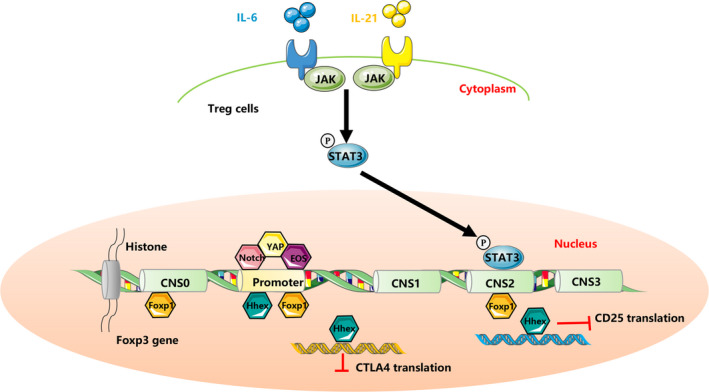
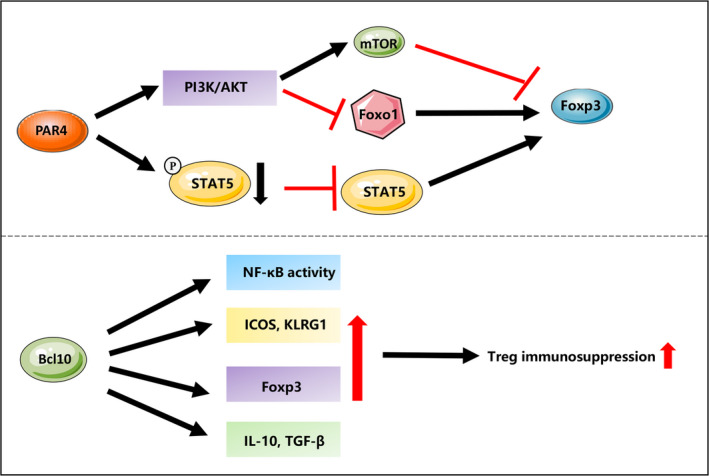
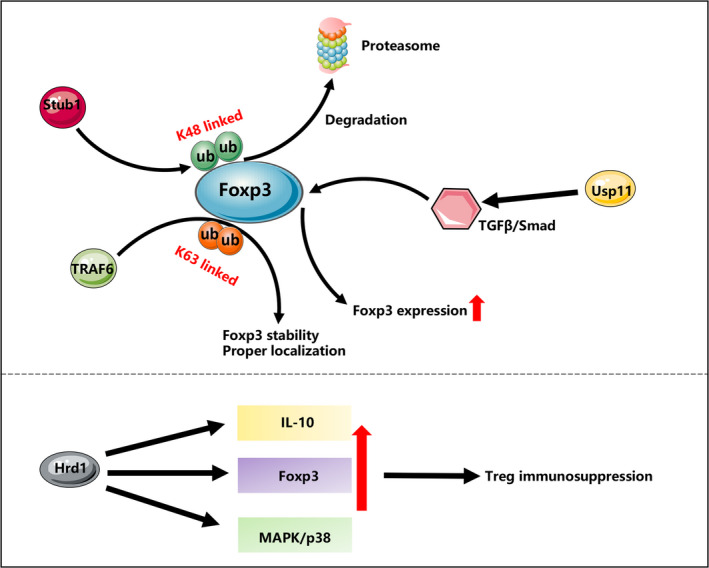
Regulatory T (Treg) cells are responsible for maintaining immune homeostasis and preventing autoimmunity. In immune homeostasis condition, Tregs exert their suppressive function through inhibiting the proliferation of effector T cells. In response to environmental signals, Tregs display phenotypic heterogeneity and altered stability, which endows their suppressive function in a context-dependent manner. Compelling evidence indicates deficiency of Treg suppressive function is related to the immunopathogenesis of various autoimmune diseases. Consequently, it is vital to further our understanding of the molecular mechanism accounting for the regulation of Treg suppressive functions. In this review, we outline the current knowledge that highlights how cell-intrinsic factors, such as inflammatory cytokines, transcription factors, signalling pathways, post-translational modification (PTM), miRNAs, protein and protein complex, and cell-extrinsic factors orchestrate the suppressive function of Tregs. Improved understanding of the molecular mechanism related to the suppressive functional property of Tregs should provide new insights into autoimmunity and disease pathogenesis, which offers opportunity for identifying new therapeutic targets for Treg-related autoimmune diseases and cancers.
调节性 T(Treg)细胞负责维持免疫稳态和防止自身免疫。在免疫稳态条件下,Tregs 通过抑制效应 T 细胞的增殖来发挥其抑制功能。响应环境信号,Tregs 表现出表型异质性和稳定性改变,这使其抑制功能具有依赖于上下文的方式。令人信服的证据表明 Treg 抑制功能的缺陷与各种自身免疫性疾病的免疫发病机制有关。因此,深入了解调节 Treg 抑制功能的分子机制至关重要。在这篇综述中,我们概述了当前的知识,强调了细胞内因素(如炎症细胞因子、转录因子、信号通路、翻译后修饰(PTM)、miRNA、蛋白质和蛋白质复合物)和细胞外因素如何协调 Treg 的抑制功能。对与 Treg 抑制功能特性相关的分子机制的深入了解,应能为自身免疫和疾病发病机制提供新的见解,为确定与 Treg 相关的自身免疫性疾病和癌症的新治疗靶点提供机会。