Department of Rehabilitation, Radboud University Medical Center, Nijmegen, The Netherlands.
Orthopaedic Research Laboratory, Radboud Institute for Health Sciences, Radboud University Medical Center, Nijmegen, The Netherlands.
PLoS One. 2020 Sep 3;15(9):e0233271. doi: 10.1371/journal.pone.0233271. eCollection 2020.
Survivors of Head and Neck Cancer experience specific problems in functional performance. The aim of this study was to obtain the test-retest reliability of measurements on Maximal Mouth Opening (MMO), shoulder and neck function, lower and upper body strength, level of mobility and walking ability.
Test-retest study design. Measurements on MMO (intra- and extra orally), Active range of motion of shoulders and neck, 30 Seconds Chair Stand Test, Grip Strength, Timed Up and Go test, and Six Minute Walk test.
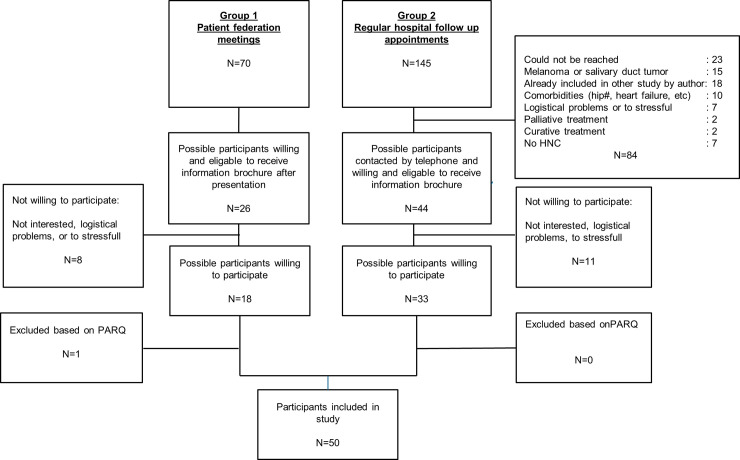
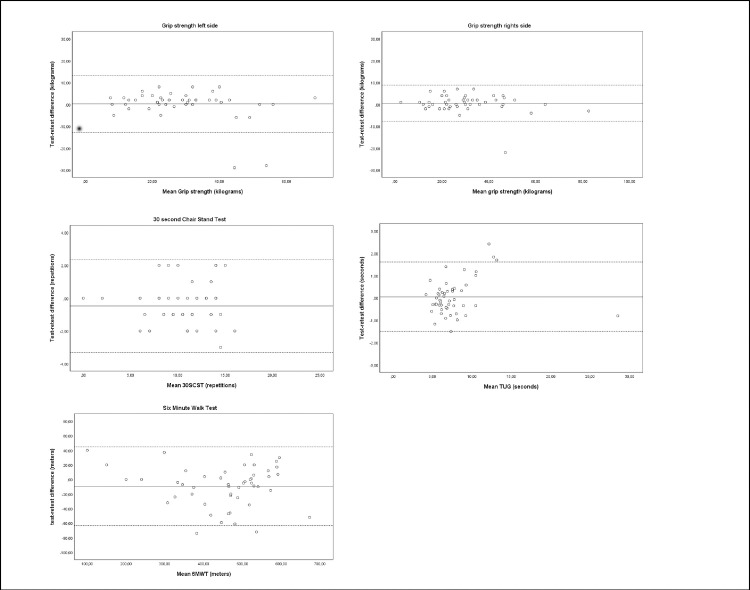
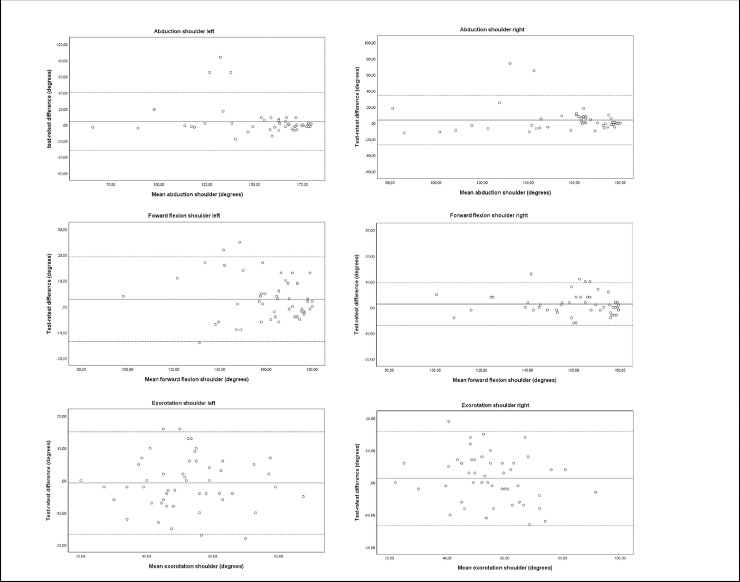
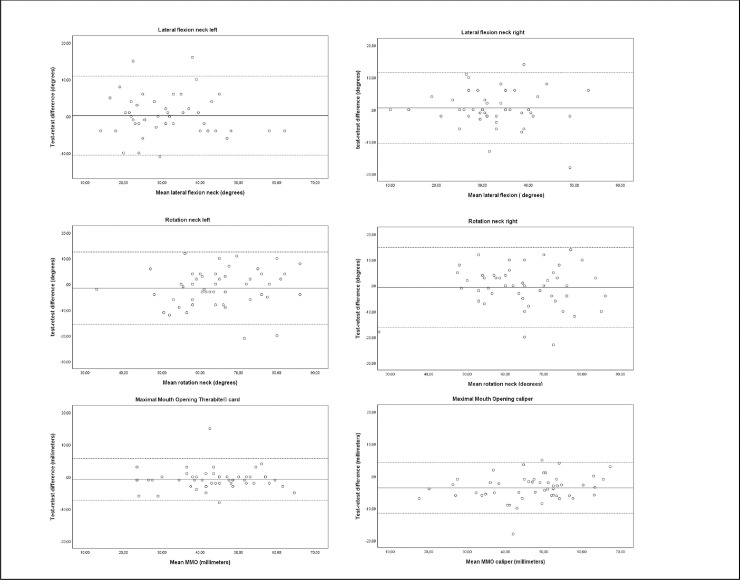
In total 50 participants were included. The mean age was 68.6. ± 9.9 years and median time since end of treatment was 3.0 years (Q1-Q3: 1.0-5.25 years). We found good to excellent test-retest reliability on the core set of measurements (Intraclass Correlation Coefficient (ICC) 0.77 to 0.98). Measurement of MMO with cardboard card, forward flexion shoulder and Six Minute Walk test had a relatively small measurement error (Smallest Detectable Change (SDC) % 5.4% - 15.1%). Measurement of MMO with a caliper, shoulder abduction, shoulder external rotation, later flexion and rotation of the neck, grip strength, 30 Seconds Chair Stand Test, and Timed up and Go test had a relatively large measurement error (SDC% 19.8% - 44.7%).
This core set of measurements on physical performance is found reliable and therefore able to differentiate in physical performance. The reported measurement errors should be taken into consideration when interpreting the results of repeated measurements.
A core set of physical measurements can be used to measure physical performance in survivors of Head and Neck Cancer.
头颈部癌症幸存者在功能表现方面会遇到特定问题。本研究旨在获得张口最大度(MMO)、肩部和颈部功能、上下肢力量、活动度和步行能力测量的重测信度。
测试-重测研究设计。MMO(口内和口外)、肩部和颈部主动活动范围、30 秒椅子站立测试、握力、计时起立行走测试和 6 分钟步行测试的测量。
共纳入 50 名参与者。平均年龄为 68.6 ± 9.9 岁,中位治疗结束后时间为 3.0 年(Q1-Q3:1.0-5.25 年)。我们发现核心测量集的重测信度良好至优秀(组内相关系数(ICC)0.77 至 0.98)。使用纸板卡测量 MMO、肩部前屈和 6 分钟步行测试的测量误差较小(最小可检测变化(SDC)%为 5.4%-15.1%)。使用卡尺测量 MMO、肩外展、肩外旋、颈后屈和旋转、握力、30 秒椅子站立测试和计时起立行走测试的测量误差较大(SDC%为 19.8%-44.7%)。
该核心身体表现测量集被发现可靠,因此能够区分身体表现。在解释重复测量的结果时,应考虑报告的测量误差。
一组核心的身体测量可以用于测量头颈部癌症幸存者的身体表现。