Stenvall Erik, Flodberg Göran, Pettersson Henrik, Hellberg Kennet, Hermansson Liselotte, Wallin Martin, Yang Li
Stora Enso AB, Sommargatan 101A, 65009 Karlstad, Sweden.
RISE-Research Institutes of Sweden, Drottning Kristinas väg 61, 11486 Stockholm, Sweden.
Bioengineering (Basel). 2020 Sep 1;7(3):103. doi: 10.3390/bioengineering7030103.
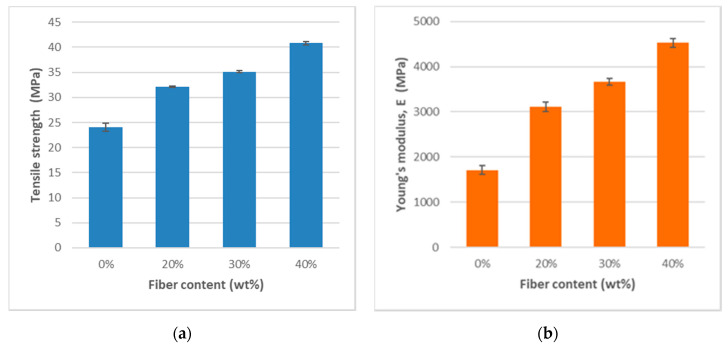
A custom-made prosthetic product is unique for each patient. Fossil-based thermoplastics are the dominant raw materials in both prosthetic and industrial applications; there is a general demand for reducing their use and replacing them with renewable, biobased materials. A transtibial prosthesis sets strict demands on mechanical strength, durability, reliability, etc., which depend on the biocomposite used and also the additive manufacturing (AM) process. The aim of this project was to develop systematic solutions for prosthetic products and services by combining biocomposites using forestry-based derivatives with AM techniques. Composite materials made of polypropylene (PP) reinforced with microfibrillated cellulose (MFC) were developed. The MFC contents (20, 30 and 40 wt%) were uniformly dispersed in the polymer PP matrix, and the MFC addition significantly enhanced the mechanical performance of the materials. With 30 wt% MFC, the tensile strength and Young´s modulus was about twice that of the PP when injection molding was performed. The composite material was successfully applied with an AM process, i.e., fused deposition modeling (FDM), and a transtibial prosthesis was created based on the end-user's data. A clinical trial of the prosthesis was conducted with successful outcomes in terms of wearing experience, appearance (color), and acceptance towards the materials and the technique. Given the layer-by-layer nature of AM processes, structural and process optimizations are needed to maximize the reinforcement effects of MFC to eliminate variations in the binding area between adjacent layers and to improve the adhesion between layers.
定制的假肢产品对每个患者来说都是独一无二的。化石基热塑性塑料是假肢和工业应用中的主要原材料;人们普遍要求减少其使用并以可再生的生物基材料取而代之。小腿假肢对机械强度、耐用性、可靠性等提出了严格要求,这些要求取决于所使用的生物复合材料以及增材制造(AM)工艺。该项目的目的是通过将基于林业衍生物的生物复合材料与增材制造技术相结合,为假肢产品和服务开发系统的解决方案。开发了由微纤化纤维素(MFC)增强的聚丙烯(PP)制成的复合材料。MFC含量(20%、30%和40%重量)均匀分散在聚合物PP基体中,添加MFC显著提高了材料的机械性能。当进行注塑成型时,含30%重量MFC的材料的拉伸强度和杨氏模量约为PP的两倍。该复合材料成功应用于增材制造工艺,即熔融沉积成型(FDM),并根据最终用户的数据制作了小腿假肢。对该假肢进行了临床试验,在佩戴体验、外观(颜色)以及对材料和技术的接受度方面都取得了成功结果。鉴于增材制造工艺的逐层性质,需要进行结构和工艺优化,以最大限度地发挥MFC的增强效果,消除相邻层之间结合区域的变化,并改善层间附着力。