J Pediatr Health Care. 2021 Jan-Feb;35(1):84-90. doi: 10.1016/j.pedhc.2020.08.002. Epub 2020 Sep 1.
Sickle cell disease (SCD) stigma is a major community health issue. The challenges of caring for someone with SCD can be overwhelming. We explored stigma and related factors for caregivers of pediatric patients with SCD in Kumasi, Ghana.
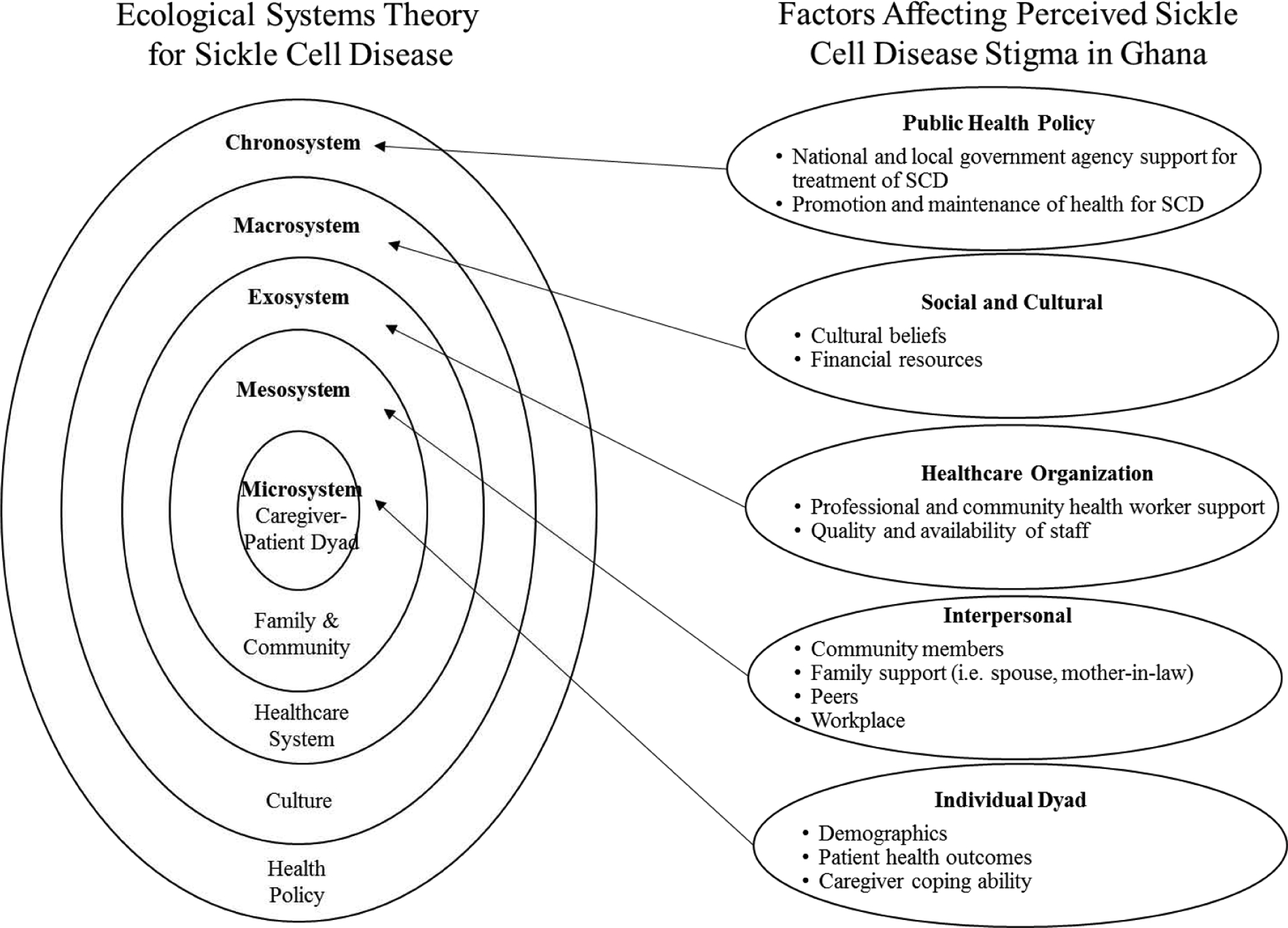
Guided by the Ecological Systems Theory, we used in-depth interviews with a semistructured guide to learn about the perception of stigmatization for Ghanaian caregivers of patients with SCD.
Overall, participants were knowledgeable about SCD. We identified three themes, including (1) blame for SCD, (2) public misconception about SCD, and (3) shame for the financial burden of SCD.
Findings demonstrate the need to design an SCD stigma reduction program for caregivers, families, and the community. Providers need to consider SCD stigma and interaction with multiple ecological levels, including the family, community, health care system, culture, and health policy in Ghana. Findings can be used as a catalyst to explore the reduction of stigmatization in other sub-Saharan countries.
镰状细胞病(SCD)污名是一个主要的社区健康问题。照顾 SCD 患者的挑战可能会让人不堪重负。我们在加纳库马西探索了 SCD 患儿照顾者的污名和相关因素。
本研究以生态系统理论为指导,采用半结构式指南进行深入访谈,了解加纳 SCD 患者照顾者对污名化的看法。
总体而言,参与者对 SCD 有一定的了解。我们确定了三个主题,包括(1)对 SCD 的指责,(2)公众对 SCD 的误解,以及(3)对 SCD 经济负担的羞耻感。
研究结果表明,有必要为照顾者、家庭和社区设计一个 SCD 污名减少计划。提供者需要考虑 SCD 污名以及与多个生态层次的相互作用,包括家庭、社区、医疗保健系统、文化和加纳的卫生政策。这些发现可以作为一个催化剂,探索在其他撒哈拉以南非洲国家减少污名化。