Bashar Abul Hasan Muhammad, Hakim Md Enamul, Rahman Md Mokhlesur, Dey Nirmal Kanti, Chowdhury S M Minhajul Hasan, Islam Md Moynul, Jamil Md Saffait, Rahman Md Mushfiqur, Islam Md Faridul, Mandal Naresh Chandra
Department of Vascular Surgery, National Institute of Cardiovascular Diseases and Hospital, Dhaka, Bangladesh.
Department of Vascular Surgery, National Institute of Traumatology and Orthopedic Rehabilitation, Dhaka, Bangladesh.
Ann Vasc Surg. 2021 Jan;70:306-313. doi: 10.1016/j.avsg.2020.08.114. Epub 2020 Sep 2.
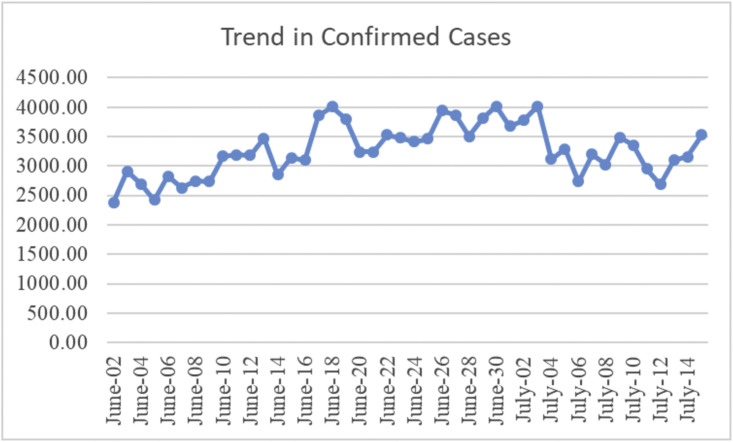
The situation of coronavirus disease 2019 (COVID-19) pandemic in the Indian subcontinent is worsening. In Bangladesh, rate of new infection has been on the rise despite limited testing facility. Constraint of resources in the health care sector makes the fight against COVID-19 more challenging for a developing country like Bangladesh. Vascular surgeons find themselves in a precarious situation while delivering professional services during this crisis. With the limited number of dedicated vascular surgeons in Bangladesh, it is important to safeguard these professionals without compromising emergency vascular care services in the long term. To this end, we at the National Institute of Cardiovascular Diseases and Hospital, Dhaka, have developed a working guideline for our vascular surgeons to follow during the COVID-19 pandemic. The guideline takes into account high vascular work volume against limited resources in the country.
A total of 307 emergency vascular patients were dealt with in the first 4 COVID-19 months (March through June 2020) according to the working guideline, and the results were compared with the 4 pre-COVID-19 months. Vascular trauma, dialysis access complications, and chronic limb-threatening ischemia formed the main bulk of the patient population. Vascular health care workers were regularly screened for COVID-19 infection.
There was a 38% decrease in the number of patients in the COVID-19 period. Treatment outcome in COVID-19 months were comparable with that in the pre-COVID-19 months except that limb loss in the chronic limb-threatening ischemia patients was higher. COVID-19 infection among the vascular health care professionals was low.
Vascular surgery practice guidelines customized for the high work volume and limited resources of the National Institute of Cardiovascular Diseases and Hospital, Dhaka were effective in delivering emergency care during COVID-19 pandemic, ensuring safety of the caregivers. Despite the fact that similar guidelines exist in different parts of the world, we believe that the present one is still relevant on the premises of a deepening COVID-19 crisis in a developing country like Bangladesh.
2019年冠状病毒病(COVID-19)在印度次大陆的疫情形势正在恶化。在孟加拉国,尽管检测设施有限,但新感染率仍在上升。对于像孟加拉国这样的发展中国家来说,医疗保健部门资源的限制使得抗击COVID-19的斗争更具挑战性。血管外科医生在这场危机中提供专业服务时面临着不稳定的局面。由于孟加拉国专门从事血管外科的医生数量有限,在不长期影响紧急血管护理服务的情况下保护这些专业人员非常重要。为此,达卡国家心血管疾病研究所和医院制定了一份工作指南,供我们的血管外科医生在COVID-19大流行期间遵循。该指南考虑到了该国血管工作量大但资源有限的情况。
根据工作指南,在COVID-19的前4个月(2020年3月至6月)共处理了307例急诊血管患者,并将结果与COVID-19前的4个月进行了比较。血管创伤、透析通路并发症和慢性肢体威胁性缺血构成了主要患者群体。对血管医护人员定期进行COVID-19感染筛查。
COVID-19期间患者数量减少了38%。COVID-19期间的治疗结果与COVID-19前的几个月相当,只是慢性肢体威胁性缺血患者的肢体丧失率更高。血管医护人员中的COVID-19感染率较低。
针对达卡国家心血管疾病研究所和医院工作量大、资源有限的情况制定的血管外科实践指南,在COVID-19大流行期间有效地提供了紧急护理,确保了护理人员的安全。尽管世界不同地区存在类似的指南,但我们认为,在像孟加拉国这样的发展中国家COVID-19危机不断加深情况下,本指南仍然适用。