Largo Eneko, Queralt-Martín María, Carravilla Pablo, Nieva José L, Alcaraz Antonio
Department of Biochemistry and Molecular Biology, University of the Basque Country (UPV/EHU), P.O. Box 644, 48080 Bilbao, Spain; Instituto Biofisika (UPV/EHU, CSIC), University of the Basque Country, Leioa E-48940, Spain; Department of Immunology, Microbiology and Parasitology, Faculty of Medicine, University of the Basque Country (UPV/EHU), Leioa, Bizkaia, Spain.
Laboratory of Molecular Biophysics, Department of Physics, University Jaume I, 12071 Castellón, Spain.
Bioelectrochemistry. 2021 Feb;137:107641. doi: 10.1016/j.bioelechem.2020.107641. Epub 2020 Aug 24.
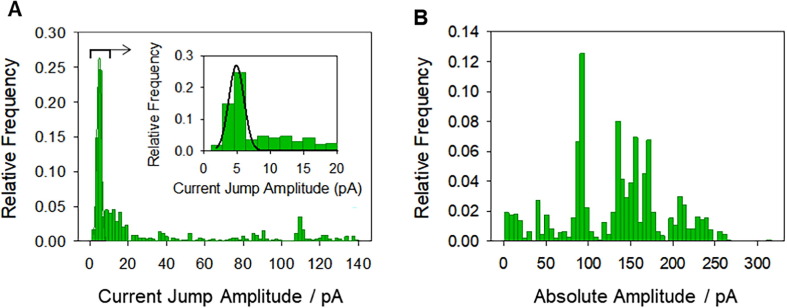
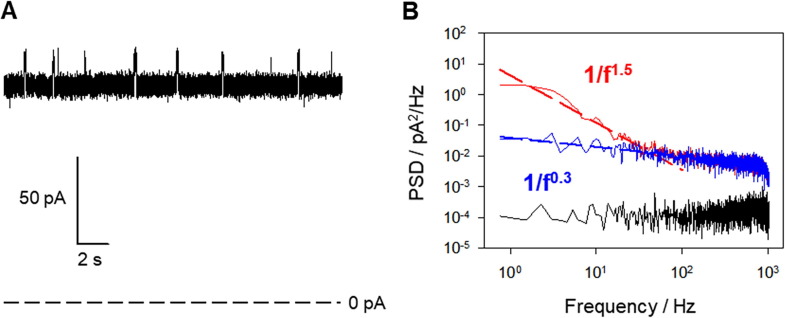
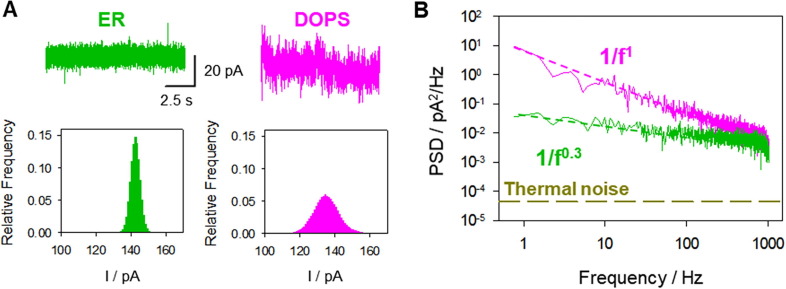
Classic swine fever is a highly contagious and often fatal viral disease that is caused by the classical swine fever virus (CSFV). Protein p7 of CFSV is a prototype of viroporin, a family of small, highly hydrophobic proteins postulated to modulate virus-host interactions during the processes of virus entry, replication and assembly. It has been shown that CSFV p7 displays substantial ion channel activity when incorporated into membrane systems, but a deep rationalization of the size and dynamics of the induced pores is yet to emerge. Here, we use high-resolution conductance measurements and current fluctuation analysis to demonstrate that CSFV p7 channels are ruled by equilibrium conformational dynamics involving protein-lipid interactions. Atomic force microscopy (AFM) confirms the existence of a variety of pore sizes and their tight regulation by solution pH. We conclude that p7 viroporin forms subnanometric channels involved in virus propagation, but also much larger pores (1-10 nm in diameter) with potentially significant roles in virus pathogenicity. Our findings provide new insights into the sources of noise in protein electrochemistry and demonstrate the existence of slow complex dynamics characteristic of crowded systems like biomembrane surfaces.
经典猪瘟是一种由经典猪瘟病毒(CSFV)引起的高度传染性且往往致命的病毒性疾病。CSFV的p7蛋白是病毒孔蛋白的一个原型,病毒孔蛋白是一类小的、高度疏水的蛋白质家族,推测其在病毒进入、复制和组装过程中调节病毒与宿主的相互作用。研究表明,CSFV p7蛋白整合到膜系统中时会表现出显著的离子通道活性,但对于所诱导形成的孔的大小和动力学的深入合理解释尚未出现。在此,我们使用高分辨率电导测量和电流波动分析来证明,CSFV p7通道受涉及蛋白质-脂质相互作用的平衡构象动力学支配。原子力显微镜(AFM)证实了存在多种孔径大小,并且它们受溶液pH值的严格调控。我们得出结论,p7病毒孔蛋白形成了参与病毒传播的亚纳米级通道,同时也形成了直径为1-10纳米的大得多的孔,这些孔在病毒致病性方面可能具有重要作用。我们的研究结果为蛋白质电化学中噪声的来源提供了新的见解,并证明了生物膜表面等拥挤系统所特有的缓慢复杂动力学的存在。