Department of Orthopaedics and Rehabilitation, Penn State College of Medicine.
Department of Student Affairs, Western Michigan University Homer Stryker M.D. School of Medicine, Kalamazoo, MI.
Clin J Pain. 2020 Nov;36(11):845-851. doi: 10.1097/AJP.0000000000000876.
An interdisciplinary pain team was established at our institution to explore options for improving pain control in patients undergoing orthopedic surgery by identifying traits that put a patient at increased risk for inadequate pain control postoperatively.
The interdisciplinary pain team identified 7 potential risk factors that may lead to inadequate pain control postoperatively including (1) history of physical, emotional, or sexual abuse; (2) history of anxiety; (3) history of drug or alcohol abuse; (4) preoperative nonsteroidal anti-inflammatory drug, or disease-modifying antirheumatic drug use; (5) current opioid use; (6) psychological conditions other than anxiety; and (7) current smoker. Statistical analysis determined which risk factors were associated with increased preoperative and postoperative pain scores.
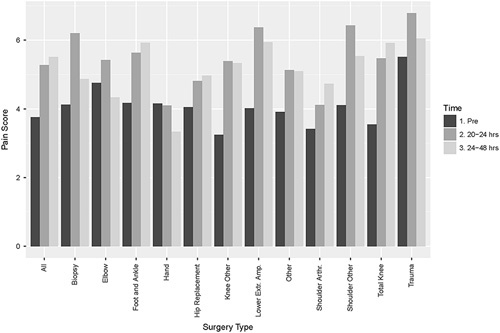
A total of 1923 patients undergoing elective orthopedic surgery were retrospectively identified. Hip, knee, and shoulder replacements accounted for 76.0% of the procedures. 78.5% of patients had 3 or fewer risk factors and 17.1% had no risk factors. Anxiety, other psychological conditions, current opioid use, and current smoking were significantly associated with higher preoperative and postoperative pain scores.
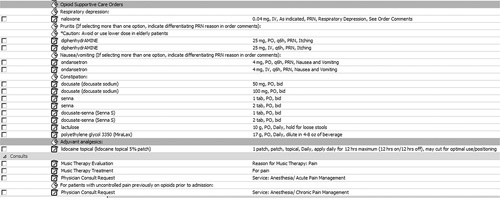
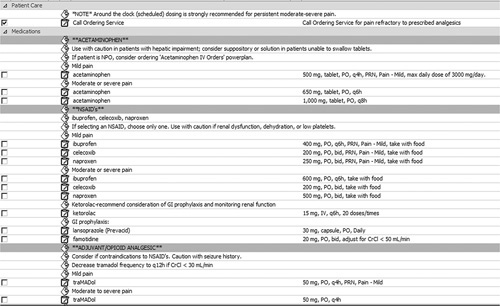
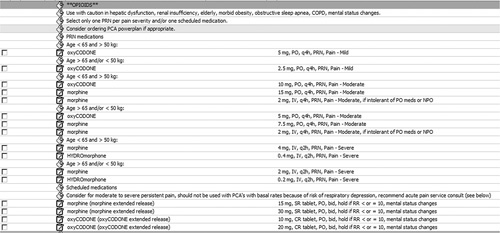
We found a significant association between anxiety, current smoking, psychological conditions, and current opioid use with increased preoperative and postoperative reported pain score. We propose that identification of these risk factors should prompt more attention to postoperative pain control plans and will improve communication with patients and providers. We recommend a multimodal approach to postoperative pain control, and developed a pain orderset to help guide providers.
我们机构成立了一个跨学科疼痛团队,以探索通过识别可能导致术后疼痛控制不佳的患者特征,来改善接受骨科手术患者的疼痛控制的选择。
跨学科疼痛团队确定了 7 个可能导致术后疼痛控制不佳的潜在风险因素,包括:(1)身体、情感或性虐待史;(2)焦虑史;(3)药物或酒精滥用史;(4)术前非甾体抗炎药或疾病修饰抗风湿药的使用;(5)当前阿片类药物的使用;(6)除焦虑以外的心理状况;(7)当前吸烟者。统计分析确定了哪些风险因素与术前和术后疼痛评分增加相关。
共回顾性确定了 1923 例接受择期骨科手术的患者。髋关节、膝关节和肩关节置换术占手术的 76.0%。78.5%的患者有 3 个或更少的风险因素,17.1%的患者没有风险因素。焦虑、其他心理状况、当前阿片类药物的使用和当前吸烟与术前和术后更高的疼痛评分显著相关。
我们发现焦虑、当前吸烟、心理状况和当前阿片类药物的使用与术前和术后报告的疼痛评分增加之间存在显著关联。我们提出,识别这些风险因素应促使更多地关注术后疼痛控制计划,并改善与患者和提供者的沟通。我们建议采用多模式方法来控制术后疼痛,并制定了疼痛医嘱集以帮助指导提供者。