Neuroscience Postgraduate Program, Center of Biological Sciences, Universidade Federal de Santa Catarina, Florianópolis 88040-900, SC, Brazil.
Pharmaceutical Sciences Postgraduate Program, Center of Health Sciences, Universidade do Vale do Itajaí, CEP 88302-202 Itajaí, Santa Catarina, Brazil.
Exp Neurol. 2020 Dec;334:113459. doi: 10.1016/j.expneurol.2020.113459. Epub 2020 Sep 3.
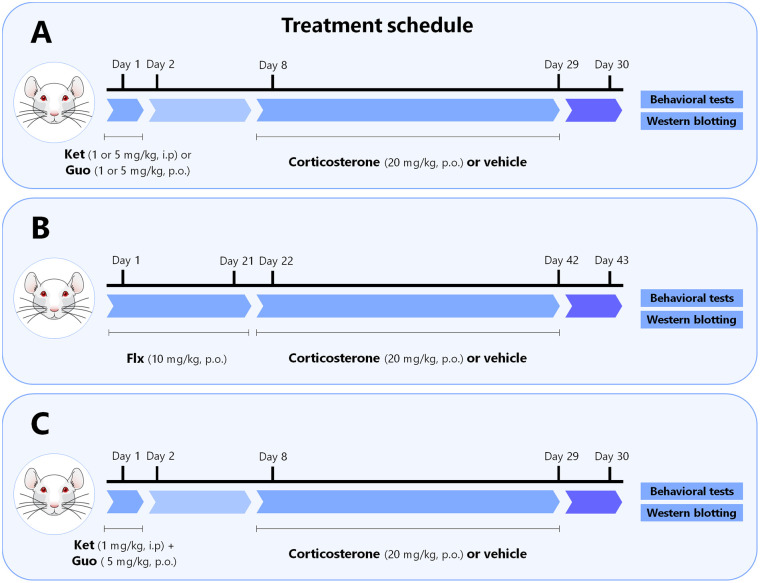
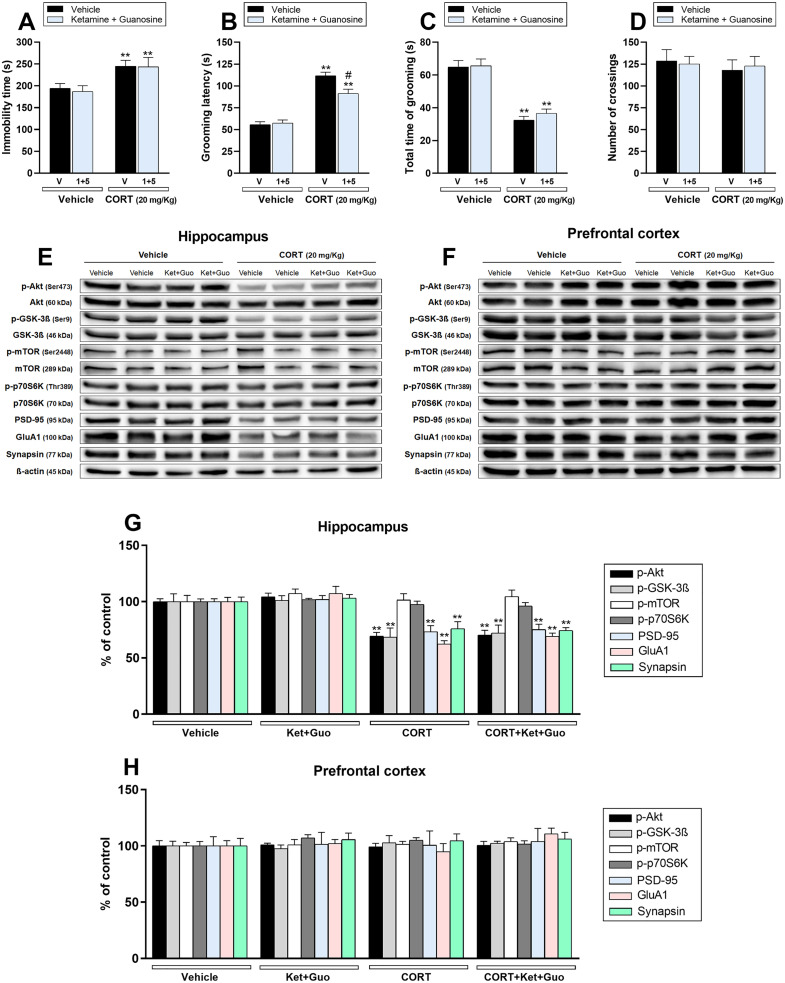
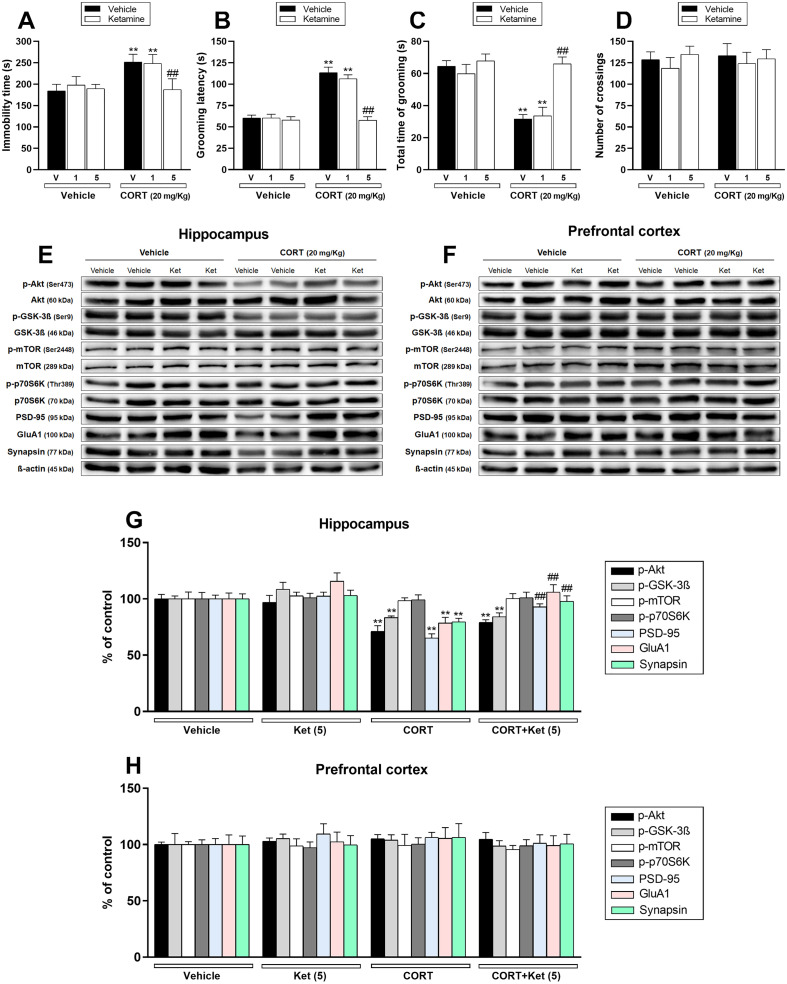
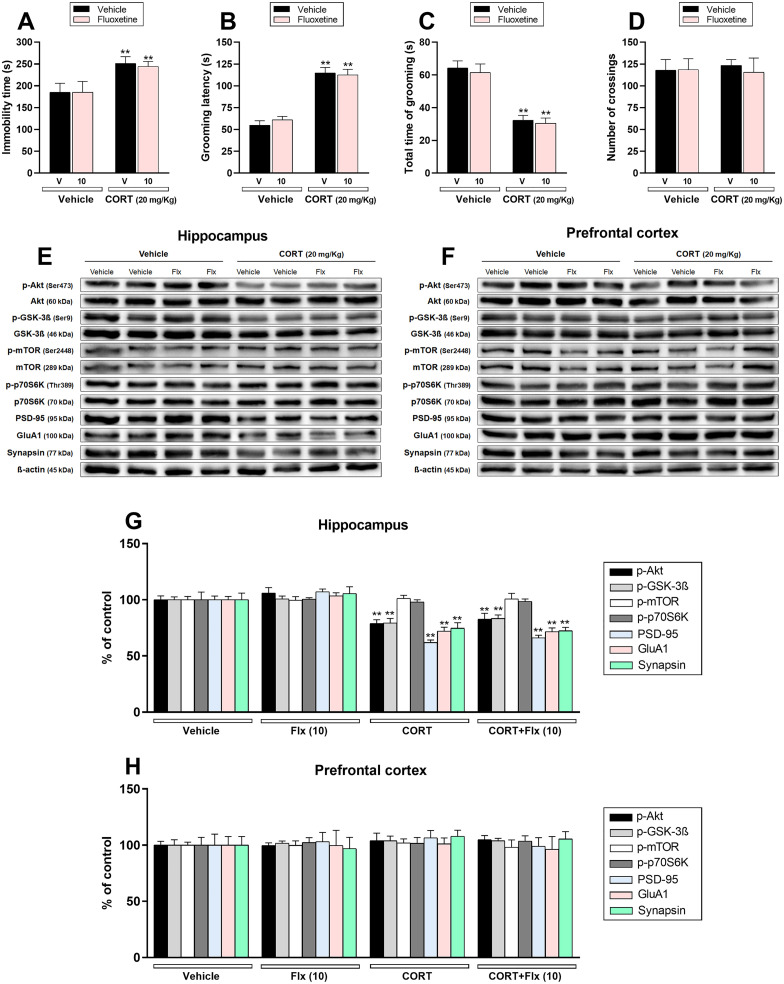
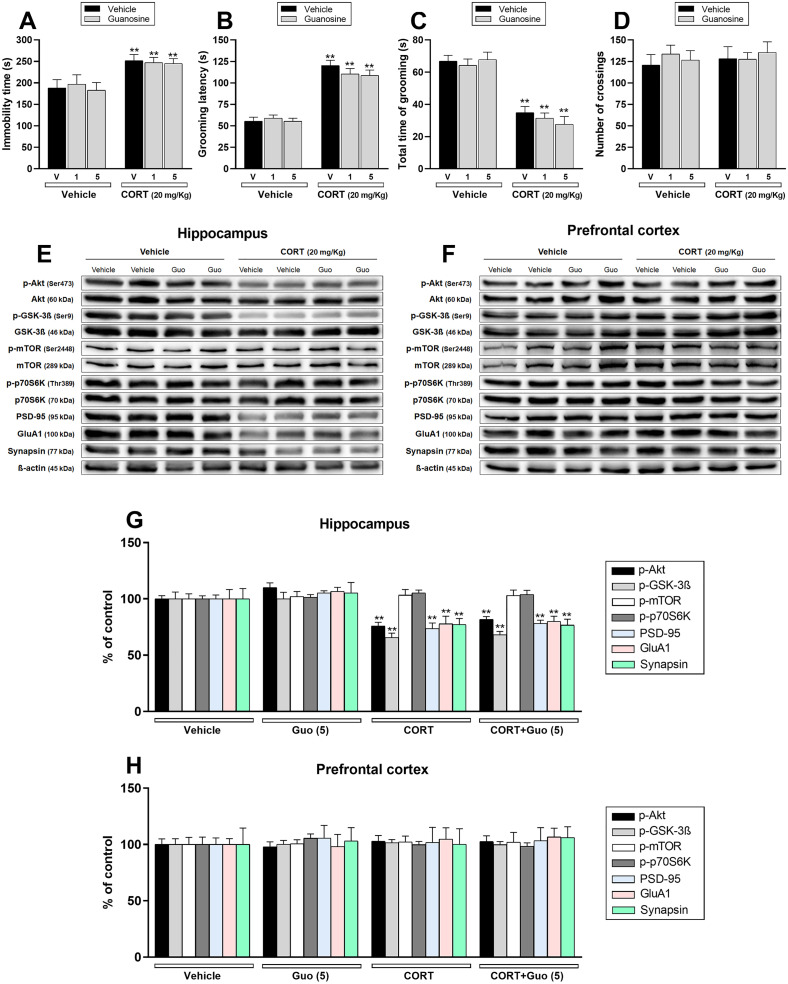
Ketamine has been reported to exert a prophylactic effect against stress-induced depressive-like behavior by modulating the guanosine-based purinergic system. However, the molecular pathways underlying its prophylactic effect and whether guanosine also elicits a similar effect remain to be determined. Here, we investigated the prophylactic effect of ketamine and guanosine against corticosterone (CORT - 20 mg/kg, p.o.)-induced depressive-like behavior in mice. Furthermore, we characterized if the prophylactic response may be associated with mTORC1-driven signaling in the hippocampus and prefrontal cortex. A single administration of ketamine (5 mg/kg, i.p.), but not guanosine (1 or 5 mg/kg, p.o.), given 1 week before the pharmacological stress prevented CORT-induced depressive-like behavior in the tail suspension test (TST) and splash test (SPT). Fluoxetine treatment for 3 weeks did not prevent CORT-induced behavioral effects. A single administration of subthreshold doses of ketamine (1 mg/kg, i.p.) plus guanosine (5 mg/kg, p.o.) partially prevented the CORT-induced depressive-like behavior in the SPT. Additionally, CORT reduced Akt (Ser) and GSK-3β (Ser) phosphorylation and PSD-95, GluA1, and synapsin immunocontent in the hippocampus, but not in the prefrontal cortex. No alterations on mTORC1/p70S6K immunocontent were found in both regions in any experimental group. CORT-induced reductions on PSD-95, GluA1, and synapsin immunocontent were prevented only by ketamine treatment. Collectively, these findings suggest that ketamine, but not guanosine, exerts a prophylactic effect against depressive-like behavior, an effect associated with the stimulation of long-lasting pro-synaptogenic signaling in the hippocampus.
氯胺酮已被报道通过调节基于鸟苷的嘌呤能系统发挥预防应激诱导的抑郁样行为的作用。然而,其预防作用的分子途径以及鸟苷是否也产生类似的作用仍有待确定。在这里,我们研究了氯胺酮和鸟苷对小鼠皮质酮(CORT-20mg/kg,po)诱导的抑郁样行为的预防作用。此外,我们还研究了这种预防反应是否与海马和前额叶皮层中的 mTORC1 驱动的信号有关。在药理学应激前 1 周单次给予氯胺酮(5mg/kg,ip),而不是鸟苷(1 或 5mg/kg,po),可预防皮质酮诱导的悬尾试验(TST)和飞溅试验(SPT)中的抑郁样行为。氟西汀治疗 3 周不能预防皮质酮诱导的行为效应。单次给予亚阈值剂量的氯胺酮(1mg/kg,ip)加鸟苷(5mg/kg,po)可部分预防 SPT 中皮质酮诱导的抑郁样行为。此外,CORT 降低了海马体中的 Akt(Ser)和 GSK-3β(Ser)磷酸化以及 PSD-95、GluA1 和突触素免疫含量,但在前额叶皮层中没有变化。在任何实验组中,mTORC1/p70S6K 免疫含量在两个区域都没有变化。只有氯胺酮治疗可预防 CORT 诱导的 PSD-95、GluA1 和突触素免疫含量降低。总之,这些发现表明,氯胺酮而非鸟苷对抑郁样行为具有预防作用,这种作用与海马体中持久的促突触形成信号的刺激有关。