Zhou Zhihao, Li Yangshuo, Ding Jie, Sun Shuai, Cheng Wen, Yu Jin, Cai Zailong, Ni Zhexin, Yu Chaoqin
Department of Traditional Chinese Gynecology, The First Affiliated Hospital of Naval Military Medical University (Changhai Hospital), 168 Changhai Road, Yangpu District, Shanghai, China.
Traditional Chinese Medicine Department, No. 929 Hospital, Naval Medical University, Shanghai, 200433, China.
Sci Rep. 2024 Dec 28;14(1):30681. doi: 10.1038/s41598-024-76717-y.
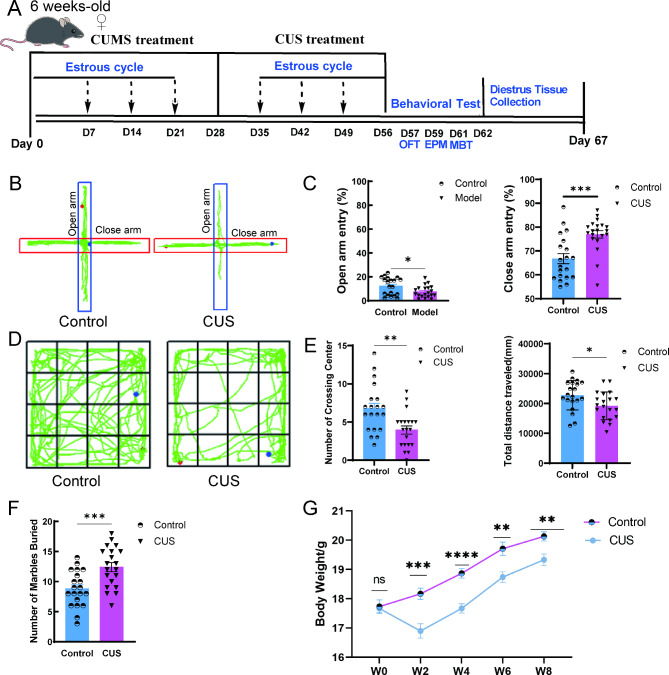
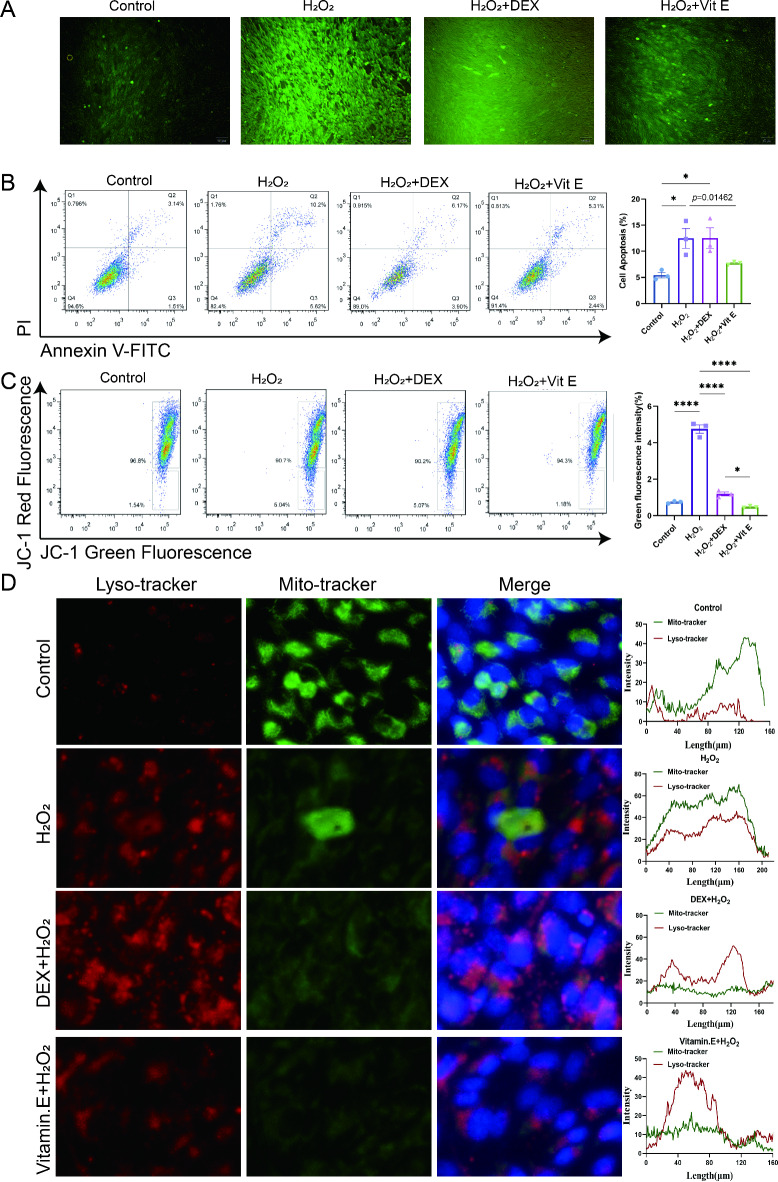
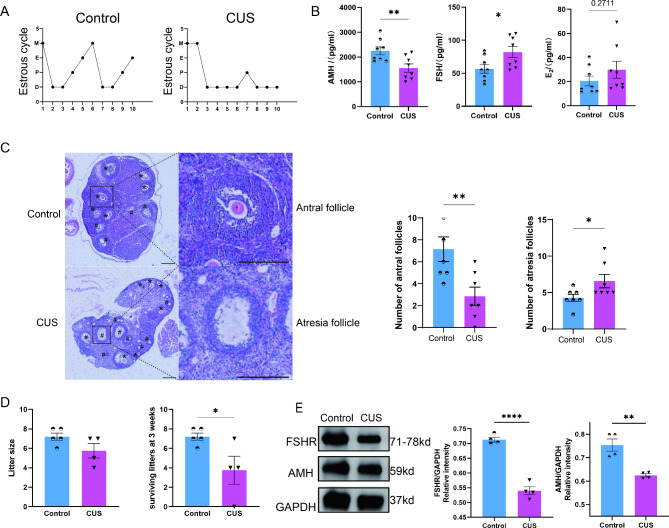
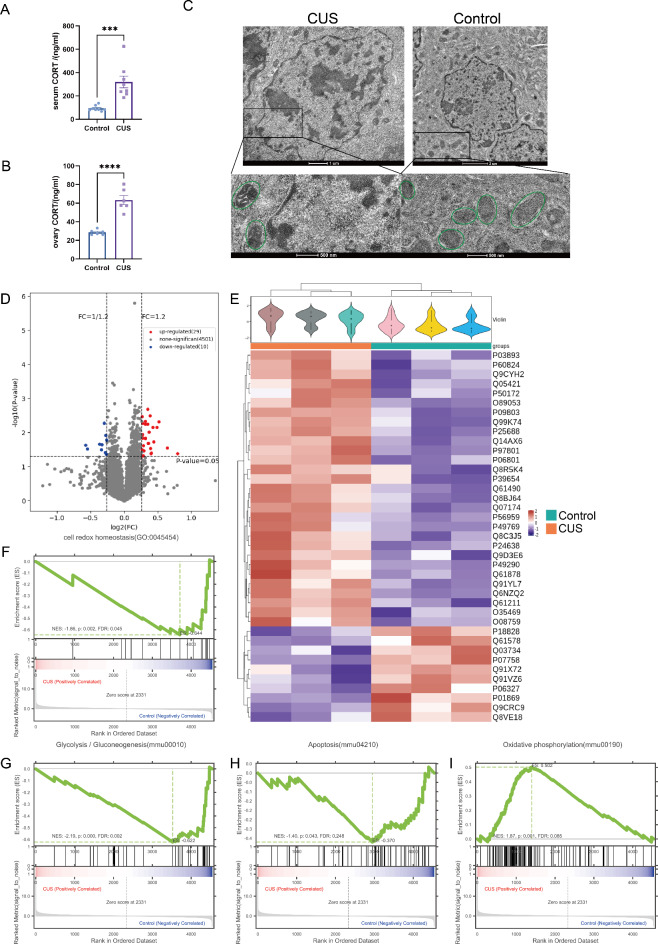
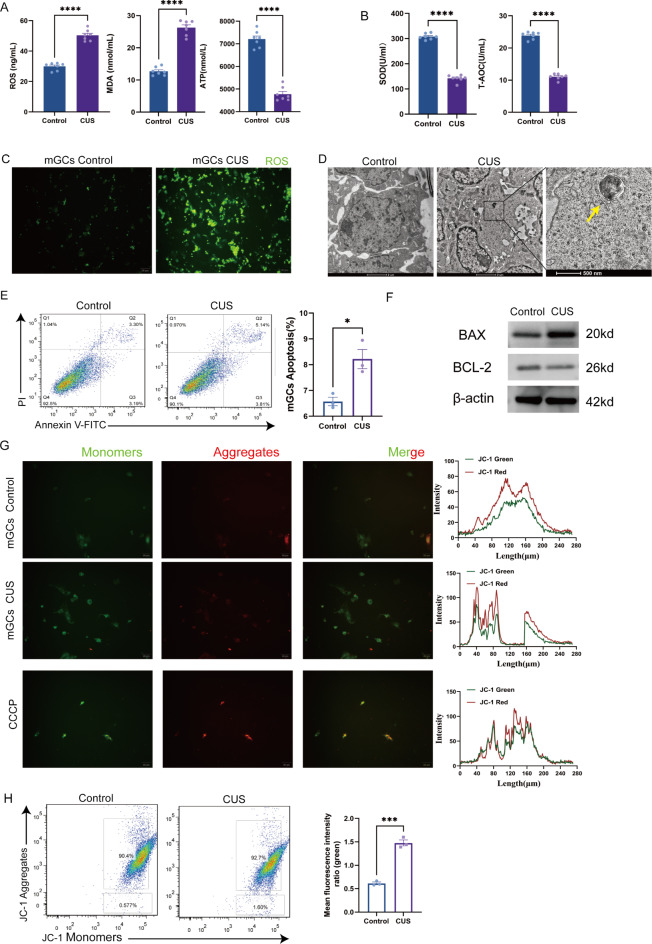
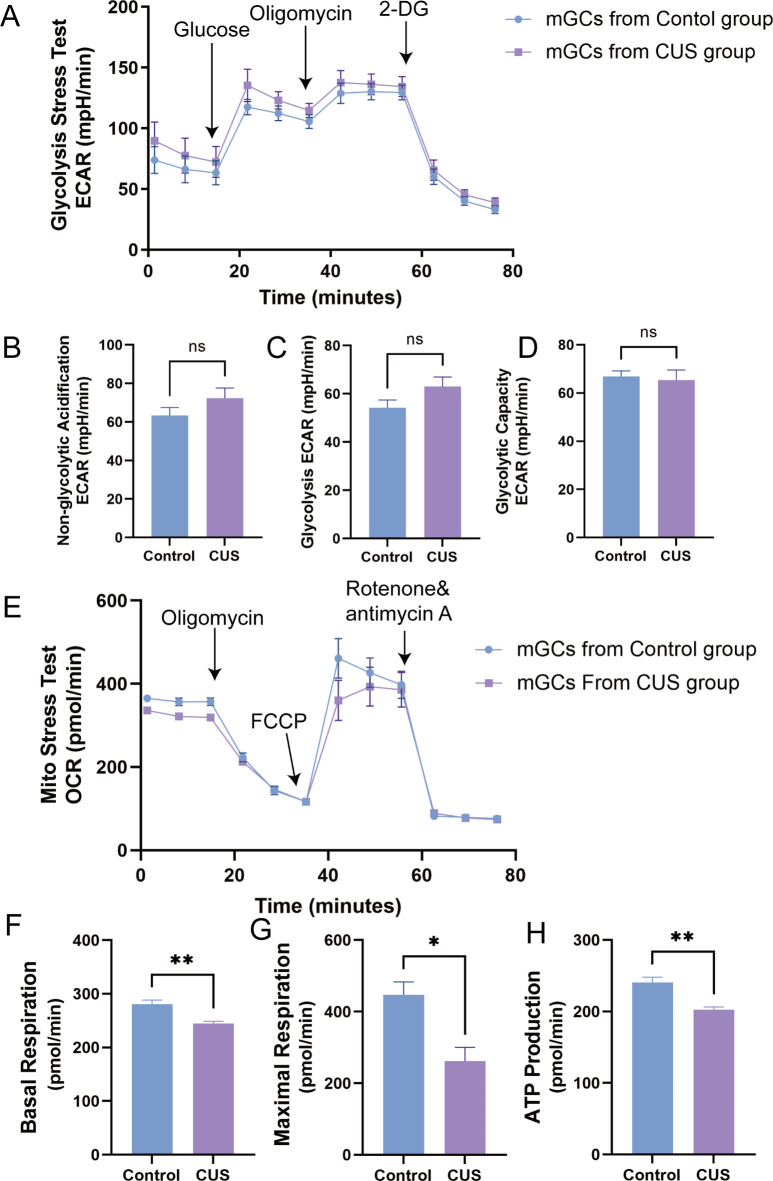
Chronic stress can adversely affect the female reproductive endocrine system, potentially leading to disorders and impairments in ovarian function. However, current research lacks comprehensive understanding regarding the biochemical characteristics and underlying mechanisms of ovarian damage induced by chronic stress. We established a stable chronic unpredictable stress (CUS)-induced diminished ovarian reserve (DOR) animal model. Our findings demonstrated that prolonged CUS treatment over eight weeks resulted in increased atresia follicles in female mice. This atresia was accompanied by decreased AMH and increased FSH levels. Furthermore, we observed elevated levels of corticosterone both in the peripheral blood and within the ovary. Additionally, we detected abnormalities in ATP metabolism within the ovarian tissue. CUS exposure led to oxidative stress in the ovaries, fostering a microenvironment characterized by oxidative damage to mouse ovarian granulosa cells (mGCs) and heightened levels of reactive oxygen species. Furthermore, CUS prompted mGCs to undergo apoptosis via the mitochondrial pathway. These findings indicate a direct association between the fundamental physiological alterations leading to DOR and the oxidative phosphorylation processes within mGCs. The diminished ATP production by mGCs, triggered by CUS, emerges as a pivotal indicator of CUS-induced DOR. Our study establishes an animal model to investigate the impact of chronic stress on ovarian reserve function and sheds light on potential mechanisms underlying this phenomenon.
慢性应激会对女性生殖内分泌系统产生不利影响,可能导致卵巢功能紊乱和损害。然而,目前的研究对慢性应激诱导的卵巢损伤的生化特征和潜在机制缺乏全面的了解。我们建立了一种稳定的慢性不可预测应激(CUS)诱导的卵巢储备功能减退(DOR)动物模型。我们的研究结果表明,持续八周以上的CUS处理导致雌性小鼠闭锁卵泡增加。这种闭锁伴随着抗穆勒氏管激素(AMH)水平降低和卵泡刺激素(FSH)水平升高。此外,我们观察到外周血和卵巢内皮质酮水平升高。此外,我们检测到卵巢组织内ATP代谢异常。CUS暴露导致卵巢氧化应激,形成以小鼠卵巢颗粒细胞(mGCs)氧化损伤和活性氧水平升高为特征的微环境。此外,CUS促使mGCs通过线粒体途径发生凋亡。这些发现表明,导致DOR的基本生理改变与mGCs内的氧化磷酸化过程之间存在直接关联。CUS引发的mGCs产生ATP减少,成为CUS诱导DOR的关键指标。我们的研究建立了一个动物模型,以研究慢性应激对卵巢储备功能的影响,并揭示这一现象的潜在机制。