Department of Orthopaedic Surgery, Qilu Hospital (Qingdao), Cheeloo College of Medicine, Shandong University, Qingdao, China.
Department of Orthopaedic Surgery, Cheeloo College of Medicine, Shandong University, Jinan, China.
Orthop Surg. 2020 Oct;12(5):1362-1371. doi: 10.1111/os.12771. Epub 2020 Sep 6.
To evaluate the clinical and radiographic outcomes of patients undergoing coracoclavicular (CC) ligament repair by two suture anchors and acromioclavicular (AC) joint (ACJ) fixation using heavy nonabsorbable sutures for the treatment of types III-V ACJ injuries with a minimum of 1-year follow-up.
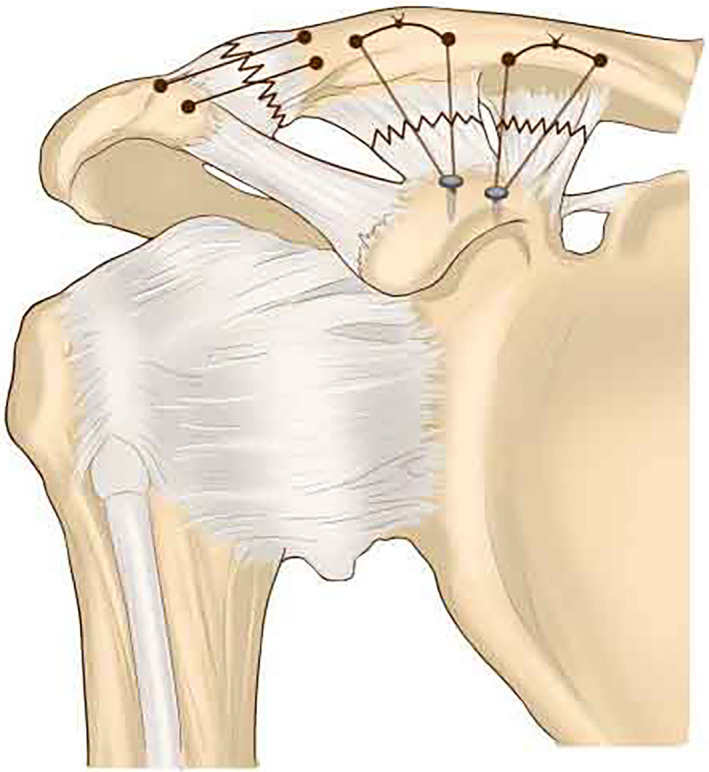
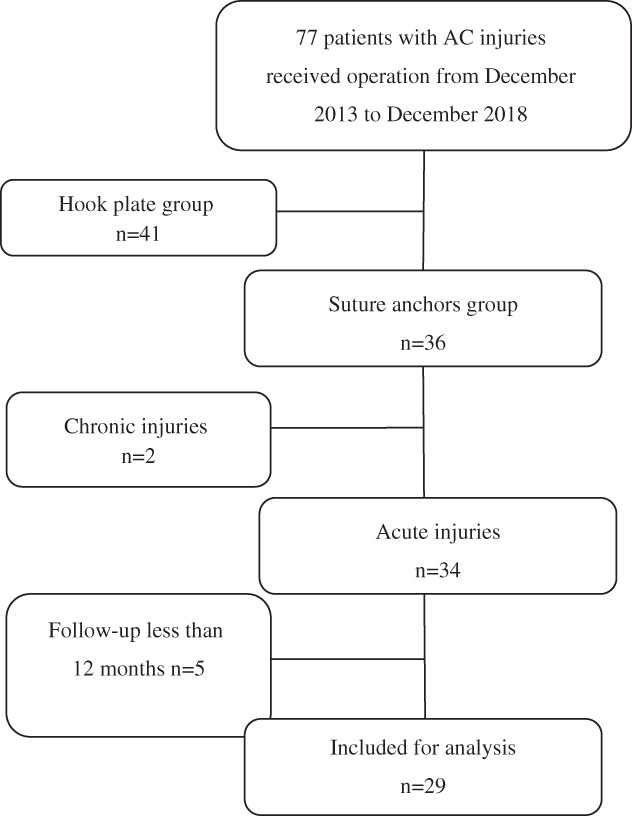
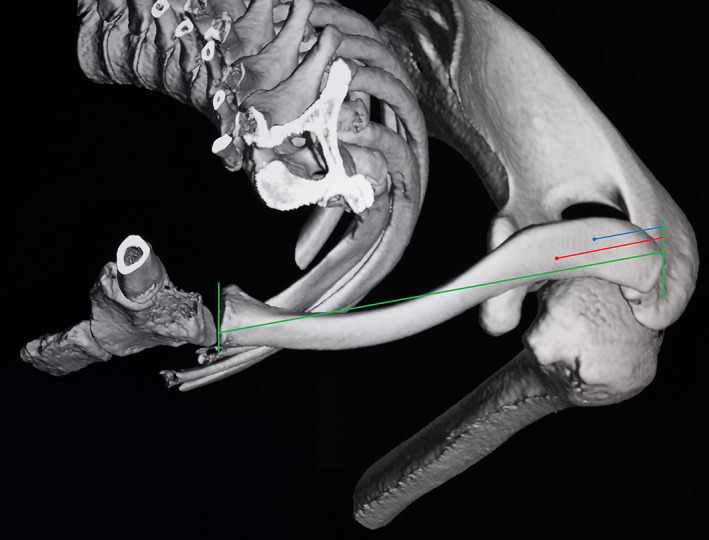
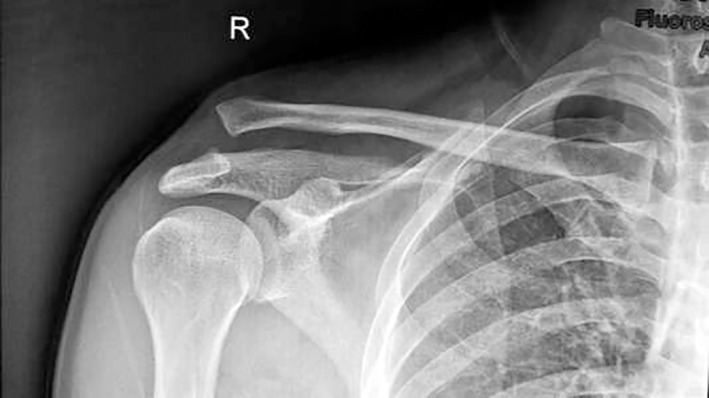
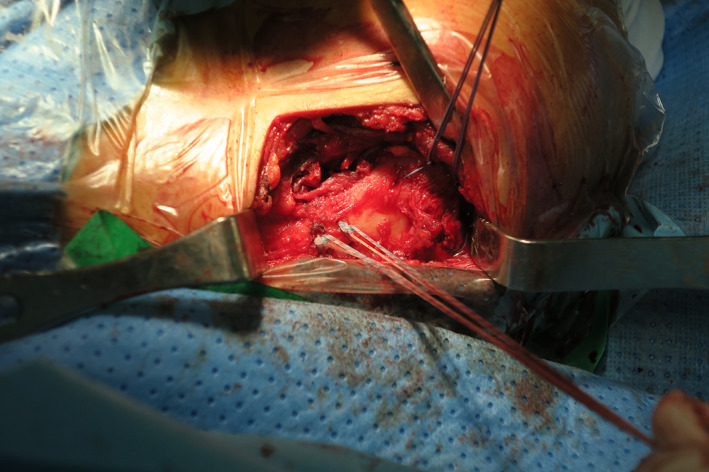
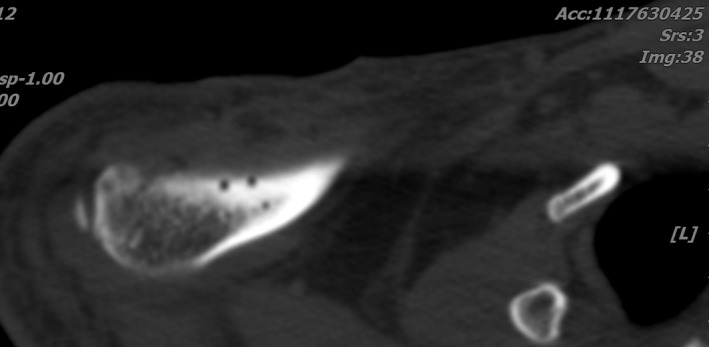
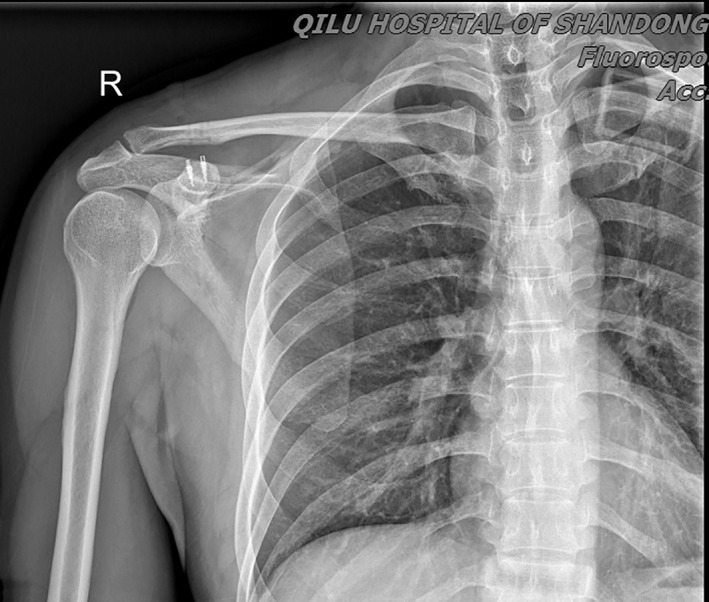
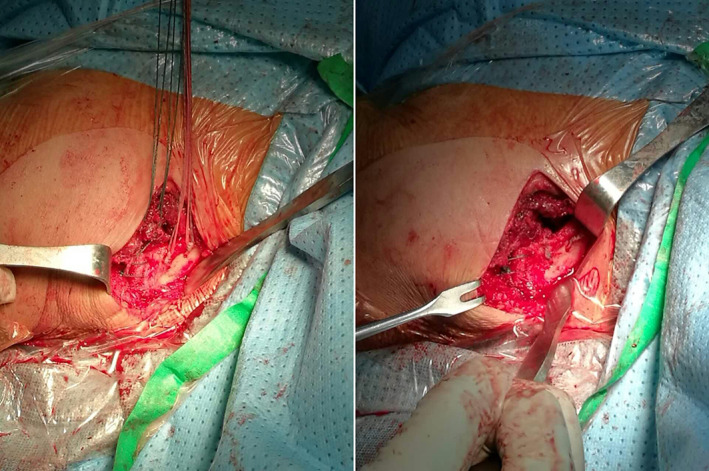
The clinical and radiographic outcomes of 36 consecutive patients (26 men and 10 women) who underwent anatomic reduction for acute ACJ dislocation using two suture anchors for CC ligament reconstruction and two strands of non-absorbable stitches for ACJ fixation between December 2013 and December 2018 were reviewed. Two 3.5 mm suture anchors with double-loaded sutures were separately inserted into the anterolateral and posteromedial portions of the coracoid process. The suture strands were passed through the hole created in the clavicle using 2.0 mm drill and tied over the clavicle. Additional ACJ augmentation using two strands of non-absorbable heavy sutures was performed in all patients. At 3, 6, and 12 months and last follow-up visit, the scores on the visual analog scale (VAS), the American Shoulder and Elbow Surgeons (ASES) score, Constant-Murley score, and simple shoulder test (SST) questionnaires were used to provide a final evaluation of shoulder function. Comparison between baseline and treatment results was performed. Radiographic analysis included vertical displacement and horizontal shift.
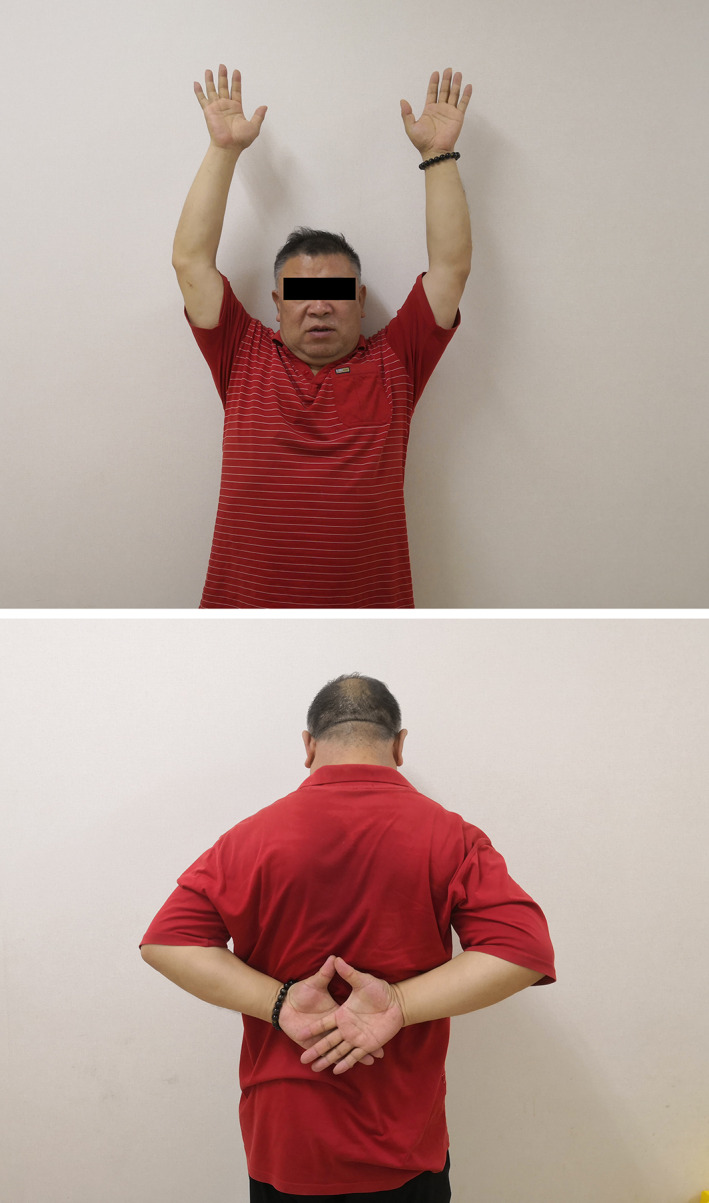
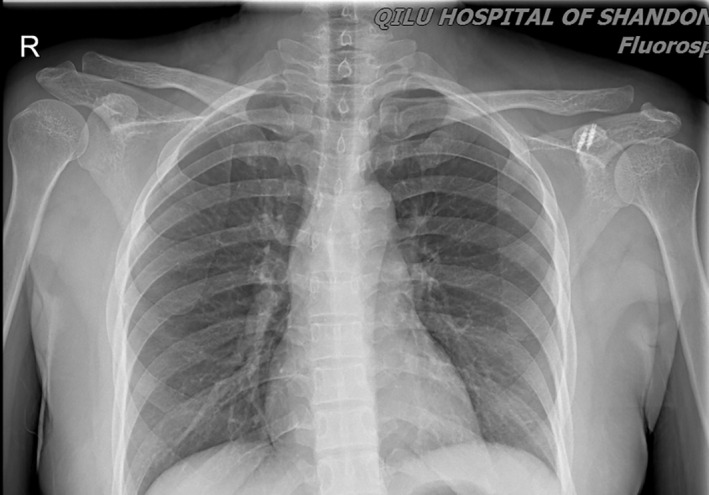
A total of 29 patients (20 men and nine women) were included in the study. A total of seven, six, and 16 patients had Rockwood type III, type IV, and type V ACJ dislocations, respectively. The mean patient age was 42.8 ± 13.5 years, with a mean follow-up of 28 months (range, 12-56 months). At the 12-month follow-up, the mean ASES score was 92.1 ± 3.5, with a mean pain score of 0.5 ± 0.7 on the VAS and mean Constant-Murley score of 93.0 ± 2.4. The new number of positive answers on the SST was 11.5 ± 0.6. Compared with the baseline, the clinical results improved significantly (P < 0.05). No significant difference could be found between the 6- and 12-month follow-up evaluations (P > 0.05). Radiographs showed two partial loss of reduction, whereas no horizontal displacement was found in all patients. One patient developed a superficial wound infection 3 weeks postoperation. The wound healed after routine wound care. No neurovascular complications were recorded.
CC ligament reconstruction using two suture anchors and ACJ augmentation using two strands of non-absorbable heavy sutures on high-grade AC dislocation is a reliable technique for restoring stability to the ACJ and can obtain good to excellent clinical results.
评估使用 2 个缝线锚钉和非吸收性粗缝线固定肩锁关节(AC)治疗 Rockwood Ⅲ-Ⅴ型肩锁关节脱位患者的临床和影像学结果,所有患者均获得至少 1 年的随访。
回顾性分析 2013 年 12 月至 2018 年 12 月采用 2 个缝线锚钉重建喙锁韧带和 2 根非吸收性缝线固定 AC 治疗急性 AC 脱位的 36 例(26 例男性,10 例女性)患者的临床和影像学结果。用 2 个 3.5mm 的缝线锚钉分别从前外侧和后内侧将喙锁韧带固定在喙突上,缝线穿过锁骨上的孔并用 2.0mm 的钻头固定,然后在锁骨上打结。所有患者均采用 2 根非吸收性粗缝线进行额外的 AC 关节加固。在术后 3、6 和 12 个月及末次随访时,采用视觉模拟评分(VAS)、美国肩肘外科医生协会(ASES)评分、Constant-Murley 评分和简单肩部测试(SST)问卷对肩部功能进行最终评估。比较基线和治疗结果。影像学分析包括垂直移位和水平移位。
共有 29 例患者(20 例男性,9 例女性)纳入研究。总共 7 例、6 例和 16 例患者为 Rockwood Ⅲ型、Ⅳ型和Ⅴ型肩锁关节脱位。患者的平均年龄为 42.8±13.5 岁,平均随访时间为 28 个月(12-56 个月)。在 12 个月的随访时,ASES 评分平均为 92.1±3.5,VAS 平均疼痛评分为 0.5±0.7,Constant-Murley 评分平均为 93.0±2.4。SST 的新阳性答案数为 11.5±0.6。与基线相比,临床结果显著改善(P<0.05)。6 个月和 12 个月的随访评估结果无显著差异(P>0.05)。影像学显示 2 例部分复位丢失,但所有患者均无水平移位。1 例患者术后 3 周出现浅表伤口感染,经常规伤口护理后愈合。无神经血管并发症记录。
对于高等级肩锁关节脱位,使用 2 个缝线锚钉重建喙锁韧带和 2 根非吸收性粗缝线固定肩锁关节是一种可靠的技术,可恢复肩锁关节的稳定性,并可获得良好至优秀的临床效果。