Department of Epidemiology and Biostatistics, Imperial College London, London, UK.
MRC Centre for Environment and Health, Imperial College London, London, UK.
BMC Nephrol. 2020 Sep 7;21(1):387. doi: 10.1186/s12882-020-02034-x.
An epidemic of chronic kidney disease of unknown cause (CKDu) is occurring in rural communities in tropical regions of low-and middle-income countries in South America and India. Little information is available from Southern African countries which have similar climatic and occupational characteristics to CKDu-endemic countries. We investigated whether CKDu is prevalent in Malawi and identified its potential risk factors in this setting.
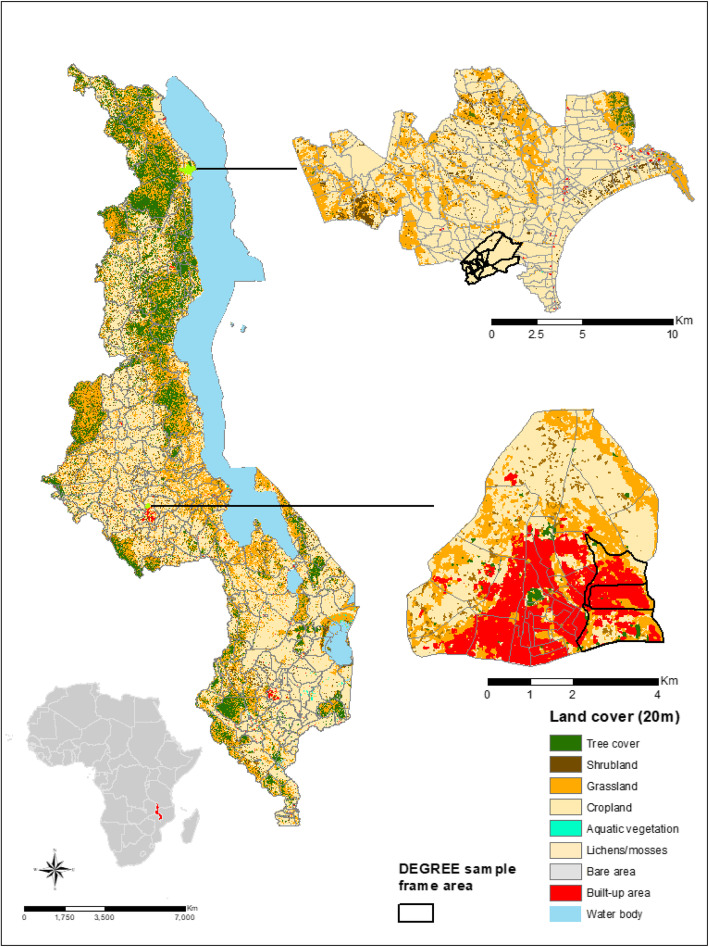
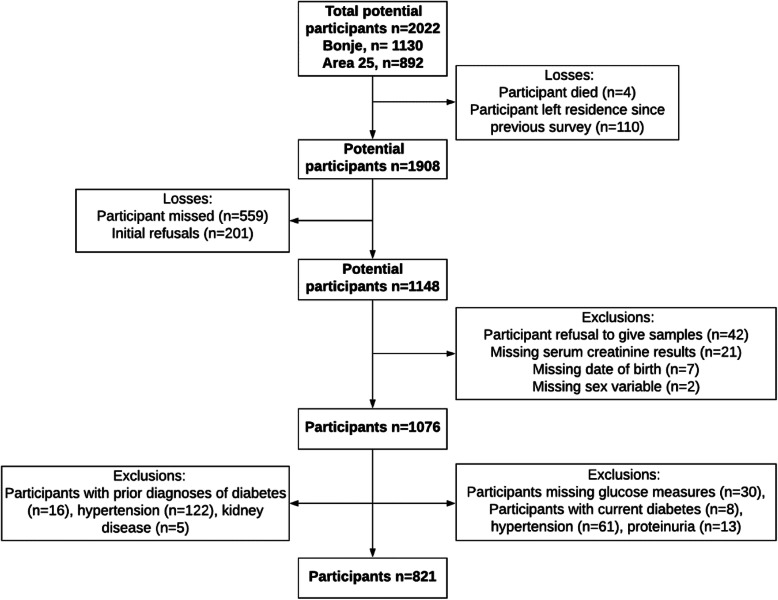
We conducted a cross-sectional study from January-August 2018 collecting bio samples and anthropometric data in two Malawian populations. The sample comprised adults > 18 years (n = 821) without diabetes, hypertension, and proteinuria. Estimates of glomerular filtration rate (eGFR) were calculated using the CKD-EPI equation. Linear and logistic regression models were applied with potential risk factors, to estimate risk of reduced eGFR.
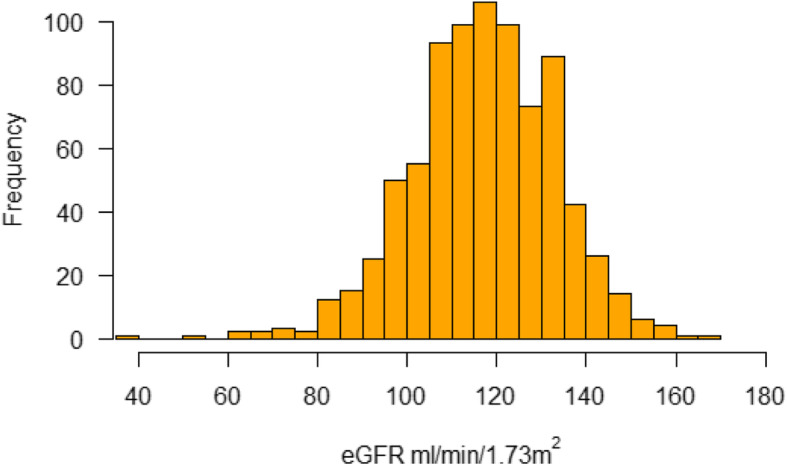
The mean eGFR was 117.1 ± 16.0 ml/min per 1.73m and the mean participant age was 33.5 ± 12.7 years. The prevalence of eGFR< 60 was 0.2% (95% confidence interval (95% CI) 0.1, 0.9); the prevalence of eGFR< 90 was 5% (95% CI =3.2, 6.3). We observed a higher prevalence in the rural population (5% (3.6, 7.8)), versus urban (3% (1.4, 6.7)). Age and BMI were associated with reduced eGFR< 90 [Odds ratio (OR) (95%CI) =3.59 (2.58, 5.21) per ten-year increment]; [OR (95%CI) =2.01 (1.27, 3.43) per 5 kg/m increment] respectively. No increased risk of eGFR < 90 was observed for rural participants [OR (95%CI) =1.75 (0.50, 6.30)].
Reduced kidney function consistent with the definition of CKDu is not common in the areas of Malawi sampled, compared to that observed in other tropical or sub-tropical countries in Central America and South Asia. Reduced eGFR< 90 was related to age, BMI, and was more common in rural areas. These findings are important as they contradict some current hypothesis that CKDu is endemic across tropical and sub-tropical countries. This study has enabled standardized comparisons of impaired kidney function between and within tropical/subtropical regions of the world and will help form the basis for further etiological research, surveillance strategies, and the implementation and evaluation of interventions.
在南美洲和印度的一些低收入和中等收入国家的热带农村社区,一种病因不明的慢性肾脏病(CKDu)正在流行。来自具有与 CKDu 流行国家相似气候和职业特征的南部非洲国家的信息很少。我们调查了 CKDu 是否在马拉维流行,并在此背景下确定了其潜在的危险因素。
我们于 2018 年 1 月至 8 月进行了一项横断面研究,在马拉维的两个人群中收集了生物样本和人体测量数据。该样本包括年龄大于 18 岁的成年人(n=821),他们没有糖尿病、高血压和蛋白尿。使用 CKD-EPI 方程计算肾小球滤过率(eGFR)的估计值。应用线性和逻辑回归模型,对潜在的危险因素进行分析,以评估 eGFR 降低的风险。
平均 eGFR 为 117.1±16.0 ml/min/1.73m,平均参与者年龄为 33.5±12.7 岁。eGFR<60 的患病率为 0.2%(95%置信区间(95%CI)为 0.1,0.9);eGFR<90 的患病率为 5%(95%CI=3.2,6.3)。我们观察到农村人口的患病率较高(5%(3.6,7.8)),而城市人口的患病率较低(3%(1.4,6.7))。年龄和 BMI 与 eGFR<90 相关[每增加十岁的比值比(OR)(95%CI)=3.59(2.58,5.21)];[每增加 5kg/m2 的 OR(95%CI)=2.01(1.27,3.43)]。农村参与者的 eGFR<90 风险没有增加[OR(95%CI)=1.75(0.50,6.30)]。
与中美洲和南亚其他热带或亚热带国家观察到的情况相比,在马拉维采样的地区,符合 CKDu 定义的肾功能降低并不常见。eGFR<90 与年龄、BMI 有关,在农村地区更为常见。这些发现很重要,因为它们与一些目前的假设相矛盾,即 CKDu 在热带和亚热带国家普遍存在。本研究使我们能够在世界热带/亚热带地区之间和内部对受损肾功能进行标准化比较,并将有助于进一步开展病因学研究、监测策略以及干预措施的实施和评估。