SAMRC/Wits Developmental Pathways for Health Research Unit, Faculty of Health Sciences, University of the Witwatersrand, Johannesburg, South Africa.
Department of Anthropology, Northwestern University, Evanston, IL, USA.
Psychol Med. 2022 Jun;52(8):1587-1599. doi: 10.1017/S0033291720003414. Epub 2020 Sep 8.
South Africa's national lockdown introduced serious threats to public mental health in a society where one in three individuals develops a psychiatric disorder during their life. We aimed to evaluate the mental health impacts of the COVID-19 pandemic using a mixed-methods design.
This longitudinal study drew from a preexisting sample of 957 adults living in Soweto, a major township near Johannesburg. Psychological assessments were administered across two waves between August 2019 and March 2020 and during the first 6 weeks of the lockdown (late March-early May 2020). Interviews on COVID-19 experiences were administered in the second wave. Multiple regression models examined relationships between perceived COVID-19 risk and depression.
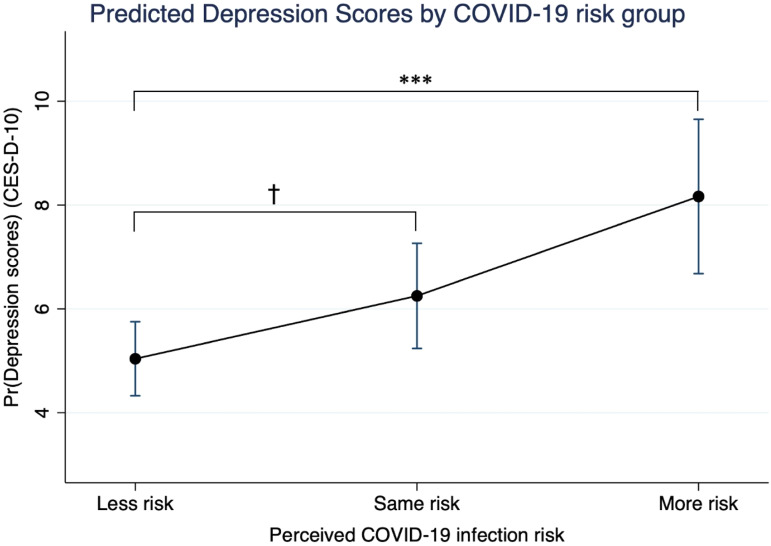
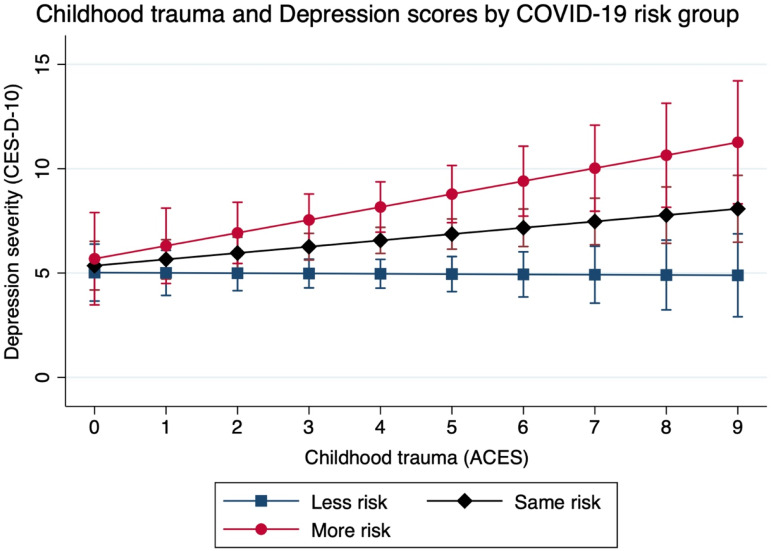
Full data on perceived COVID-19 risk, depression, and covariates were available in 221 adults. In total, 14.5% of adults were at risk for depression. Higher perceived COVID-19 risk predicted greater depressive symptoms ( < 0.001), particularly among adults with histories of childhood trauma, though this effect was marginally significant ( = 0.063). Adults were about two times more likely to experience significant depressive symptoms for every one unit increase in perceived COVID-19 risk ( = 0.021; 95% CI 1.10-3.39). Qualitative data identified potent experiences of anxiety, financial insecurity, fear of infection, and rumination.
Higher perceived risk of COVID-19 infection is associated with greater depressive symptoms during the first 6 weeks of quarantine. High rates of severe mental illness and low availability of mental healthcare amidst COVID-19 emphasize the need for immediate and accessible psychological resources.
在一个有三分之一的人在一生中会发展出精神障碍的社会中,南非的全国封锁对公众的心理健康造成了严重威胁。我们旨在使用混合方法设计评估 COVID-19 大流行对心理健康的影响。
这项纵向研究基于居住在约翰内斯堡附近一个主要城镇索韦托的 957 名成年人的现有样本。在 2019 年 8 月至 2020 年 3 月期间和封锁的前 6 周(2020 年 3 月下旬至 5 月上旬)进行了两次心理评估。在第二次评估中进行了关于 COVID-19 经历的访谈。多元回归模型检验了感知 COVID-19 风险与抑郁之间的关系。
在 221 名成年人中,可获得有关感知 COVID-19 风险、抑郁和协变量的完整数据。共有 14.5%的成年人有患抑郁症的风险。感知 COVID-19 风险越高,抑郁症状越严重(<0.001),尤其是在有儿童期创伤史的成年人中,但这种影响略显著(=0.063)。成年人感知 COVID-19 风险每增加一个单位,患严重抑郁的可能性就会增加两倍(=0.021;95%CI 1.10-3.39)。定性数据确定了焦虑、财务不安全、对感染的恐惧和反复思考等强烈的体验。
在隔离的前 6 周内,感知 COVID-19 感染的风险越高,抑郁症状越严重。在 COVID-19 期间,严重精神疾病的发病率高且心理健康服务的可用性低,这强调了需要立即提供和获取心理资源。