Cai Jiawei, Chen Junmin, Zeng Qianqian, Liu Jie, Zhang Yanli, Cheng Haiping, Yao Shasha, Chen Qiu
Hospital of Chengdu University of Traditional Chinese Medicine, Chengdu, Sichuan, China.
Medicine (Baltimore). 2020 Sep 4;99(36):e22161. doi: 10.1097/MD.0000000000022161.
Diabetes mellitus with erectile dysfunction (DMED) is one of the most common causes of disability in diabetic population, and its pathogenesis is related to a variety of factors. Because its pathogenesis is complex and the existing treatment methods have limitations, DMED is difficult to treat in clinical. Recently, some studies have shown that α-lipoic acid (ALA) is associated with DMED, but there is no systematic review and meta-analysis on the relationship between ALA and DMED.
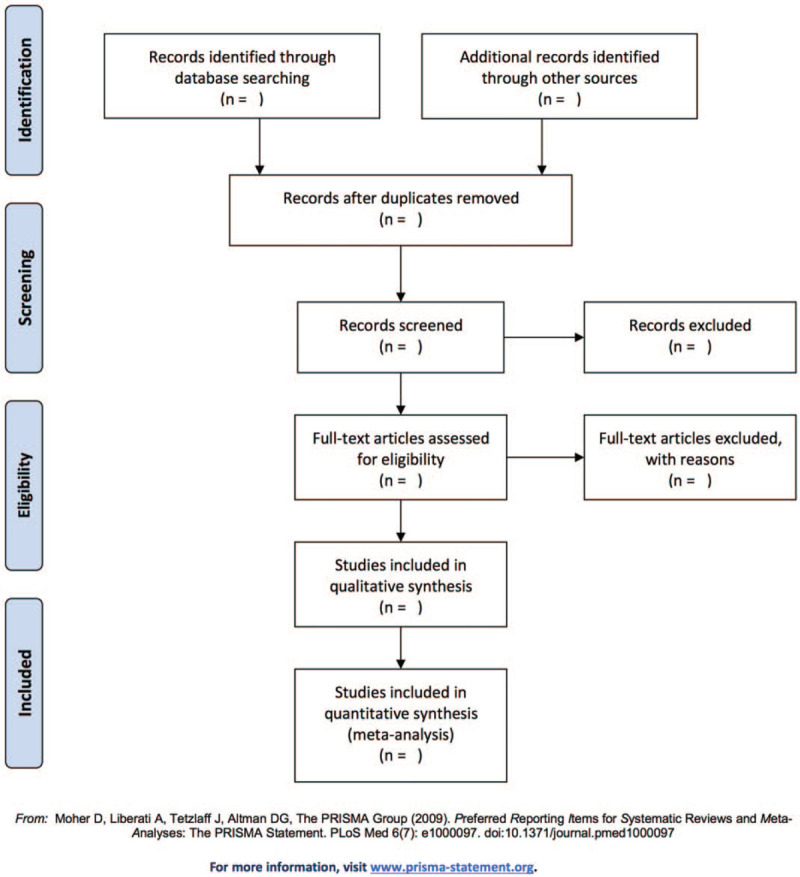
We will search each database from the built-in until July 2020. The English literature mainly searches Cochrane Library, PubMed, EMBASE, and Web of Science, while the Chinese literature comes from CNKI, CBM, VIP, and Wangfang database. Simultaneously we will retrieve clinical registration tests and grey literatures. This study only screen the clinical randomized controlled trials (RCTs) about ALA for DMED to assess its efficacy. The 2 researchers worked independently on literature selection, data extraction, and quality assessment. The dichotomous data is represented by relative risk (RR), and the continuous is expressed by mean difference (MD) or standard mean difference (SMD), eventually the data is synthesized using a fixed effect model (FEM) or a random effect model (REM) depending on whether or not heterogeneity exists. Erectile dysfunction (ED) will be diagnosed by the International Index of Erectile Function 5 (IIEF-5) score. Finally, meta-analysis was conducted by RevMan software version 5.3.
This study will synthesize and provide high quality to evaluate the effectiveness of ALA supplementation for the treatment of DMED.
This systematic review aims to provide new options for ALA supplementation treatment of DMED in terms of its efficacy and safety.
INPLASY202070130.
糖尿病伴勃起功能障碍(DMED)是糖尿病患者最常见的致残原因之一,其发病机制与多种因素有关。由于其发病机制复杂且现有治疗方法存在局限性,DMED在临床上难以治疗。最近,一些研究表明α-硫辛酸(ALA)与DMED有关,但关于ALA与DMED之间关系尚无系统评价和荟萃分析。
我们将检索自建库至2020年7月的每个数据库。英文文献主要检索Cochrane图书馆、PubMed、EMBASE和科学网,中文文献来自中国知网、中国生物医学文献数据库、维普数据库和万方数据库。同时,我们将检索临床注册试验和灰色文献。本研究仅筛选关于ALA治疗DMED的临床随机对照试验(RCT)以评估其疗效。两名研究人员独立进行文献筛选、数据提取和质量评估。二分数据用相对危险度(RR)表示,连续数据用均数差(MD)或标准化均数差(SMD)表示,最终根据是否存在异质性使用固定效应模型(FEM)或随机效应模型(REM)对数据进行合成。勃起功能障碍(ED)将通过国际勃起功能指数5(IIEF-5)评分进行诊断。最后,使用RevMan 5.3版软件进行荟萃分析。
本研究将综合并高质量评估补充ALA治疗DMED的有效性。
本系统评价旨在从疗效和安全性方面为补充ALA治疗DMED提供新的选择。
PROSPERO注册号:INPLASY202070130。