Department of Molecular Biology, National Institute of Geriatrics, Rheumatology and Rehabilitation, 02-637 Warsaw, Poland.
Department of Experimental and Clinical Pharmacology, Pomeranian Medical University, 70-111 Szczecin, Poland.
Int J Mol Sci. 2020 Sep 3;21(17):6404. doi: 10.3390/ijms21176404.
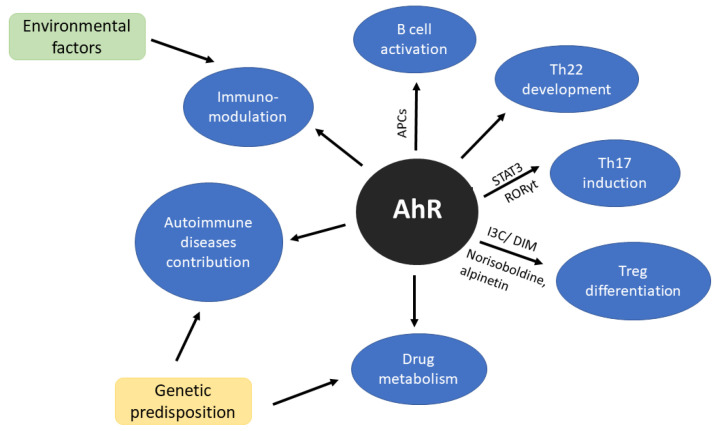
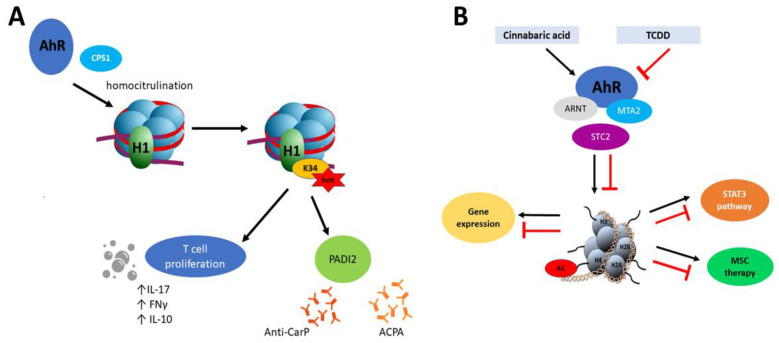
Environmental factors contribute to autoimmune disease manifestation, and as regarded today, AhR has become an important factor in studies of immunomodulation. Besides immunological aspects, AhR also plays a role in pharmacological, toxicological and many other physiological processes such as adaptive metabolism. In recent years, epigenetic mechanisms have provided new insight into gene regulation and reveal a new contribution to autoimmune disease pathogenesis. DNA methylation, histone modifications, chromatin alterations, microRNA and consequently non-genetic changes in phenotypes connect with environmental factors. Increasing data reveals AhR cross-roads with the most significant in immunology pathways. Although study on epigenetic modulations in autoimmune diseases is still not well understood, therefore future research will help us understand their pathophysiology and help to find new therapeutic strategies. Present literature review sheds the light on the common ground between remodeling chromatin compounds and autoimmune antibodies used in diagnostics. In the proposed review we summarize recent findings that describe epigenetic factors which regulate AhR activity and impact diverse immunological responses and pathological changes.
环境因素有助于自身免疫性疾病的发生,而如今,AHR 已成为免疫调节研究的重要因素。除了免疫学方面,AHR 在药理学、毒理学和许多其他生理过程中也发挥作用,如适应性代谢。近年来,表观遗传机制为基因调控提供了新的见解,并揭示了其对自身免疫性疾病发病机制的新贡献。DNA 甲基化、组蛋白修饰、染色质改变、microRNA 以及表型的非遗传变化与环境因素有关。越来越多的数据表明,AHR 与免疫学途径中的最重要因素相互交叉。尽管自身免疫性疾病中的表观遗传调控研究仍不明确,但未来的研究将有助于我们了解其病理生理学,并有助于寻找新的治疗策略。本文综述了重塑染色质化合物与用于诊断的自身抗体之间的共同点。在提出的综述中,我们总结了描述调节 AHR 活性并影响多种免疫反应和病理变化的表观遗传因素的最新发现。