Division of Oncology, Department of Medicine I, Medical University of Vienna , Vienna, Austria.
Comprehensive Cancer Center , Vienna, Austria.
Cell Cycle. 2020 Oct;19(20):2573-2588. doi: 10.1080/15384101.2020.1810402. Epub 2020 Sep 8.
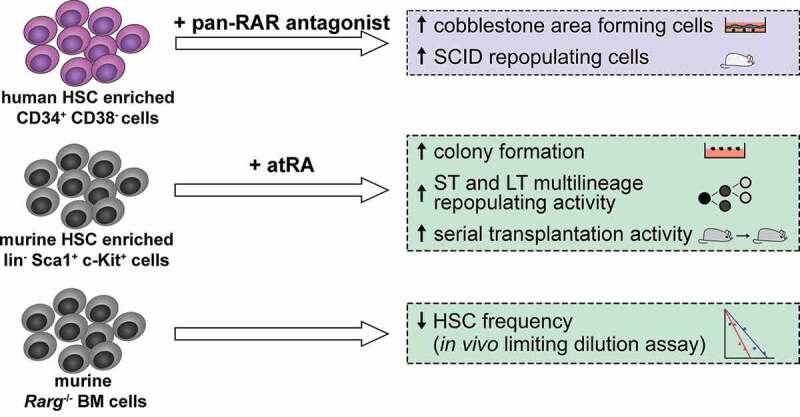
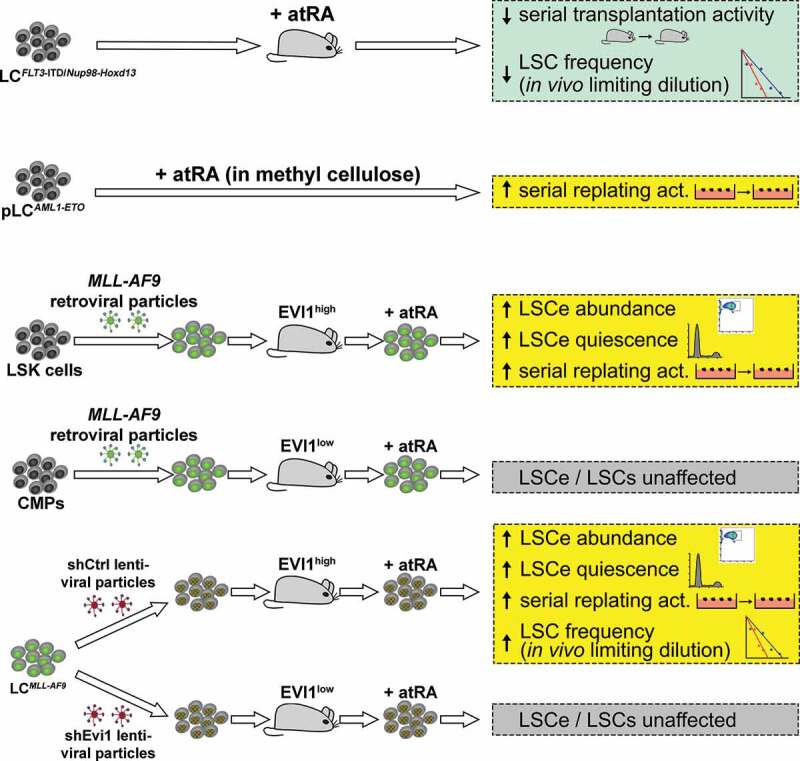
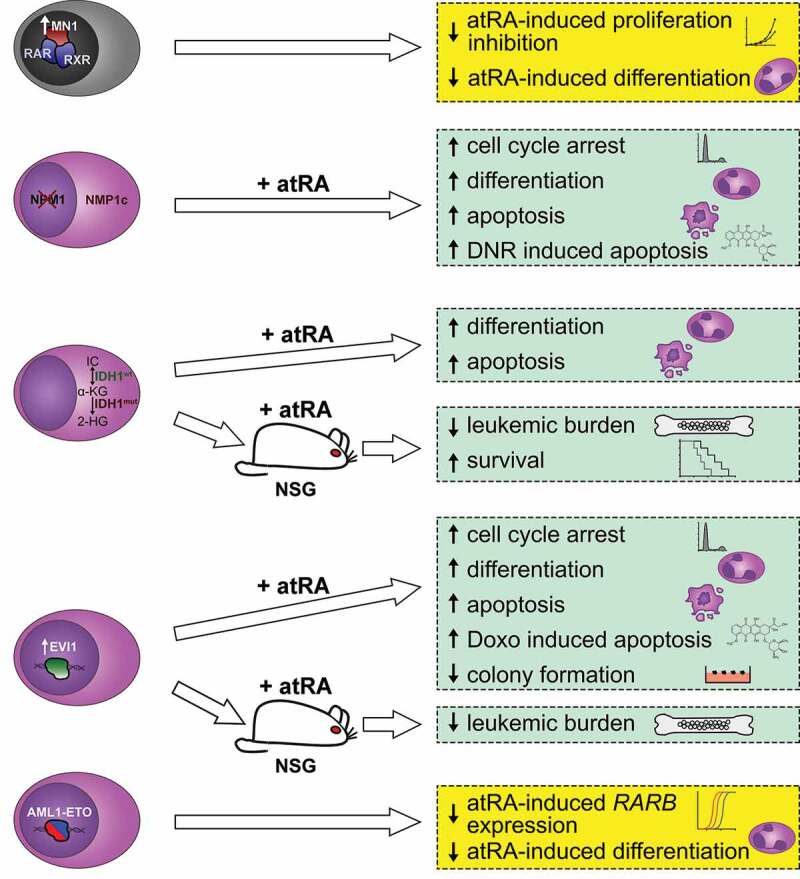
Acute myeloid leukemia (AML) is an aggressive, often fatal hematopoietic malignancy. retinoic acid (atRA), one of the first molecularly targeted drugs in oncology, has greatly improved the outcome of a subtype of AML, acute promyelocytic leukemia (APL). In contrast, atRA has so far provided little therapeutic benefit in the much larger group of patients with non-APL AML. Attempts to identify genetically or molecularly defined subgroups of patients that may respond to atRA have not yielded consistent results. Since AML is a stem cell-driven disease, understanding the effectiveness of atRA may require an appreciation of its impact on AML stem cells. Recent studies reported that atRA decreased stemness of AML with an -ITD mutation, yet increased it in driven or -overexpressing AML. This review summarizes the role of atRA in normal hematopoiesis and in AML, focusing on its impact on AML stem cells.
急性髓系白血病 (AML) 是一种侵袭性的、通常致命的造血恶性肿瘤。维甲酸 (atRA) 是肿瘤学中首批靶向药物之一,它极大地改善了急性早幼粒细胞白血病 (APL) 这一亚型的治疗效果。相比之下,atRA 迄今为止在非 APL AML 这一更大的患者群体中提供的治疗益处甚微。尝试鉴定可能对 atRA 有反应的基因或分子定义亚组的患者并未产生一致的结果。由于 AML 是一种干细胞驱动的疾病,因此了解 atRA 的有效性可能需要认识到它对 AML 干细胞的影响。最近的研究报告称,atRA 降低了具有 -ITD 突变的 AML 的干性,但增加了 驱动或 -过表达 AML 的干性。本综述总结了 atRA 在正常造血和 AML 中的作用,重点关注其对 AML 干细胞的影响。