• 文献检索
  • 文档翻译
  • 深度研究
  • 学术资讯
  • Suppr Zotero 插件Zotero 插件
  • 邀请有礼
  • 套餐&价格
  • 历史记录
应用&插件
Suppr Zotero 插件Zotero 插件浏览器插件Mac 客户端Windows 客户端微信小程序
定价
高级版会员购买积分包购买API积分包
服务
文献检索文档翻译深度研究API 文档MCP 服务
关于我们
关于 Suppr公司介绍联系我们用户协议隐私条款
关注我们

Suppr 超能文献

核心技术专利:CN118964589B侵权必究
粤ICP备2023148730 号-1Suppr @ 2026

文献检索

告别复杂PubMed语法,用中文像聊天一样搜索,搜遍4000万医学文献。AI智能推荐,让科研检索更轻松。

立即免费搜索

文件翻译

保留排版,准确专业,支持PDF/Word/PPT等文件格式,支持 12+语言互译。

免费翻译文档

深度研究

AI帮你快速写综述,25分钟生成高质量综述,智能提取关键信息,辅助科研写作。

立即免费体验

FcγRIIB 结合驱动 Fc 工程化 αOX40 抗体的激动剂活性,以刺激人肿瘤浸润性 T 细胞。

FcγRIIB engagement drives agonistic activity of Fc-engineered αOX40 antibody to stimulate human tumor-infiltrating T cells.

机构信息

Gastroenterology and Hepatology, Erasmus MC-University Medical Center, Rotterdam, Netherlands.

Pathology, Erasmus MC-University Medical Center, Rotterdam, Netherlands.

出版信息

J Immunother Cancer. 2020 Sep;8(2). doi: 10.1136/jitc-2020-000816.

DOI:10.1136/jitc-2020-000816
PMID:32900860
原文链接:https://pmc.ncbi.nlm.nih.gov/articles/PMC7478034/
Abstract

BACKGROUND

OX40 (CD134) is a costimulatory molecule of the tumor necrosis factor receptor superfamily that is currently being investigated as a target for cancer immunotherapy. However, despite promising results in murine tumor models, the clinical efficacy of agonistic αOX40 antibodies in the treatment of patients with cancer has fallen short of the high expectation in earlier-stage trials.

METHODS

Using lymphocytes from resected tumor, tumor-free (TF) tissue and peripheral blood mononuclear cells (PBMC) of 96 patients with hepatocellular and colorectal cancers, we determined OX40 expression and the in vitro T-cell agonistic activity of OX40-targeting compounds. RNA-Seq was used to evaluate OX40-mediated transcriptional changes in CD4+ and CD8+ human tumor-infiltrating lymphocytes (TILs).

RESULTS

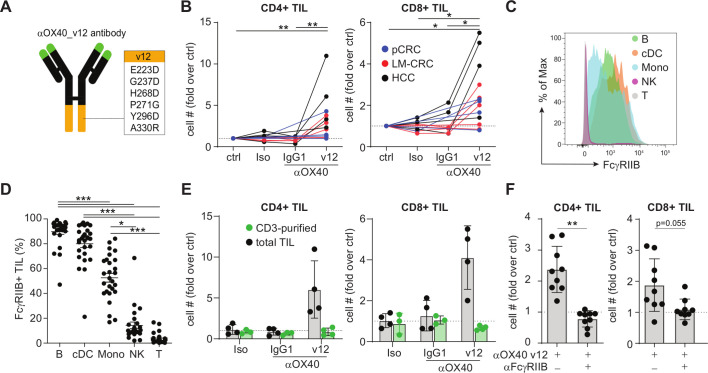
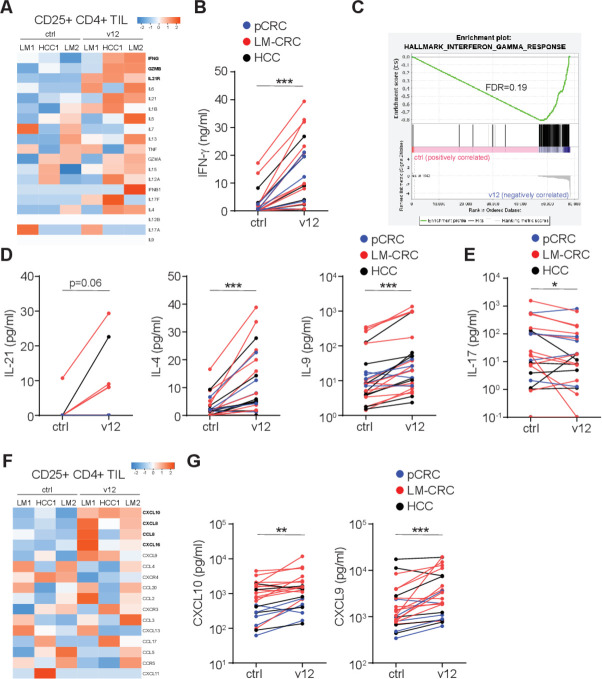
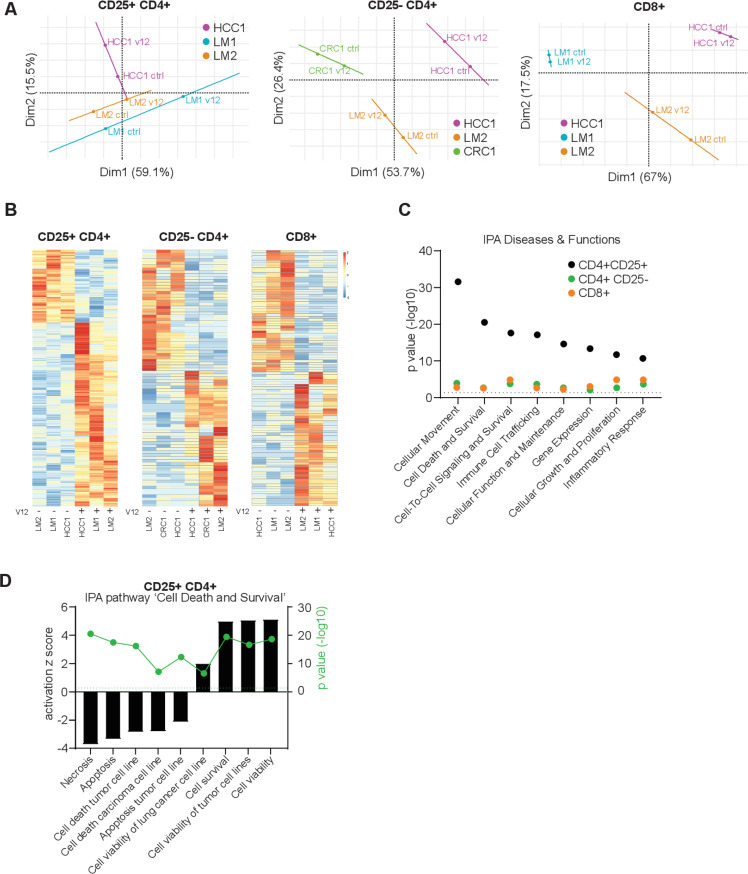
Here, we show that OX40 was overexpressed on tumor-infiltrating CD4+ T cells compared with blood and TF tissue-derived T cells. In contrast to a clinical candidate αOX40 antibody, treatment with an Fc-engineered αOX40 antibody (αOX40_v12) with selectively enhanced FcγRIIB affinity, stimulated in vitro CD4+ and CD8+ TIL expansion, as well as cytokine and chemokine secretions. The activity of αOX40_v12 was dependent on FcγRIIB engagement and intrinsic CD3/CD28 signals. The transcriptional landscape of CD4+ and CD8+ TILs shifted toward a prosurvival, inflammatory and chemotactic profile on treatment with αOX40_v12.

CONCLUSIONS

OX40 is overexpressed on CD4+ TILs and thus represents a promising target for immunotherapy. Targeting OX40 with currently used agonistic antibodies may be inefficient due to lack of OX40 multimerization. Thus, Fc engineering is a powerful tool in enhancing the agonistic activity of αOX40 antibody and may shape the future design of antibody-mediated αOX40 immunotherapy.

摘要

背景

OX40(CD134)是肿瘤坏死因子受体超家族的一种共刺激分子,目前正在作为癌症免疫治疗的靶点进行研究。然而,尽管在鼠类肿瘤模型中取得了有希望的结果,但在早期试验中,激动型 αOX40 抗体在治疗癌症患者方面的临床疗效并未达到预期的高期望。

方法

我们使用来自肝癌和结直肠癌患者切除的肿瘤、无肿瘤(TF)组织和外周血单核细胞(PBMC)的淋巴细胞,确定了 OX40 表达和 OX40 靶向化合物的体外 T 细胞激动活性。RNA-Seq 用于评估 OX40 介导的 CD4+和 CD8+人肿瘤浸润淋巴细胞(TIL)中的转录变化。

结果

在这里,我们表明与血液和 TF 组织衍生的 T 细胞相比,肿瘤浸润的 CD4+T 细胞过度表达 OX40。与一种临床候选的 αOX40 抗体相反,用一种具有选择性增强 FcγRIIB 亲和力的 Fc 工程化的 αOX40 抗体(αOX40_v12)治疗,刺激体外 CD4+和 CD8+TIL 的扩增以及细胞因子和趋化因子的分泌。αOX40_v12 的活性依赖于 FcγRIIB 结合和内在的 CD3/CD28 信号。用 αOX40_v12 治疗后,CD4+和 CD8+TIL 的转录谱向生存、炎症和趋化的特征转移。

结论

OX40 在 CD4+TIL 上过度表达,因此代表了免疫治疗的一个有前途的靶点。由于缺乏 OX40 多聚化,用目前使用的激动型抗体靶向 OX40 可能效率低下。因此,Fc 工程是增强 αOX40 抗体激动活性的有力工具,并可能塑造抗体介导的 αOX40 免疫治疗的未来设计。

https://cdn.ncbi.nlm.nih.gov/pmc/blobs/3c08/7478034/df52a4004356/jitc-2020-000816f06.jpg
https://cdn.ncbi.nlm.nih.gov/pmc/blobs/3c08/7478034/d1b4cfbbb473/jitc-2020-000816f01.jpg
https://cdn.ncbi.nlm.nih.gov/pmc/blobs/3c08/7478034/bd47e7ba2321/jitc-2020-000816f02.jpg
https://cdn.ncbi.nlm.nih.gov/pmc/blobs/3c08/7478034/a0629244fb0c/jitc-2020-000816f03.jpg
https://cdn.ncbi.nlm.nih.gov/pmc/blobs/3c08/7478034/3d2a0b8ce5b1/jitc-2020-000816f04.jpg
https://cdn.ncbi.nlm.nih.gov/pmc/blobs/3c08/7478034/ce0984e308ea/jitc-2020-000816f05.jpg
https://cdn.ncbi.nlm.nih.gov/pmc/blobs/3c08/7478034/df52a4004356/jitc-2020-000816f06.jpg
https://cdn.ncbi.nlm.nih.gov/pmc/blobs/3c08/7478034/d1b4cfbbb473/jitc-2020-000816f01.jpg
https://cdn.ncbi.nlm.nih.gov/pmc/blobs/3c08/7478034/bd47e7ba2321/jitc-2020-000816f02.jpg
https://cdn.ncbi.nlm.nih.gov/pmc/blobs/3c08/7478034/a0629244fb0c/jitc-2020-000816f03.jpg
https://cdn.ncbi.nlm.nih.gov/pmc/blobs/3c08/7478034/3d2a0b8ce5b1/jitc-2020-000816f04.jpg
https://cdn.ncbi.nlm.nih.gov/pmc/blobs/3c08/7478034/ce0984e308ea/jitc-2020-000816f05.jpg
https://cdn.ncbi.nlm.nih.gov/pmc/blobs/3c08/7478034/df52a4004356/jitc-2020-000816f06.jpg

相似文献

1
FcγRIIB engagement drives agonistic activity of Fc-engineered αOX40 antibody to stimulate human tumor-infiltrating T cells.FcγRIIB 结合驱动 Fc 工程化 αOX40 抗体的激动剂活性,以刺激人肿瘤浸润性 T 细胞。
J Immunother Cancer. 2020 Sep;8(2). doi: 10.1136/jitc-2020-000816.
2
Biomimetic nanoparticles deliver mRNAs encoding costimulatory receptors and enhance T cell mediated cancer immunotherapy.仿生纳米颗粒递送编码共刺激受体的 mRNAs,并增强 T 细胞介导的癌症免疫治疗。
Nat Commun. 2021 Dec 14;12(1):7264. doi: 10.1038/s41467-021-27434-x.
3
Fc Engineering Approaches to Enhance the Agonism and Effector Functions of an Anti-OX40 Antibody.增强抗OX40抗体激动活性和效应功能的Fc工程方法。
J Biol Chem. 2016 Dec 30;291(53):27134-27146. doi: 10.1074/jbc.M116.757773. Epub 2016 Nov 17.
4
Anti-OX40 Antibody Directly Enhances The Function of Tumor-Reactive CD8 T Cells and Synergizes with PI3Kβ Inhibition in PTEN Loss Melanoma.抗 OX40 抗体直接增强肿瘤反应性 CD8 T 细胞的功能,并与 PTEN 缺失黑色素瘤中的 PI3Kβ 抑制协同作用。
Clin Cancer Res. 2019 Nov 1;25(21):6406-6416. doi: 10.1158/1078-0432.CCR-19-1259. Epub 2019 Aug 1.
5
Adjuvant therapy with agonistic antibodies to CD134 (OX40) increases local control after surgical or radiation therapy of cancer in mice.激动型抗 CD134(OX40)抗体的辅助治疗可提高癌症小鼠手术或放疗后的局部控制率。
J Immunother. 2010 Oct;33(8):798-809. doi: 10.1097/CJI.0b013e3181ee7095.
6
Early Therapeutic Vaccination Prediction of Hepatocellular Carcinoma via Imaging OX40-Mediated Tumor Infiltrating Lymphocytes.通过影像学 OX40 介导的肿瘤浸润淋巴细胞预测肝细胞癌的早期治疗性疫苗接种。
Mol Pharm. 2019 Oct 7;16(10):4252-4259. doi: 10.1021/acs.molpharmaceut.9b00590. Epub 2019 Sep 16.
7
Combined targeting of costimulatory (OX40) and coinhibitory (CTLA-4) pathways elicits potent effector T cells capable of driving robust antitumor immunity.联合靶向共刺激(OX40)和共抑制(CTLA-4)途径可引发强大的效应 T 细胞,从而驱动强大的抗肿瘤免疫。
Cancer Immunol Res. 2014 Feb;2(2):142-53. doi: 10.1158/2326-6066.CIR-13-0031-T. Epub 2013 Nov 11.
8
GITR ligation enhances functionality of tumor-infiltrating T cells in hepatocellular carcinoma.GITR 交联增强肝癌浸润 T 细胞的功能。
Int J Cancer. 2019 Aug 15;145(4):1111-1124. doi: 10.1002/ijc.32181. Epub 2019 Feb 27.
9
Functional optimization of agonistic antibodies to OX40 receptor with novel Fc mutations to promote antibody multimerization.通过新型 Fc 突变对 OX40 受体激动性抗体进行功能优化,以促进抗体多聚化。
MAbs. 2017 Oct;9(7):1129-1142. doi: 10.1080/19420862.2017.1358838. Epub 2017 Jul 31.
10
The small molecule TGF-β signaling inhibitor SM16 synergizes with agonistic OX40 antibody to suppress established mammary tumors and reduce spontaneous metastasis.小分子 TGF-β 信号抑制剂 SM16 与激动性 OX40 抗体协同作用,抑制已建立的乳腺肿瘤并减少自发转移。
Cancer Immunol Immunother. 2012 Apr;61(4):511-21. doi: 10.1007/s00262-011-1119-y. Epub 2011 Oct 5.

引用本文的文献

1
Unlocking new frontiers: novel immune targets for next-generation cancer immunotherapy.开拓新领域:下一代癌症免疫疗法的新型免疫靶点
Korean J Clin Oncol. 2025 Aug;21(2):47-80. doi: 10.14216/kjco.24322. Epub 2025 Aug 31.
2
Unlocking the therapeutic potential of the NKG2A-HLA-E immune checkpoint pathway in T cells and NK cells for cancer immunotherapy.解锁 T 细胞和 NK 细胞中 NKG2A-HLA-E 免疫检查点通路的治疗潜力,用于癌症免疫治疗。
J Immunother Cancer. 2024 Oct 31;12(10):e009934. doi: 10.1136/jitc-2024-009934.
3
Treg Cell Therapeutic Strategies for Breast Cancer: Holistic to Local Aspects.

本文引用的文献

1
Macrophage-Derived CXCL9 and CXCL10 Are Required for Antitumor Immune Responses Following Immune Checkpoint Blockade.肿瘤微环境中巨噬细胞衍生的趋化因子 CXCL9 和 CXCL10 是免疫检查点阻断后抗肿瘤免疫反应所必需的。
Clin Cancer Res. 2020 Jan 15;26(2):487-504. doi: 10.1158/1078-0432.CCR-19-1868. Epub 2019 Oct 21.
2
OX40 Agonist Tumor Immunotherapy Does Not Impact Regulatory T Cell Suppressive Function.OX40 激动剂肿瘤免疫疗法不会影响调节性 T 细胞的抑制功能。
J Immunol. 2019 Oct 1;203(7):2011-2019. doi: 10.4049/jimmunol.1900696. Epub 2019 Aug 21.
3
Anti-OX40 Antibody Directly Enhances The Function of Tumor-Reactive CD8 T Cells and Synergizes with PI3Kβ Inhibition in PTEN Loss Melanoma.
调节性 T 细胞治疗乳腺癌的策略:整体到局部方面。
Cells. 2024 Sep 11;13(18):1526. doi: 10.3390/cells13181526.
4
Impact of isotype on the mechanism of action of agonist anti-OX40 antibodies in cancer: implications for therapeutic combinations.激动型抗 OX40 抗体的同种型对其作用机制在癌症中的影响:对治疗联合的启示。
J Immunother Cancer. 2024 Jul 4;12(7):e008677. doi: 10.1136/jitc-2023-008677.
5
Engaging stimulatory immune checkpoint interactions in the tumour immune microenvironment of primary liver cancers - how to push the gas after having released the brake.在原发性肝癌的肿瘤免疫微环境中,激发免疫检查点相互作用——在松开刹车后如何踩下油门。
Front Immunol. 2024 Feb 19;15:1357333. doi: 10.3389/fimmu.2024.1357333. eCollection 2024.
6
sFgl2 gene-modified MSCs regulate the differentiation of CD4 T cells in the treatment of autoimmune hepatitis.sFgl2 基因修饰的间充质干细胞调节 CD4 T 细胞分化治疗自身免疫性肝炎。
Stem Cell Res Ther. 2023 Nov 3;14(1):316. doi: 10.1186/s13287-023-03550-x.
7
Unlocking the potential of agonist antibodies for treating cancer using antibody engineering.利用抗体工程技术挖掘激动型抗体治疗癌症的潜力。
Trends Mol Med. 2023 Jan;29(1):48-60. doi: 10.1016/j.molmed.2022.09.012. Epub 2022 Nov 4.
8
Antibody-Targeted TNFRSF Activation for Cancer Immunotherapy: The Role of FcγRIIB Cross-Linking.用于癌症免疫治疗的抗体靶向肿瘤坏死因子受体超家族激活:FcγRIIB交联的作用
Front Pharmacol. 2022 Jul 5;13:924197. doi: 10.3389/fphar.2022.924197. eCollection 2022.
9
Value Research of NLR, PLR, and RDW in Prognostic Assessment of Patients with Colorectal Cancer.中性粒细胞与淋巴细胞比值、血小板与淋巴细胞比值和红细胞分布宽度在结直肠癌患者预后评估中的价值研究。
J Healthc Eng. 2022 Apr 16;2022:7971415. doi: 10.1155/2022/7971415. eCollection 2022.
10
Promoting antibody-dependent cellular phagocytosis for effective macrophage-based cancer immunotherapy.促进抗体依赖的细胞吞噬作用以实现有效的基于巨噬细胞的癌症免疫疗法。
Sci Adv. 2022 Mar 18;8(11):eabl9171. doi: 10.1126/sciadv.abl9171.
抗 OX40 抗体直接增强肿瘤反应性 CD8 T 细胞的功能,并与 PTEN 缺失黑色素瘤中的 PI3Kβ 抑制协同作用。
Clin Cancer Res. 2019 Nov 1;25(21):6406-6416. doi: 10.1158/1078-0432.CCR-19-1259. Epub 2019 Aug 1.
4
Cooperation between Constitutive and Inducible Chemokines Enables T Cell Engraftment and Immune Attack in Solid Tumors.组成型和诱导型趋化因子的合作使 T 细胞在实体瘤中植入和免疫攻击成为可能。
Cancer Cell. 2019 Jun 10;35(6):885-900.e10. doi: 10.1016/j.ccell.2019.05.004.
5
Targeting the Antibody Checkpoints to Enhance Cancer Immunotherapy-Focus on FcγRIIB.靶向抗体检查点以增强癌症免疫治疗 - 聚焦于 FcγRIIB。
Front Immunol. 2019 Mar 12;10:481. doi: 10.3389/fimmu.2019.00481. eCollection 2019.
6
OX40 Costimulation Inhibits Foxp3 Expression and Treg Induction via BATF3-Dependent and Independent Mechanisms.OX40 共刺激通过 BATF3 依赖和非依赖机制抑制 Foxp3 表达和 Treg 诱导。
Cell Rep. 2018 Jul 17;24(3):607-618. doi: 10.1016/j.celrep.2018.06.052.
7
EASL Clinical Practice Guidelines: Management of hepatocellular carcinoma.欧洲肝脏研究学会临床实践指南:肝细胞癌的管理
J Hepatol. 2018 Jul;69(1):182-236. doi: 10.1016/j.jhep.2018.03.019. Epub 2018 Apr 5.
8
Chemokines and cancer: new immune checkpoints for cancer therapy.趋化因子与癌症:癌症治疗的新免疫检查点。
Curr Opin Immunol. 2018 Apr;51:140-145. doi: 10.1016/j.coi.2018.03.004. Epub 2018 Mar 24.
9
Regulation and Function of the PD-L1 Checkpoint.PD-L1 检查点的调控与功能
Immunity. 2018 Mar 20;48(3):434-452. doi: 10.1016/j.immuni.2018.03.014.
10
Combining Immunotherapy and Radiotherapy for Cancer Treatment: Current Challenges and Future Directions.免疫疗法与放射疗法联合用于癌症治疗:当前挑战与未来方向
Front Pharmacol. 2018 Mar 5;9:185. doi: 10.3389/fphar.2018.00185. eCollection 2018.