Departments of Gastroenterology and Hepatology, Erasmus MC-University Medical Center, Rotterdam, The Netherlands.
Department of Pathology, Erasmus MC-University Medical Center, Rotterdam, The Netherlands.
Int J Cancer. 2019 Aug 15;145(4):1111-1124. doi: 10.1002/ijc.32181. Epub 2019 Feb 27.
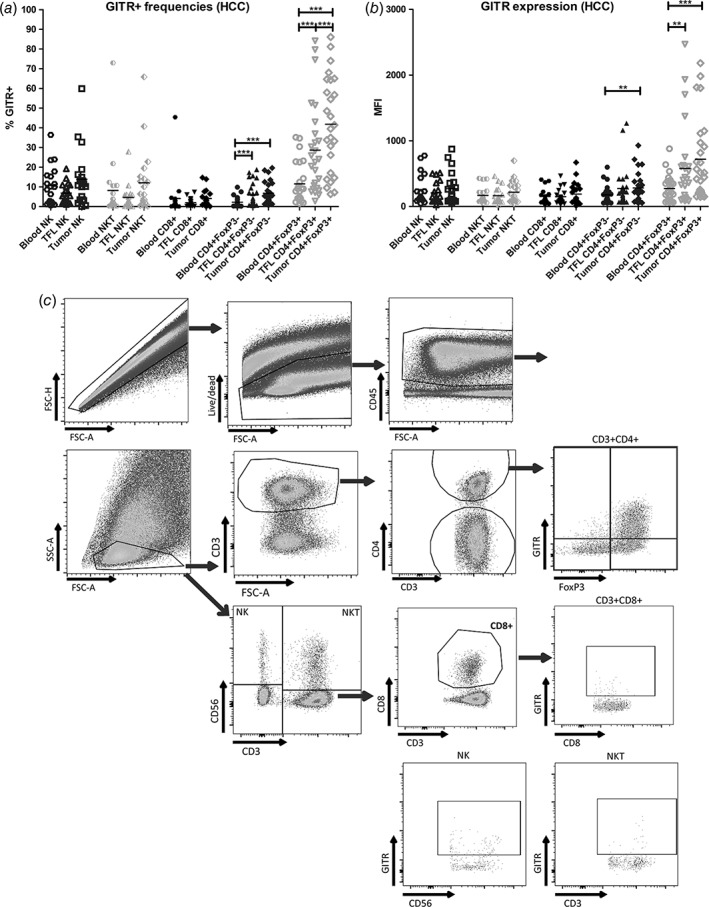
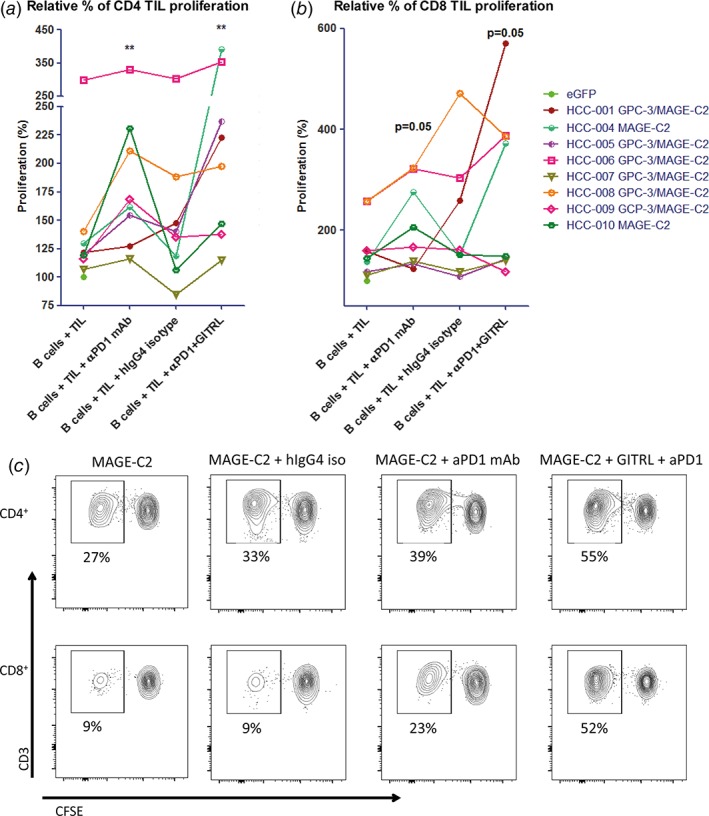
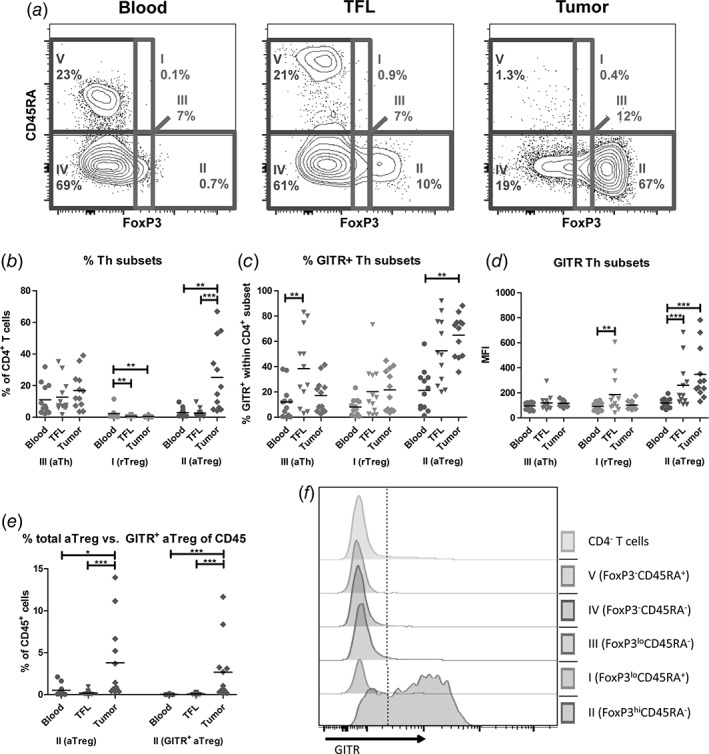
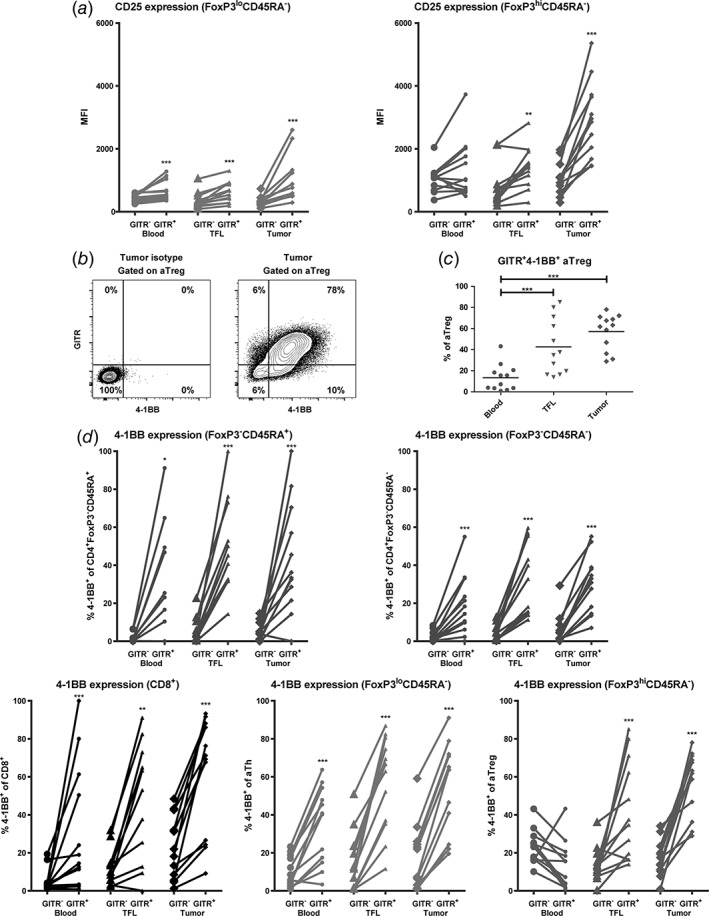
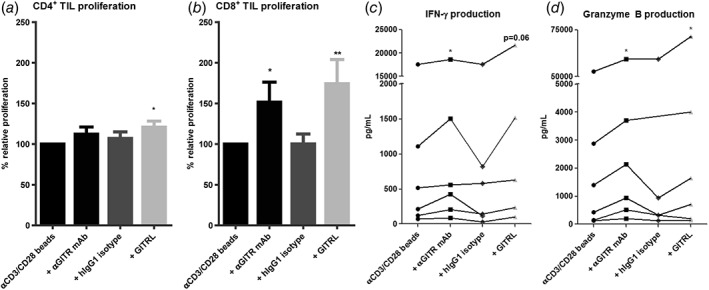
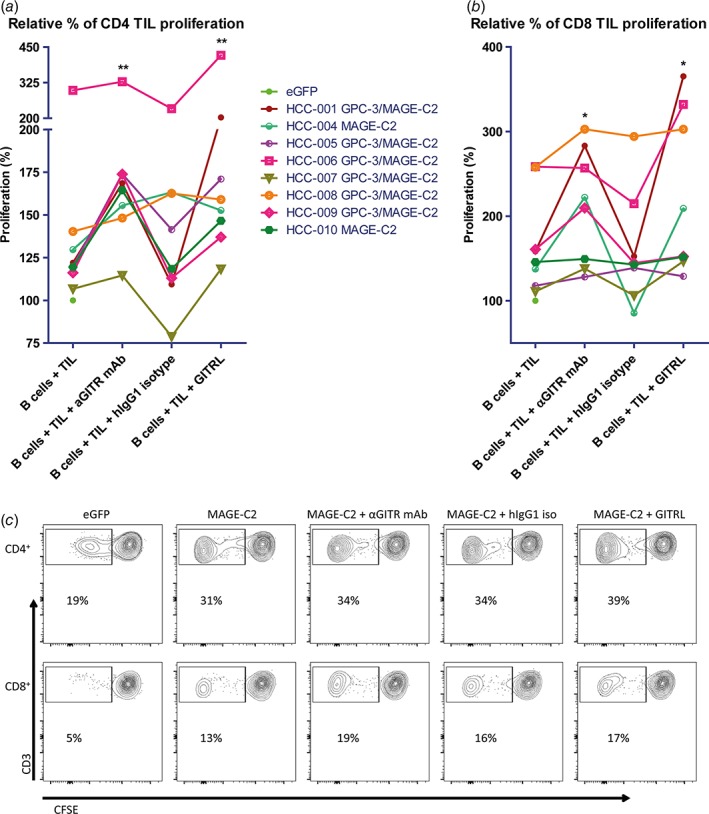
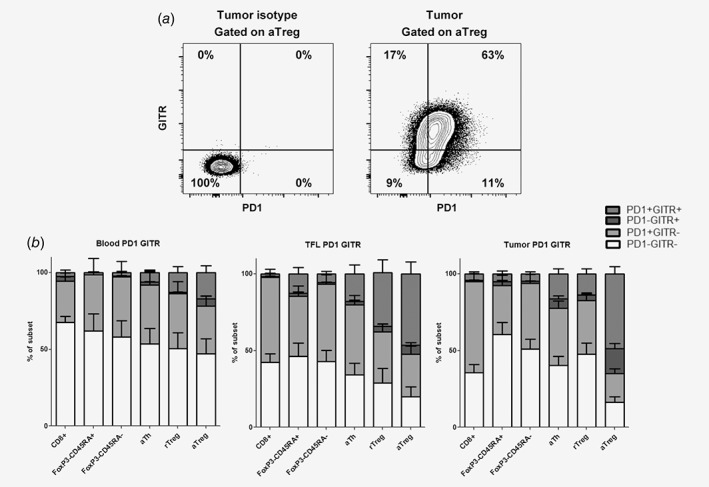
No curative treatment options are available for advanced hepatocellular carcinoma (HCC). Anti-PD1 antibody therapy can induce tumor regression in 20% of advanced HCC patients, demonstrating that co-inhibitory immune checkpoint blockade has therapeutic potential for this type of cancer. However, whether agonistic targeting of co-stimulatory receptors might be able to stimulate anti-tumor immunity in HCC is as yet unknown. We investigated whether agonistic targeting of the co-stimulatory receptor GITR could reinvigorate ex vivo functional responses of tumor-infiltrating lymphocytes (TIL) freshly isolated from resected tumors of HCC patients. In addition, we compared GITR expression between TIL and paired samples of leukocytes isolated from blood and tumor-free liver tissues, and studied the effects of combined GITR and PD1 targeting on ex vivo TIL responses. In all three tissue compartments, CD4 FoxP3 regulatory T cells (Treg) showed higher GITR expression than effector T-cell subsets. The highest expression of GITR was found on CD4 FoxP3 CD45RA activated Treg in tumors. Recombinant GITR-ligand as well as a humanized agonistic anti-GITR antibody enhanced ex vivo proliferative responses of CD4 and CD8 TIL to tumor antigens presented by mRNA-transfected autologous B-cell blasts, and also reinforced proliferation, IFN-γ secretion and granzyme B production in stimulations of TIL with CD3/CD28 antibodies. Combining GITR ligation with anti-PD1 antibody nivolumab further enhanced tumor antigen-specific responses of TIL in some, but not all, HCC patients, compared to either single treatment. In conclusion, agonistic targeting of GITR can enhance functionality of HCC TIL, and may therefore be a promising strategy for single or combinatorial immunotherapy in HCC.
目前,对于晚期肝细胞癌(HCC)尚无有效的治疗方法。抗 PD-1 抗体治疗可使 20%的晚期 HCC 患者肿瘤消退,表明共抑制免疫检查点阻断具有治疗此类癌症的潜力。然而,激动性靶向共刺激受体是否能够刺激 HCC 的抗肿瘤免疫尚不清楚。我们研究了激动性靶向共刺激受体 GITR 是否能够重新激活从 HCC 患者切除的肿瘤中分离的肿瘤浸润淋巴细胞(TIL)的体外功能反应。此外,我们比较了 TIL 与从血液和无肿瘤肝脏组织中分离的白细胞配对样本之间的 GITR 表达,并研究了联合 GITR 和 PD-1 靶向对体外 TIL 反应的影响。在所有三个组织隔室中,CD4 FoxP3 调节性 T 细胞(Treg)的 GITR 表达均高于效应 T 细胞亚群。在肿瘤中,CD4 FoxP3 CD45RA 激活的 Treg 上表达的 GITR 最高。重组 GITR 配体和人源化激动性抗 GITR 抗体增强了 CD4 和 CD8 TIL 对自体 B 细胞母细胞转染的 mRNA 呈递的肿瘤抗原的体外增殖反应,并且还增强了 TIL 与 CD3/CD28 抗体刺激时的增殖,IFN-γ 分泌和颗粒酶 B 产生。与单药治疗相比,GITR 结合与抗 PD-1 抗体 nivolumab 联合在一些但不是所有 HCC 患者中进一步增强了 TIL 的肿瘤抗原特异性反应。总之,激动性靶向 GITR 可以增强 HCC TIL 的功能,因此可能是 HCC 单药或联合免疫治疗的有前途的策略。