Department of Orthopedic Surgery, Affiliated Hospital of Zunyi Medical University, Huichuan, Zunyi 563000, P.R. China.
Department of Orthopedic Surgery, The First Affiliated Hospital of Chongqing Medical University, Chongqing 400016, P.R. China.
Mol Med Rep. 2020 Nov;22(5):4163-4172. doi: 10.3892/mmr.2020.11498. Epub 2020 Sep 9.
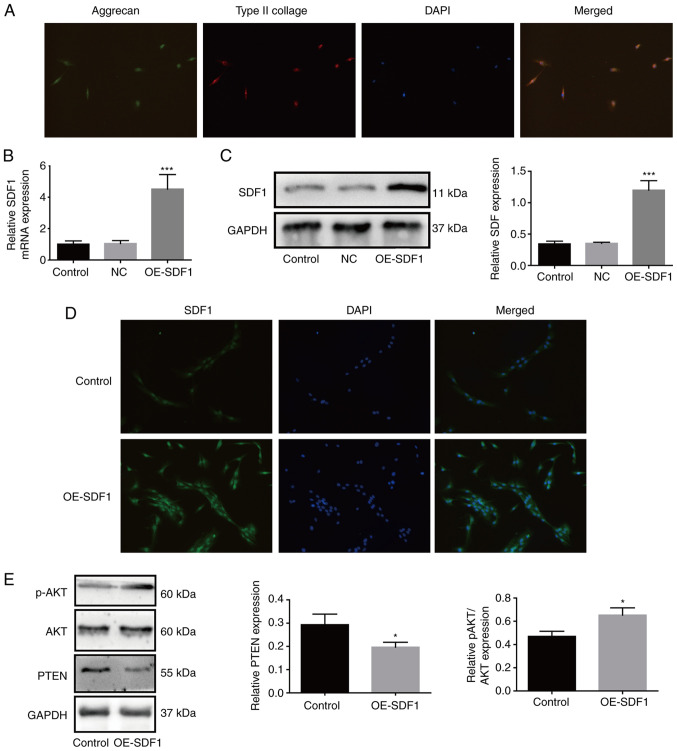
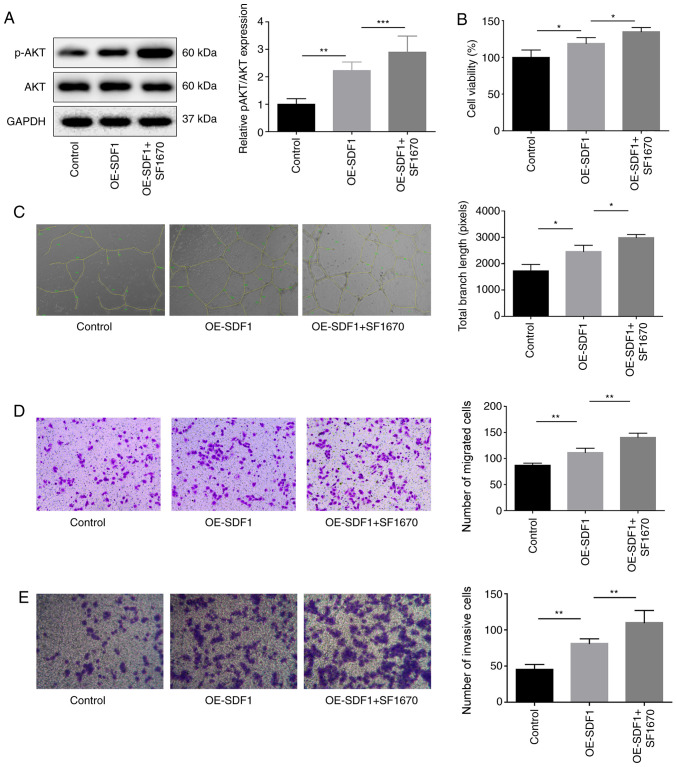
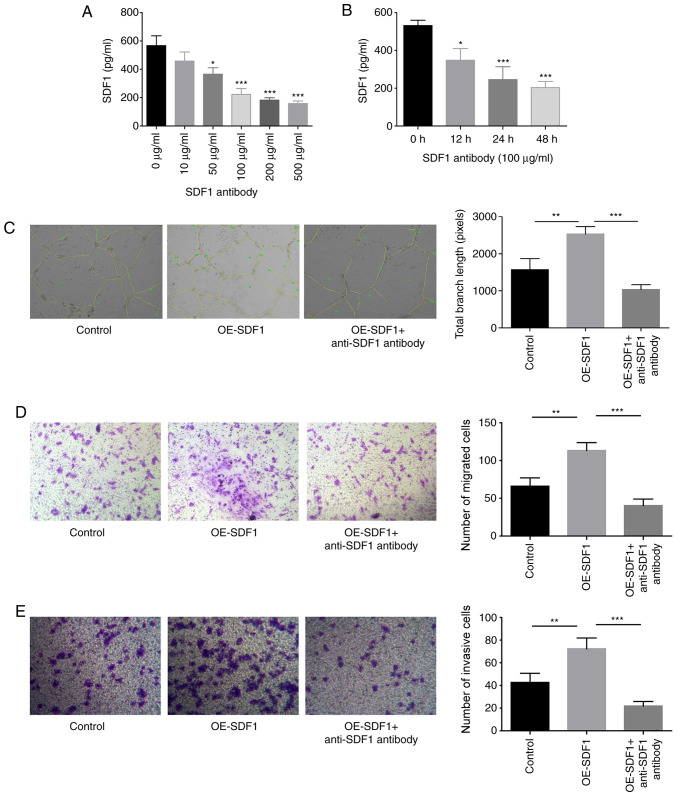
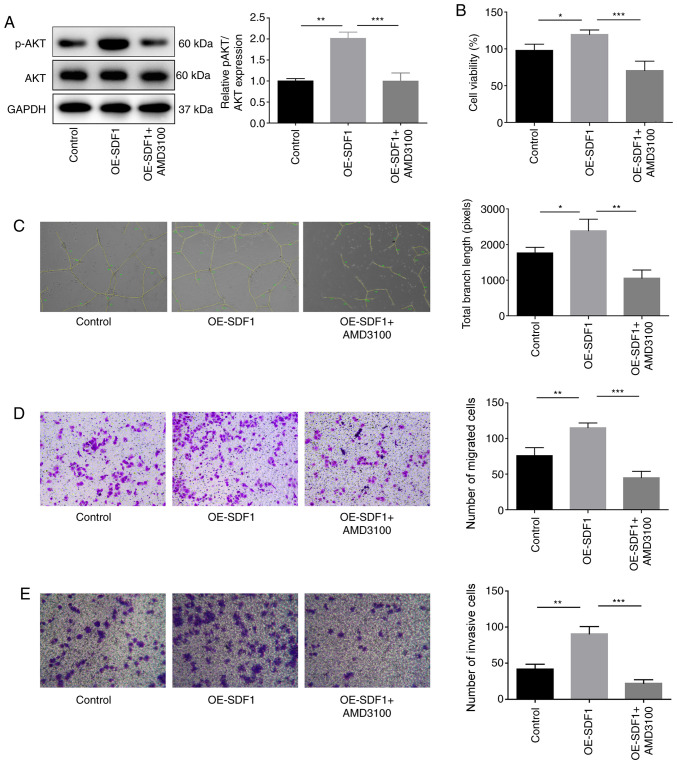
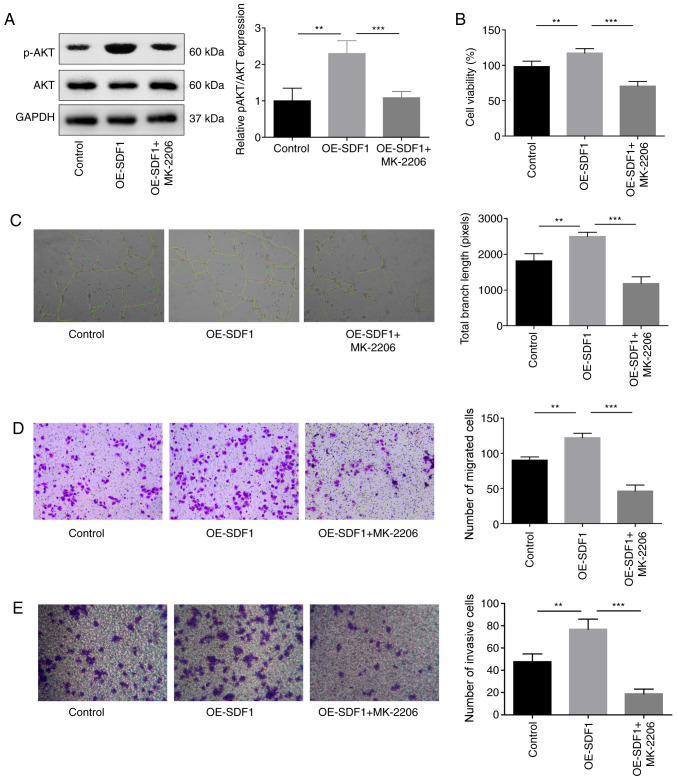
Symptomatic degenerative disc disease (DDD) is considered the leading cause of chronic lower back pain (LBP). As one of the main features of intervertebral disc degeneration (IDD), vascular ingrowth plays a crucial role in the progression of LBP. Stromal cell‑derived factor 1 (SDF1) and its receptor C‑X‑C receptor 4 (CXCR4) were reported to be overexpressed in the degenerated intervertebral discs, suggesting that they may be involved in the pathogenesis of IDD. Moreover, SDF1 has been identified to induce neovascularization in rheumatoid arthritis disease. However, the roles of the SDF1/CXCR4 axis in the neovascularization of IDD remain unclear. Therefore, the objective of the present study was to elucidate whether the SDF1/CXCR4 axis takes part in neovascularization in degenerated intervertebral discs and its underlying mechanisms. Adenovirus infection was used to upregulate SDF1 expression in primary nucleus pulposus cells (NPCs). The effects of SDF1 on the proliferation and angiogenesis of vascular endothelial cells (VECs) were assessed by Cell Counting Kit‑8 and tube formation assays after VECs were treated with the supernatants derived from SDF1 overexpressed or not treated NPCs. Transwell chambers using the supernatants from NPCs as chemokines were applied to assess VEC migration and invasion. AMD3100, MK‑2206 and SF1670 were used to antagonize CXCR4, AKT serine/threonine kinase 1 (AKT) and phosphatase and tensin homolog (PTEN) in VECs. The results revealed that SDF1 overexpression significantly increased the ratio of phosphorylated AKT to AKT and decreased PTEN expression in NPCs, as well as enhanced the proliferation, migration, invasion and angiogenesis abilities of VECs. However, these effects induced by SDF1 overexpression in NPCs were all reversed when VECs were pretreated with AMD3100 or MK‑2206, whereas enhanced by SF1670 treatment. Collectively, the present study indicated that enhancement of the SDF1/CXCR4 axis in NPCs can significantly accelerate angiogenesis by regulating the PTEN/phosphatidylinositol‑3‑kinase/AKT pathway.
症状性退行性椎间盘疾病(DDD)被认为是慢性下腰痛(LBP)的主要原因。作为椎间盘退行性变(IDD)的主要特征之一,血管侵入在 LBP 的进展中起着关键作用。基质细胞衍生因子 1(SDF1)及其受体 C-X-C 受体 4(CXCR4)在退变的椎间盘中有过度表达的报道,表明它们可能参与 IDD 的发病机制。此外,SDF1 已被鉴定可在类风湿关节炎疾病中诱导新生血管形成。然而,SDF1/CXCR4 轴在 IDD 新生血管形成中的作用尚不清楚。因此,本研究旨在阐明 SDF1/CXCR4 轴是否参与退变椎间盘的新生血管形成及其潜在机制。腺病毒感染用于上调原代髓核细胞(NPC)中 SDF1 的表达。通过细胞计数试剂盒-8 法和管形成试验评估 SDF1 过表达或未处理 NPC 上清液处理血管内皮细胞(VEC)后对 VEC 增殖和血管生成的影响。使用 NPC 上清液作为趋化因子的 Transwell 室用于评估 VEC 迁移和侵袭。AMD3100、MK-2206 和 SF1670 用于拮抗 VEC 中的 CXCR4、AKT 丝氨酸/苏氨酸激酶 1(AKT)和磷酸酶和张力蛋白同源物(PTEN)。结果表明,SDF1 过表达显著增加 NPC 中磷酸化 AKT 与 AKT 的比值,并降低 PTEN 的表达,同时增强 VEC 的增殖、迁移、侵袭和血管生成能力。然而,当 VEC 用 AMD3100 或 MK-2206 预处理时,NPC 中 SDF1 过表达引起的这些作用均被逆转,而 SF1670 处理则增强了这些作用。总之,本研究表明,NPC 中 SDF1/CXCR4 轴的增强可通过调节 PTEN/磷脂酰肌醇-3-激酶/AKT 通路显著加速血管生成。