Barts Heart Centre, Barts Health NHS Trust, London, United Kingdom.
Circ Arrhythm Electrophysiol. 2020 Oct;13(10):e008824. doi: 10.1161/CIRCEP.120.008824. Epub 2020 Sep 9.
A novel stochastic trajectory analysis of ranked signals (STAR) mapping approach to guide atrial fibrillation (AF) ablation using basket catheters recently showed high rates of AF termination and subsequent freedom from AF.
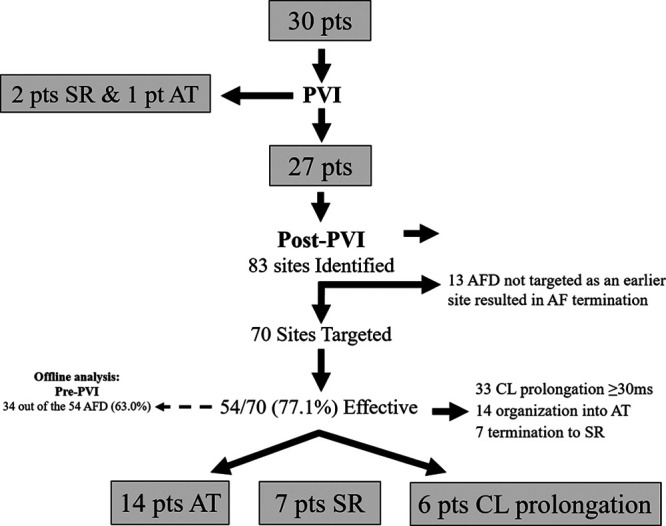
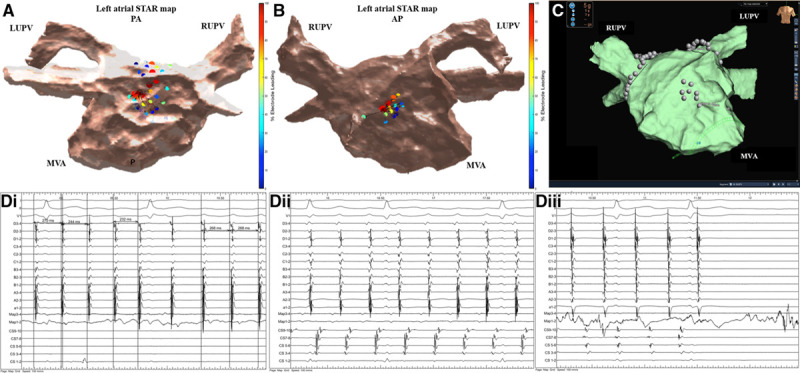
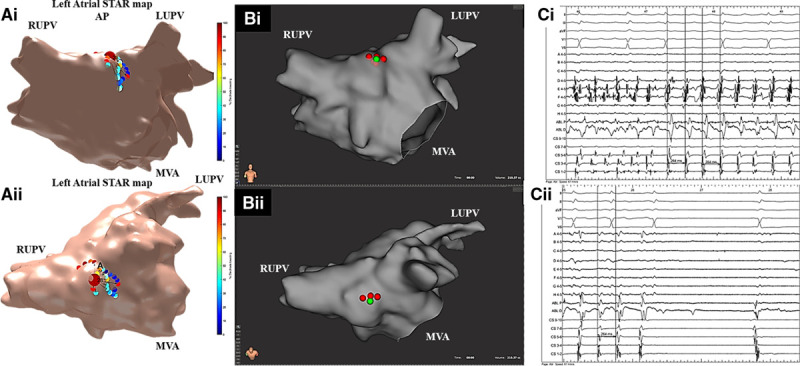
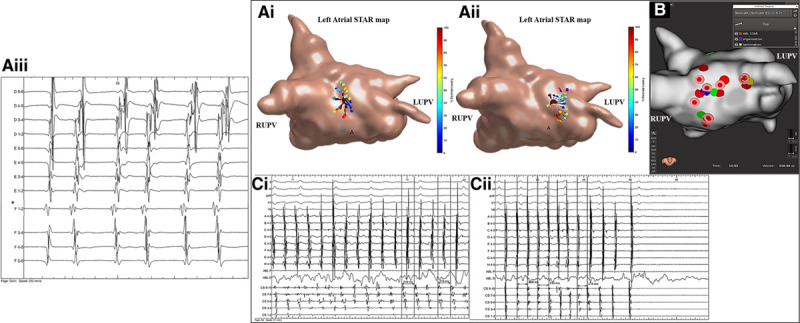
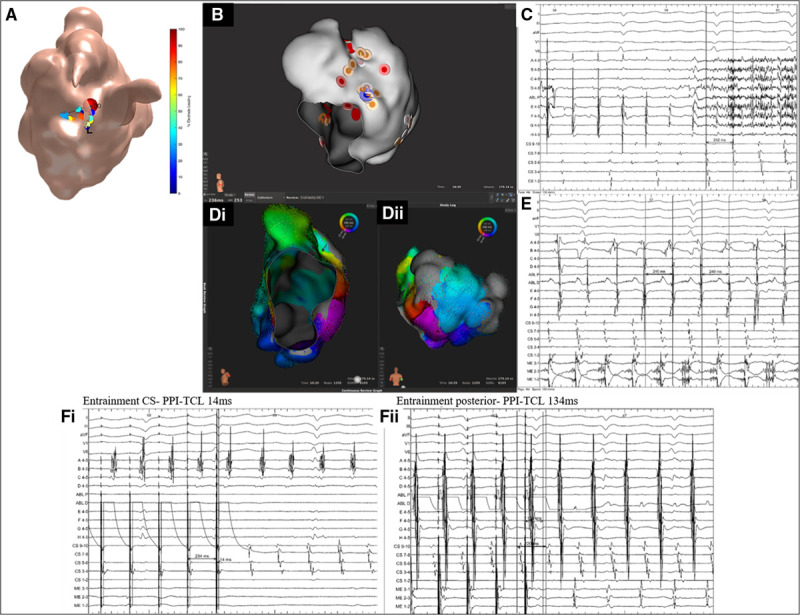
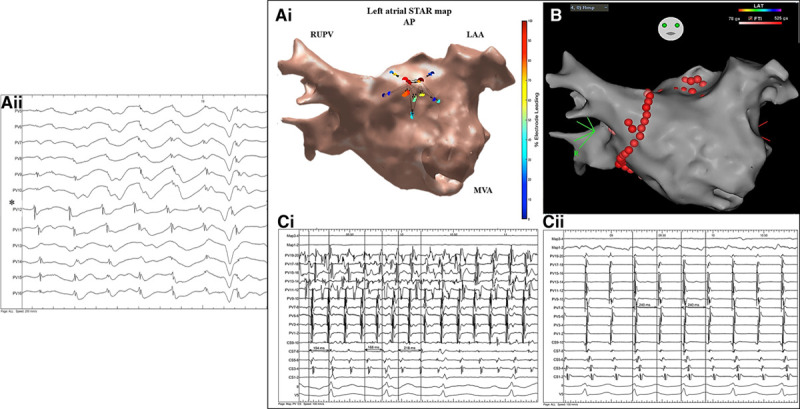
This study aimed to determine whether STAR mapping using sequential recordings from conventional pulmonary vein mapping catheters could achieve similar results. Patients with persistent AF<2 years were included. Following pulmonary vein isolation AF drivers (AFDs) were identified on sequential STAR maps created with PentaRay, IntellaMap Orion, or Advisor HD Grid catheters. Patients had a minimum of 10 multipolar recordings of 30 seconds each. These were processed in real-time and AFDs were targeted with ablation. An ablation response was defined as AF termination or cycle length slowing ≥30 ms.
Thirty patients were included (62.4±7.8 years old, AF duration 14.1±4.3 months) of which 3 had AF terminated on pulmonary vein isolation, leaving 27 patients that underwent STAR-guided AFD ablation. Eighty-three potential AFDs were identified (3.1±1.1 per patient) of which 70 were targeted with ablation (2.6±1.2 per patient). An ablation response was seen at 54 AFDs (77.1% of AFDs; 21 AF termination and 33 cycle length slowing) and occurred in all 27 patients. No complications occurred. At 17.3±10.1 months, 22 out of 27 (81.5%) patients undergoing STAR-guided ablation were free from AF/atrial tachycardia off antiarrhythmic drugs.
STAR-guided AFD ablation through sequential mapping with a multipolar catheter effectively achieved an ablation response in all patients. AF terminated in a majority of patients, with a high freedom from AF/atrial tachycardia off antiarrhythmic drugs at long-term follow-up. Registration: URL: https://www.clinicaltrials.gov; Unique identifier: NCT02950844.
最近,一种新的基于排序信号的随机轨迹分析(STAR)映射方法被用于指导使用篮状导管的心房颤动(AF)消融,该方法显示出较高的 AF 终止率和随后的无 AF 率。
本研究旨在确定使用常规肺静脉标测导管的连续记录进行 STAR 标测是否可以达到类似的结果。纳入了持续时间<2 年的持续性 AF 患者。在使用 PentaRay、IntellaMap Orion 或 Advisor HD Grid 导管创建的连续 STAR 图上识别 AF 驱动灶(AFD)。患者有至少 10 个 30 秒的多极记录。这些记录实时处理,并对 AFD 进行消融。消融反应定义为 AF 终止或周期长度减慢≥30ms。
共纳入 30 例患者(62.4±7.8 岁,AF 持续时间 14.1±4.3 个月),其中 3 例在肺静脉隔离时 AF 终止,其余 27 例患者接受了 STAR 指导的 AFD 消融。共识别出 83 个潜在的 AFD(每个患者 3.1±1.1 个),其中 70 个进行了消融(每个患者 2.6±1.2 个)。在 54 个 AFD 中观察到消融反应(77.1%的 AFD;21 例 AF 终止和 33 例周期长度减慢),所有 27 例患者均出现反应。无并发症发生。在 17.3±10.1 个月时,27 例接受 STAR 指导消融的患者中有 22 例(81.5%)在停用抗心律失常药物后无 AF/房性心动过速。
通过多极导管的连续标测进行 STAR 指导的 AFD 消融,可有效地使所有患者获得消融反应。大多数患者的 AF 终止,在长期随访中,无 AF/房性心动过速停药率高。