Shi Hongjie, Zhao Jinping, Han Linzhi, Xu Ming, Wang Kaijie, Shi Jiajun, Dong Zhe
Department of Thoracic and Cardiovascular Surgery, Zhongnan Hospital of Wuhan University, Wuhan 430071, China.
Department of Radiation and Medical Oncology, Zhongnan Hospital of Wuhan University, Wuhan 430071, China.
Aging (Albany NY). 2020 Sep 9;12(17):17022-17037. doi: 10.18632/aging.103622.
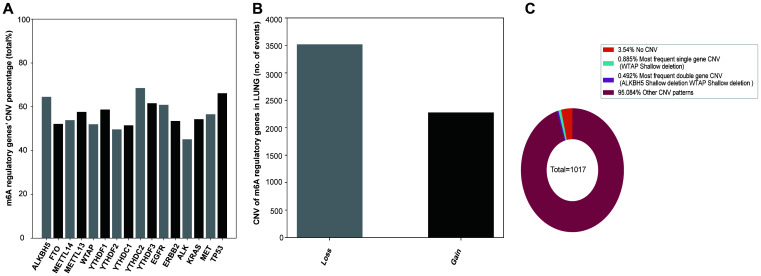
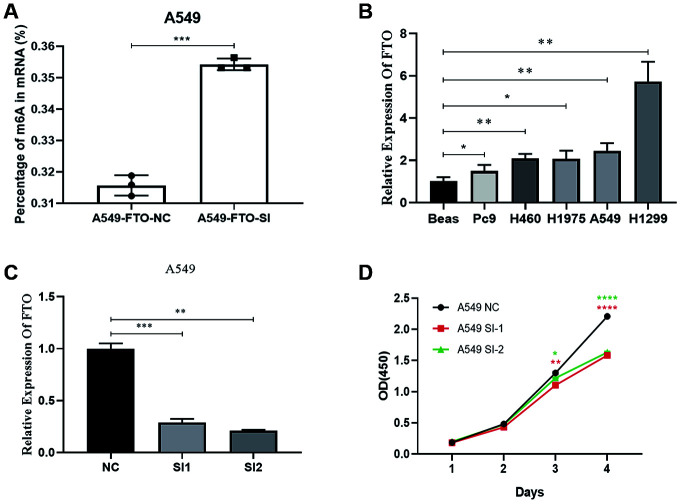
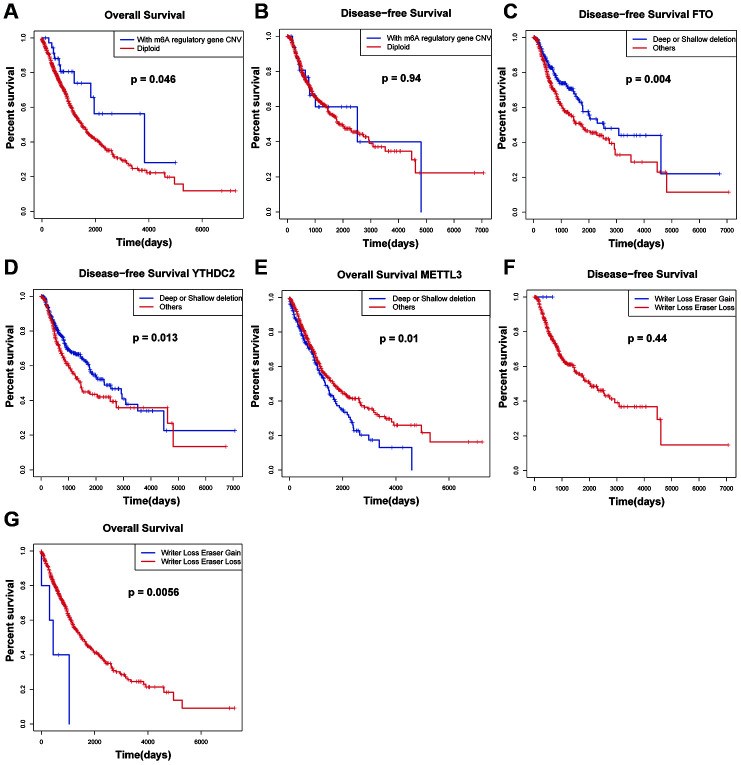
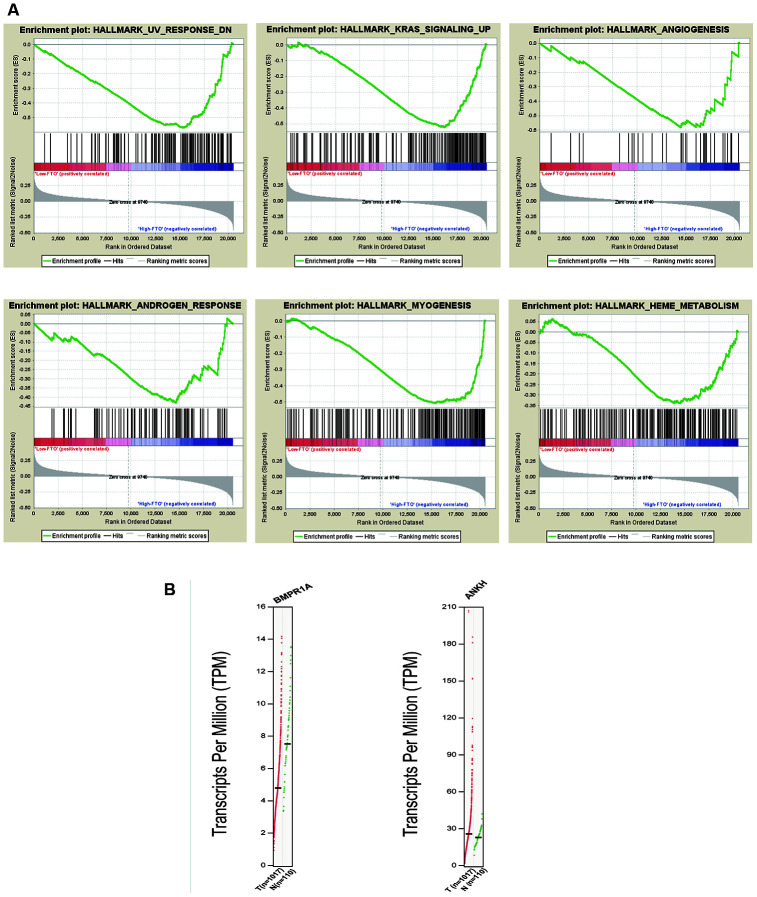
N6-methyladenosine (m6A) is the most common internal modification in eukaryotic mRNA. However, little is known about its role in non-small cell lung cancer (NSCLC). In this study, a total of 1017 NSCLC patients from the cancer genome atlas (TCGA) database with copy number variation (CNV) data were included. Log-rank tests and Cox regression model were used for survival analysis. The relationship between m6A regulators and clinicopathological features was evaluated using the chi-square test. The alteration of m6A regulators were related to T stage. Patients with any CNVs of regulators genes had worse overall survival (OS) than those with diploid genes. The deletion of m6A writer genes was an independent risk factor for poor OS, and the effect synergized with that of copy number gain of eraser genes. High expression of Fat mass-and obesity-associated gene (FTO) was associated with KRAS signaling up. Knockdown of FTO increased m6A content and inhibit proliferation of A549 lung cancer cell. Thus, we identified the genetic changes of m6A regulatory factors in NSCLC for the first time and found a significant relationship between these changes and poor clinical characteristics. FTO might play an important role in promoting NSCLC by decreasing m6A level and activating KRAS signaling.
N6-甲基腺苷(m6A)是真核生物信使核糖核酸(mRNA)中最常见的内部修饰。然而,其在非小细胞肺癌(NSCLC)中的作用却鲜为人知。在本研究中,共纳入了来自癌症基因组图谱(TCGA)数据库的1017例具有拷贝数变异(CNV)数据的非小细胞肺癌患者。采用对数秩检验和Cox回归模型进行生存分析。使用卡方检验评估m6A调节因子与临床病理特征之间的关系。m6A调节因子的改变与T分期有关。调节基因存在任何CNV的患者总生存期(OS)比二倍体基因患者更差。m6A书写基因的缺失是OS不良的独立危险因素,且该效应与去甲基化酶基因拷贝数增加的效应协同作用。脂肪量和肥胖相关基因(FTO)的高表达与KRAS信号上调有关。敲低FTO可增加m6A含量并抑制A549肺癌细胞的增殖。因此,我们首次确定了非小细胞肺癌中m6A调节因子的基因变化,并发现这些变化与不良临床特征之间存在显著关系。FTO可能通过降低m6A水平和激活KRAS信号在促进非小细胞肺癌中发挥重要作用。