Peerschke Ellinor, Stier Kenneth, Li Xiaoyu, Kandov Evelyn, de Stanchina Elisa, Chang Qing, Xiong Yuquan, Manova-Todorova Katia, Fan Ning, Barlas Afsar, Ghebrehiwet Berhane, Adusumilli Prasad S
Department of Laboratory Medicine, Memorial Sloan Kettering Cancer Center, New York, NY, United States.
Departments of Medicine and Pathology, Stony Brook University, Stony Brook, New York, NY, United States.
Front Oncol. 2020 Aug 12;10:1413. doi: 10.3389/fonc.2020.01413. eCollection 2020.
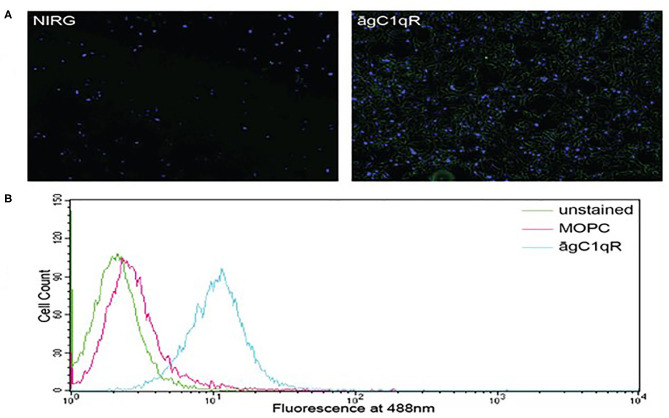
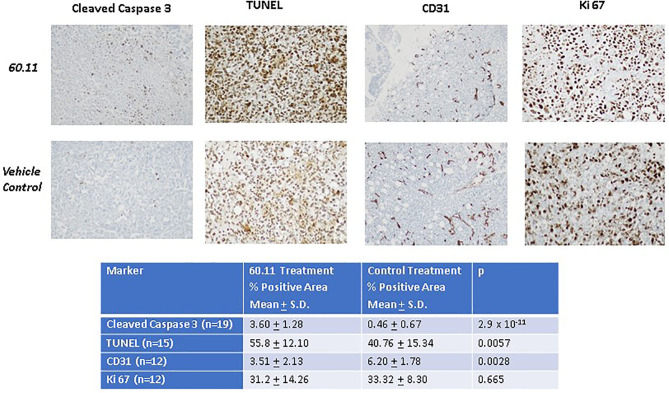
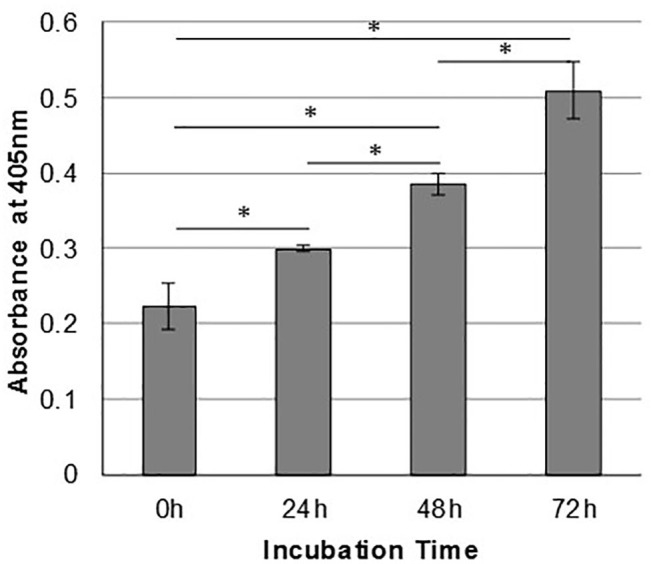
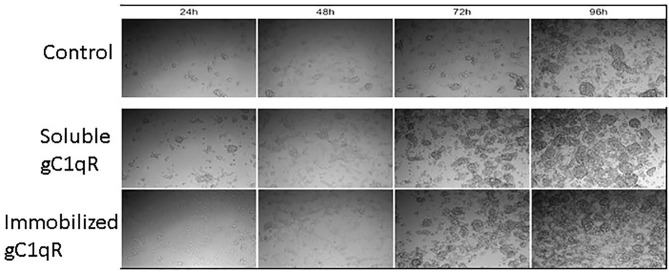
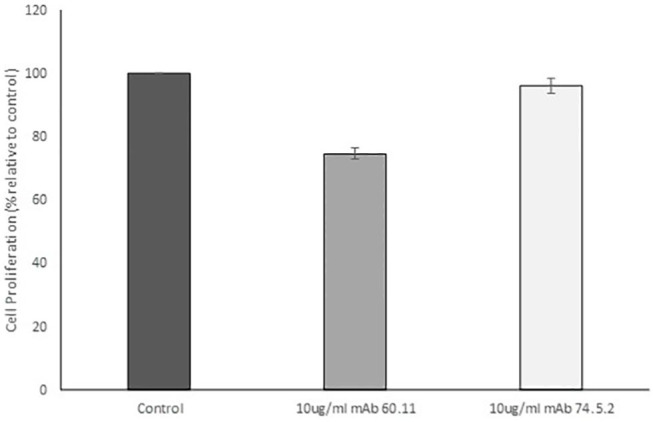
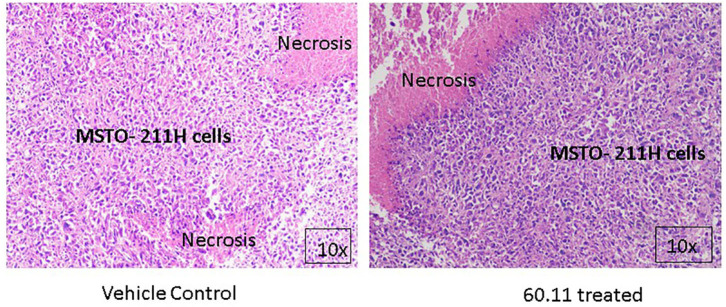
Mesothelioma is an aggressive cancer of the serous membranes with poor prognosis despite combination therapy consisting of surgery, radiotherapy, and platinum-based chemotherapy. Targeted therapies, including immunotherapies, have reported limited success, suggesting the need for additional therapeutic targets. This study investigates a potential new therapeutic target, gC1qR/HABP1/p32 (gC1qR), which is overexpressed in all morphologic subtypes of mesothelioma. gC1qR is a complement receptor that is associated with several cellular functions, including cell proliferation and angiogenesis. and experiments were conducted to test the hypothesis that targeting gC1qR with a specific gC1qR monoclonal antibody 60.11 reduces mesothelioma tumor growth, using the biphasic mesothelioma cell line MSTO-211H (MSTO). studies demonstrate cell surface and extracellular gC1qR expression by MSTO cells, and a modest 25.3 ± 1.8% ( = 4) reduction in cell proliferation by the gC1qR blocking 60.11 antibody. This inhibition was specific for targeting the C1q binding domain of gC1qR at aa 76-93, as a separate monoclonal antibody 74.5.2, directed against amino acids 204-218, had no discernable effect. studies, using a murine orthotopic xenotransplant model, demonstrated an even greater reduction in MSTO tumor growth (50% inhibition) in mice treated with the 60.11 antibody compared to controls. Immunohistochemical studies of resected tumors revealed increased cellular apoptosis by caspase 3 and TUNEL staining, in 60.11 treated tumors compared to controls, as well as impaired angiogenesis by decreased CD31 staining. Taken together, these data identify gC1qR as a potential new therapeutic target against mesothelioma with both antiproliferative and antiangiogenic properties.
间皮瘤是一种侵袭性的浆膜癌,尽管采用了手术、放疗和铂类化疗的联合治疗,其预后仍然很差。包括免疫疗法在内的靶向治疗取得的成功有限,这表明需要更多的治疗靶点。本研究调查了一个潜在的新治疗靶点,即gC1qR/HABP1/p32(gC1qR),它在间皮瘤的所有形态学亚型中均过度表达。gC1qR是一种补体受体,与多种细胞功能相关,包括细胞增殖和血管生成。进行了实验以检验用特异性gC1qR单克隆抗体60.11靶向gC1qR可减少间皮瘤肿瘤生长的假说,使用双相性间皮瘤细胞系MSTO-211H(MSTO)。研究证明MSTO细胞表面和细胞外存在gC1qR表达,gC1qR阻断抗体60.11使细胞增殖适度降低了25.3±1.8%(n = 4)。这种抑制作用是特异性针对gC1qR在第76 - 93位氨基酸的C1q结合域,因为针对第204 - 218位氨基酸的另一种单克隆抗体74.5.2没有明显效果。使用小鼠原位异种移植模型的研究表明,与对照组相比,用60.11抗体治疗的小鼠中MSTO肿瘤生长的减少更为显著(50%抑制)。对切除肿瘤的免疫组织化学研究显示,与对照组相比,在60.11治疗的肿瘤中,通过半胱天冬酶3和TUNEL染色发现细胞凋亡增加,同时通过CD31染色减少表明血管生成受损。综上所述,这些数据确定gC1qR是一种针对间皮瘤的潜在新治疗靶点,具有抗增殖和抗血管生成特性。