Sullivan Neil T, Allen Alexander G, Atkins Andrew J, Chung Cheng-Han, Dampier Will, Nonnemacher Michael R, Wigdahl Brian
Department of Microbiology and Immunology, Drexel University College of Medicine, Philadelphia, PA, United States.
Center for Molecular Virology and Translational Neuroscience, Institute for Molecular Medicine and Infectious Disease, Drexel University College of Medicine, Philadelphia, PA, United States.
Front Microbiol. 2020 Aug 12;11:1872. doi: 10.3389/fmicb.2020.01872. eCollection 2020.
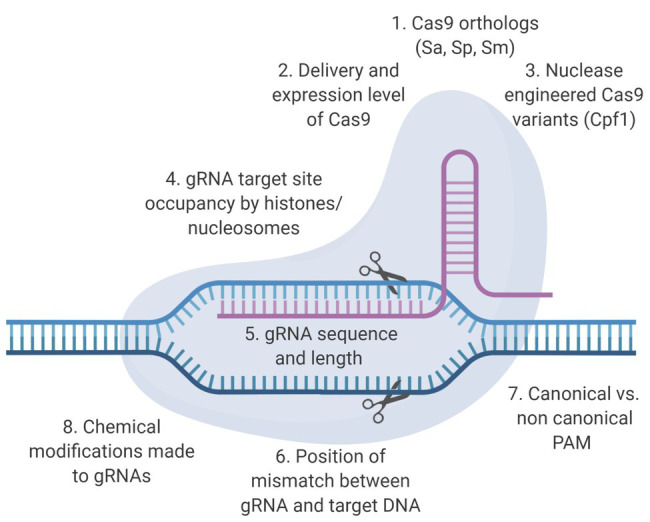
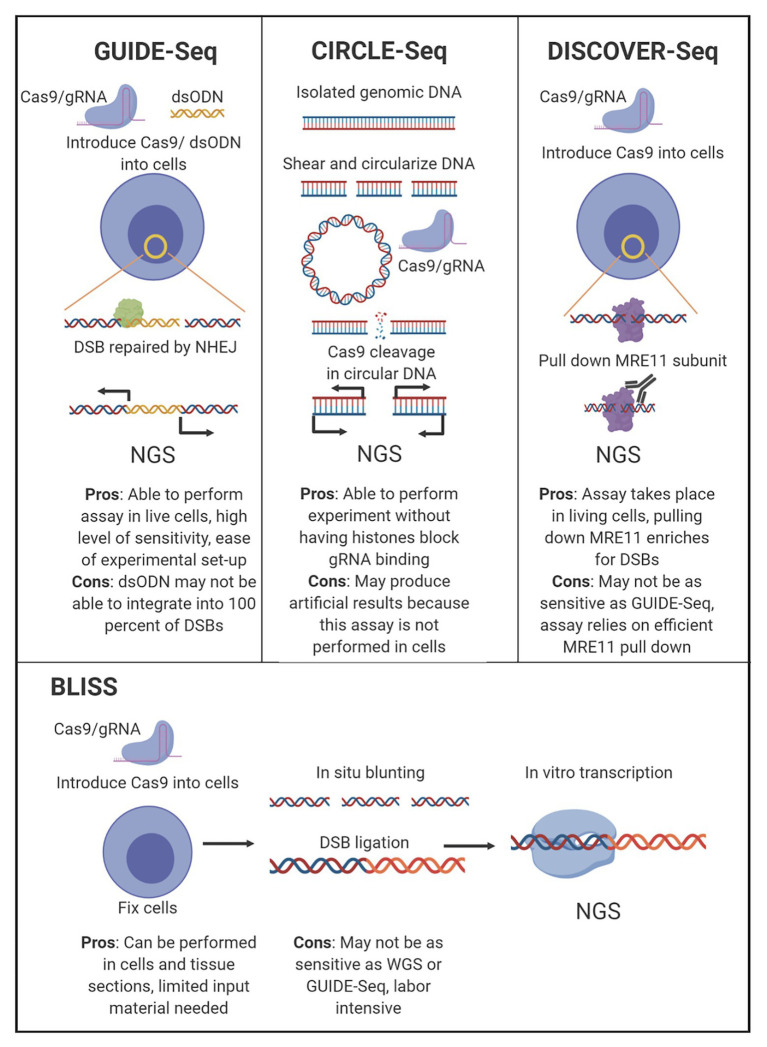
Human immunodeficiency virus type-1 (HIV-1) infection has resulted in the death of upward of 39 million people since being discovered in the early 1980s. A cure strategy for HIV-1 has eluded scientists, but gene editing technologies such as clustered regularly interspaced short palindromic repeats (CRISPR)/CRISPR-associated protein 9 (Cas9) offer a new approach to developing a cure for HIV infection. While the CRISPR/Cas9 system has been used successfully in a number of different types of studies, there remains a concern for off-target effects. This review details the different aspects of the Cas9 system and how they play a role in off-target events. In addition, this review describes the current technologies available for detecting off-target cleavage events and their advantages and disadvantages. While some studies have utilized whole genome sequencing (WGS), this method sacrifices depth of coverage for interrogating the whole genome. A number of different approaches have now been developed to take advantage of next generation sequencing (NGS) without sacrificing depth of coverage. This review highlights four widely used methods for detecting off-target events: (1) genome-wide unbiased identification of double-stranded break events enabled by sequencing (GUIDE-Seq), (2) discovery of Cas off-targets and verification by sequencing (DISCOVER-Seq), (3) circularization for reporting of cleavage effects by sequencing (CIRCLE-Seq), and (4) breaks labeling and sequencing (BLISS). Each of these technologies has advantages and disadvantages, but all center around capturing double-stranded break (DSB) events catalyzed by the Cas9 endonuclease. Being able to define off-target events is crucial for a gene therapy cure strategy for HIV-1.
自20世纪80年代初被发现以来,人类免疫缺陷病毒1型(HIV-1)感染已导致超过3900万人死亡。科学家们一直未能找到治愈HIV-1的策略,但诸如成簇规律间隔短回文重复序列(CRISPR)/CRISPR相关蛋白9(Cas9)等基因编辑技术为开发治愈HIV感染的方法提供了新途径。虽然CRISPR/Cas9系统已在许多不同类型的研究中成功应用,但脱靶效应仍然令人担忧。本综述详细介绍了Cas9系统的不同方面及其在脱靶事件中的作用。此外,本综述还描述了目前可用于检测脱靶切割事件的技术及其优缺点。虽然一些研究采用了全基因组测序(WGS),但这种方法在检测全基因组时牺牲了覆盖深度。现在已经开发出许多不同的方法来利用下一代测序(NGS),同时又不牺牲覆盖深度。本综述重点介绍了四种广泛用于检测脱靶事件的方法:(1)通过测序实现的全基因组双链断裂事件无偏识别(GUIDE-Seq),(2)Cas脱靶发现及测序验证(DISCOVER-Seq),(3)通过测序报告切割效应的环化(CIRCLE-Seq),以及(4)断裂标记与测序(BLISS)。这些技术各有优缺点,但都围绕着捕获由Cas9核酸内切酶催化的双链断裂(DSB)事件展开。能够确定脱靶事件对于HIV-1的基因治疗治愈策略至关重要。