Department of Medical Oncology, Fujian Medical University Cancer Hospital & Fujian Cancer Hospital, Fuzhou, China.
Cancer Bio-immunotherapy Center, Fujian Medical University Cancer Hospital & Fujian Cancer Hospital, Fuzhou, China.
Front Immunol. 2020 Aug 10;11:1620. doi: 10.3389/fimmu.2020.01620. eCollection 2020.
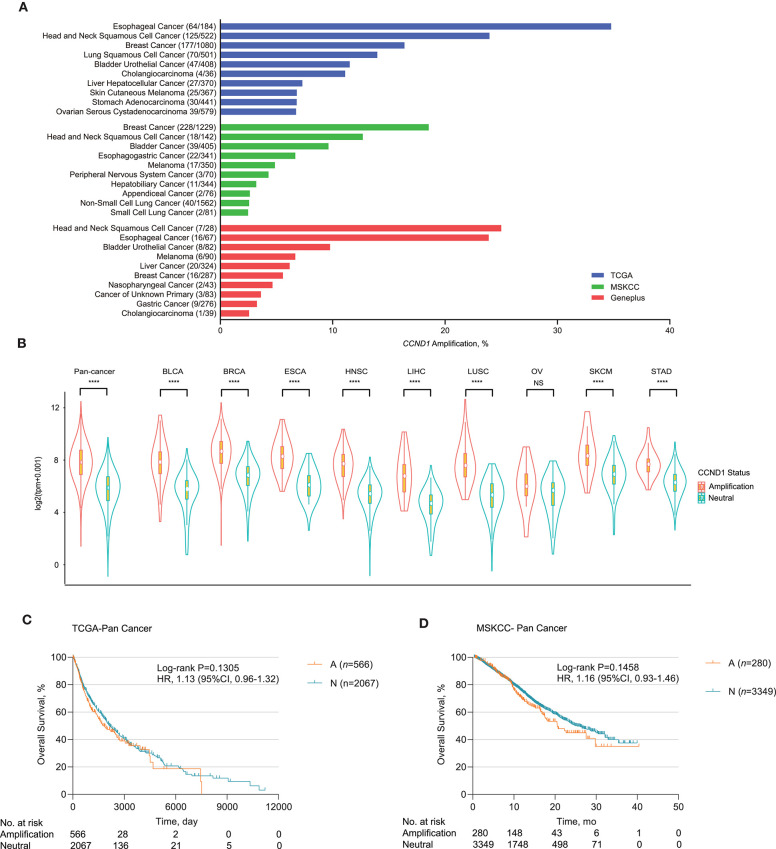
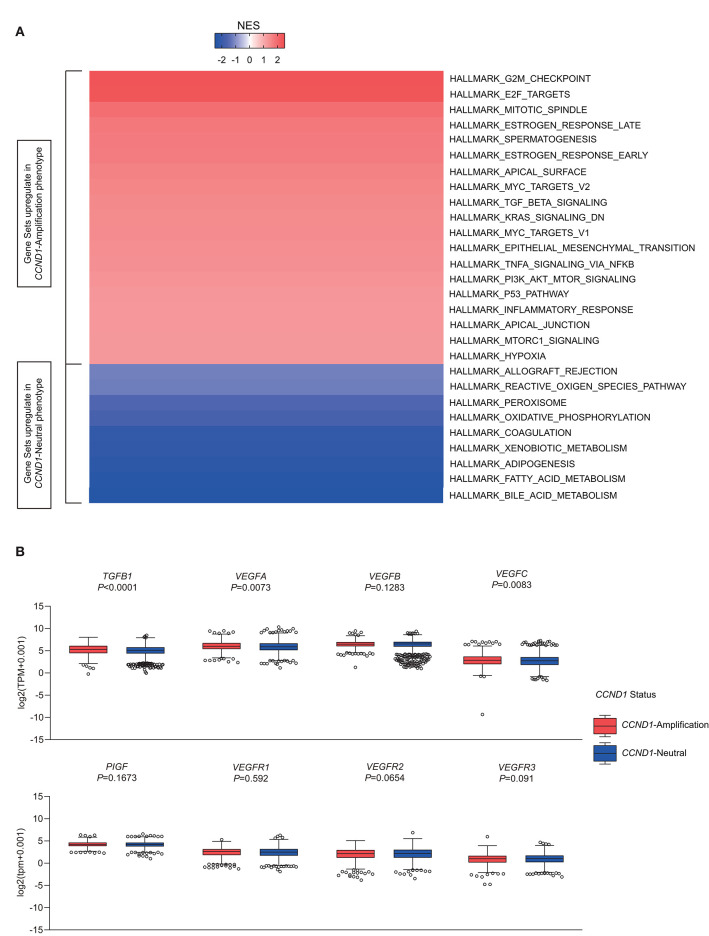
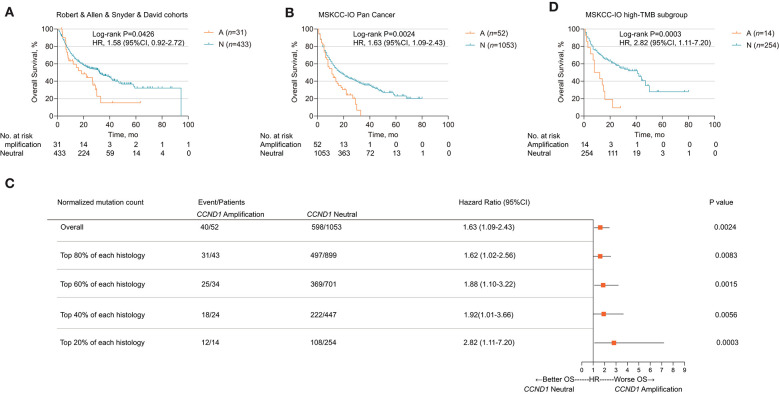
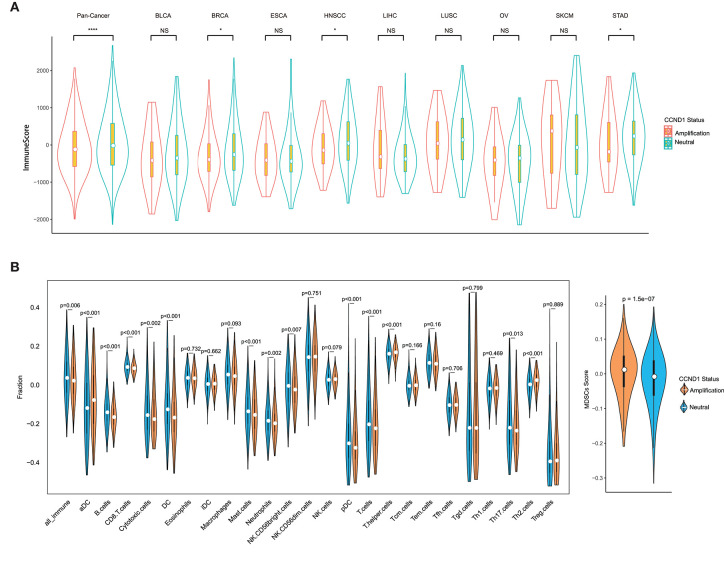
amplification relevant to malignant biological behavior exists in solid tumors. The prevalence and utility of amplification as a biomarker for the clinical response to treatment with immune checkpoint inhibitors (ICIs) are unknown. Our study is a preliminary investigation mainly focused on the predictive function of amplification in the tumor microenvironment (TME) in the aspect of genome and transcriptome. We examined the prevalence of amplification and its potential as a biomarker for the efficacy of ICI therapy for solid tumors using a local database ( = 6,536), The Cancer Genome Atlas (TCGA) database ( = 10,606), and the Memorial Sloan Kettering Cancer Center (MSKCC) database ( = 10,109). Comprehensive profiling was performed to determine the prevalence of amplification and the correlation with the prognosis and the response to ICIs. A amplification occurs in many cancer types and correlates with shorter overall survival and inferior outcomes with ICI therapy. Transcriptomic analysis showed various degrees of immune cell exclusion, including cytotoxic cells, T cells, CD8 T cells, dendritic cells (DCs), and B cells in the TME in a TCGA amplification population. The gene set enrichment analysis suggested that amplification correlates with multiple aggressive, immunosuppressive hallmarks including epithelial-mesenchymal transition, transforming growth factor (TGF)-β signaling, KRAS signaling, phosphoinositide 3-kinase (PI3K)/AKT/mammalian target of rapamycin (mTOR) signaling, p53 pathway, and hypoxia signaling in solid tumors. These findings indicate that amplification may be a key point related to immunosuppression in TME and multiple malignancy hallmarks, and it hinders not only the natural host immune responses but also the efficacy of ICIs.
在实体瘤中存在与恶性生物学行为相关的扩增。扩增作为免疫检查点抑制剂 (ICI) 治疗临床反应的生物标志物的流行率和实用性尚不清楚。我们的研究主要侧重于肿瘤微环境 (TME) 中基因组和转录组方面的扩增预测功能,是一项初步研究。我们使用本地数据库(=6536)、癌症基因组图谱 (TCGA) 数据库(=10606)和纪念斯隆凯特琳癌症中心 (MSKCC) 数据库(=10109)检查了扩增的流行率及其作为实体瘤 ICI 治疗疗效的生物标志物的潜力。进行了综合分析以确定扩增的流行率及其与预后和对 ICI 的反应的相关性。扩增发生在许多癌症类型中,与总生存期缩短和 ICI 治疗效果不佳相关。转录组分析显示在 TCGA 扩增人群的 TME 中存在不同程度的免疫细胞排斥,包括细胞毒性细胞、T 细胞、CD8 T 细胞、树突状细胞 (DC) 和 B 细胞。基因集富集分析表明,扩增与多种侵袭性、免疫抑制特征相关,包括上皮-间充质转化、转化生长因子 (TGF)-β 信号、KRAS 信号、磷酸肌醇 3-激酶 (PI3K)/AKT/哺乳动物雷帕霉素靶蛋白 (mTOR) 信号、p53 途径和缺氧信号。这些发现表明,扩增可能是 TME 中与免疫抑制相关的关键点和多种恶性特征,它不仅阻碍了天然宿主免疫反应,还阻碍了 ICI 的疗效。