• 文献检索
  • 文档翻译
  • 深度研究
  • 学术资讯
  • Suppr Zotero 插件Zotero 插件
  • 邀请有礼
  • 套餐&价格
  • 历史记录
应用&插件
Suppr Zotero 插件Zotero 插件浏览器插件Mac 客户端Windows 客户端微信小程序
定价
高级版会员购买积分包购买API积分包
服务
文献检索文档翻译深度研究API 文档MCP 服务
关于我们
关于 Suppr公司介绍联系我们用户协议隐私条款
关注我们

Suppr 超能文献

核心技术专利:CN118964589B侵权必究
粤ICP备2023148730 号-1Suppr @ 2026

文献检索

告别复杂PubMed语法,用中文像聊天一样搜索,搜遍4000万医学文献。AI智能推荐,让科研检索更轻松。

立即免费搜索

文件翻译

保留排版,准确专业,支持PDF/Word/PPT等文件格式,支持 12+语言互译。

免费翻译文档

深度研究

AI帮你快速写综述,25分钟生成高质量综述,智能提取关键信息,辅助科研写作。

立即免费体验

退行性腰椎疾病患者的胃肠道和心血管风险的流行情况。

Prevalence of Gastrointestinal and Cardiovascular Risk in Patients with Degenerative Lumbar Spinal Disease.

机构信息

Department of Orthopedic Surgery, Yonsei University College of Medicine, Seoul, Korea.

出版信息

Clin Orthop Surg. 2020 Sep;12(3):343-352. doi: 10.4055/cios20021. Epub 2020 Aug 19.

DOI:10.4055/cios20021
PMID:32904035
原文链接:https://pmc.ncbi.nlm.nih.gov/articles/PMC7449855/
Abstract

BACKGROUND

Limited information is available about the proportion of patients with degenerative lumbar spinal disease (DLSD) who have gastrointestinal (GI) and cardiovascular (CV) risk factors. Many DLSD patients are prescribed nonsteroidal anti-inflammatory drugs (NSAIDs) that are known to carry risks to the GI and CV systems by increasing GI bleeding and thromboembolic events. This study aimed to measure the prevalence of GI and CV risk in patients with DLSD and to ascertain whether the prescription of NSAIDs is in line with current guidelines.

METHODS

This study included 153 patients with symptomatic DLSD who were planning to undergo lumbar spinal surgery. The GI profile was checked using the GI Standardized Calculator of Risk for Event system and CV risk was evaluated using the presence of metabolic syndrome. The conformity of the prescription of NSAIDs was investigated according to the recommendations in current guidelines.

RESULTS

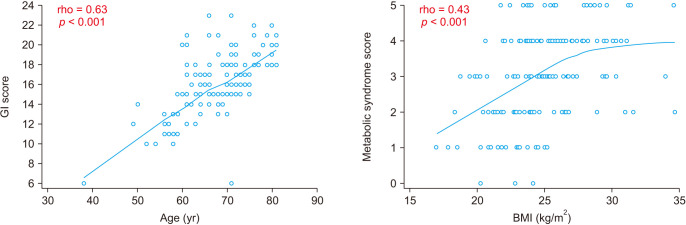
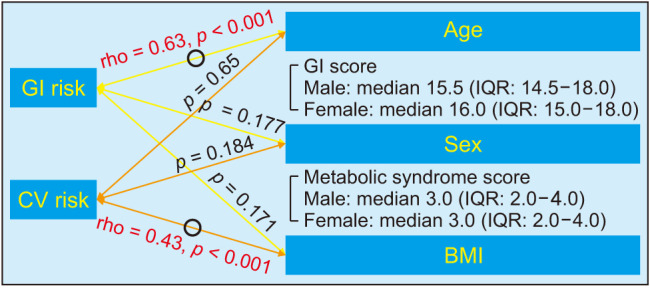
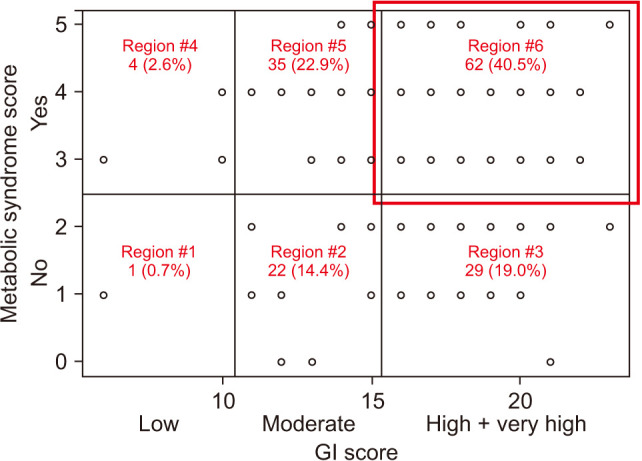
More than half of the patients (59.5%) had high or very high GI risk, and 66% of the patients were diagnosed with metabolic syndrome, which corresponds with CV risk. The rate of simultaneous GI and CV risk was 40.5% (n = 62 / 153; gastrointestinal Standardized Calculator of Risk for Event, > high and metabolic syndrome, yes). The actual prescription of NSAIDs was not in accordance with current guidelines.

CONCLUSIONS

Two out of 3 patients had GI or CV risk factors, and approximately 40% of patients had both. Detailed assessment of GI and CV risk in patients with DLSD by using effective evaluation tools is mandatory for optimal medical treatment.

摘要

背景

关于患有退行性腰椎疾病(DLSD)的患者中有多少患有胃肠道(GI)和心血管(CV)危险因素的信息有限。许多 DLSD 患者被开处非甾体抗炎药(NSAIDs),已知这些药物会增加胃肠道出血和血栓栓塞事件的风险,从而对 GI 和 CV 系统造成风险。本研究旨在测量 DLSD 患者的 GI 和 CV 风险的流行率,并确定 NSAIDs 的处方是否符合当前指南。

方法

本研究包括 153 名计划接受腰椎脊柱手术的有症状的 DLSD 患者。使用 GI 标准化风险计算器系统检查 GI 概况,使用代谢综合征评估 CV 风险。根据当前指南中的建议,研究了 NSAIDs 处方的一致性。

结果

超过一半的患者(59.5%)具有高或极高的 GI 风险,并且 66%的患者被诊断患有代谢综合征,这与 CV 风险相对应。同时存在 GI 和 CV 风险的发生率为 40.5%(n = 62/153;胃肠道标准化风险计算器,>高和代谢综合征,是)。实际的 NSAIDs 处方不符合当前指南。

结论

每 3 个患者中就有 2 个有 GI 或 CV 危险因素,约 40%的患者同时存在这两种危险因素。通过使用有效的评估工具对 DLSD 患者的 GI 和 CV 风险进行详细评估,对于最佳的医疗治疗是必要的。
https://cdn.ncbi.nlm.nih.gov/pmc/blobs/2951/7449855/72abe2a16cc0/cios-12-343-g004.jpg
https://cdn.ncbi.nlm.nih.gov/pmc/blobs/2951/7449855/ea9700f58e58/cios-12-343-g001.jpg
https://cdn.ncbi.nlm.nih.gov/pmc/blobs/2951/7449855/e832f7d89fe5/cios-12-343-g002.jpg
https://cdn.ncbi.nlm.nih.gov/pmc/blobs/2951/7449855/4c79ed29192f/cios-12-343-g003.jpg
https://cdn.ncbi.nlm.nih.gov/pmc/blobs/2951/7449855/72abe2a16cc0/cios-12-343-g004.jpg
https://cdn.ncbi.nlm.nih.gov/pmc/blobs/2951/7449855/ea9700f58e58/cios-12-343-g001.jpg
https://cdn.ncbi.nlm.nih.gov/pmc/blobs/2951/7449855/e832f7d89fe5/cios-12-343-g002.jpg
https://cdn.ncbi.nlm.nih.gov/pmc/blobs/2951/7449855/4c79ed29192f/cios-12-343-g003.jpg
https://cdn.ncbi.nlm.nih.gov/pmc/blobs/2951/7449855/72abe2a16cc0/cios-12-343-g004.jpg

相似文献

1
Prevalence of Gastrointestinal and Cardiovascular Risk in Patients with Degenerative Lumbar Spinal Disease.退行性腰椎疾病患者的胃肠道和心血管风险的流行情况。
Clin Orthop Surg. 2020 Sep;12(3):343-352. doi: 10.4055/cios20021. Epub 2020 Aug 19.
2
Prospective study of NSAIDs prescribing in Saudi Arabia: Cardiovascular and gastrointestinal risk in patients with diabetes mellitus
.沙特阿拉伯非甾体抗炎药处方的前瞻性研究:糖尿病患者的心血管和胃肠道风险
Int J Clin Pharmacol Ther. 2018 Feb;56(2):64-71. doi: 10.5414/CP203071.
3
Prescription patterns and appropriateness of NSAID therapy according to gastrointestinal risk and cardiovascular history in patients with diagnoses of osteoarthritis.根据胃肠道风险和心血管病史,对诊断为骨关节炎的患者进行 NSAID 治疗的处方模式和适宜性。
BMC Med. 2011 Apr 14;9:38. doi: 10.1186/1741-7015-9-38.
4
Gastrointestinal and cardiovascular risk of non-selective NSAIDs and COX-2 inhibitors in elderly patients with knee osteoarthritis.老年膝骨关节炎患者使用非选择性非甾体抗炎药和COX-2抑制剂的胃肠道及心血管风险
J Med Assoc Thai. 2009 Dec;92 Suppl 6:S19-26.
5
Assessment of gastrointestinal and cardiovascular risk in patients with osteoarthritis who require NSAIDs: the LOGICA study.评估需要 NSAIDs 的骨关节炎患者的胃肠道和心血管风险:LOGICA 研究。
Ann Rheum Dis. 2010 Aug;69(8):1453-8. doi: 10.1136/ard.2009.123166. Epub 2010 May 24.
6
Evaluation of risk profiles for gastrointestinal and cardiovascular adverse effects in nonselective NSAID and COX-2 inhibitor users: a cohort study using pharmacy dispensing data in The Netherlands.非选择性非甾体抗炎药和COX-2抑制剂使用者胃肠道及心血管不良反应风险特征评估:一项利用荷兰药房配药数据的队列研究
Drug Saf. 2008;31(2):143-58. doi: 10.2165/00002018-200831020-00004.
7
Strategies to optimize treatment with NSAIDs in patients at risk for gastrointestinal and cardiovascular adverse events.优化 NSAIDs 治疗方案以降低胃肠道和心血管不良事件风险的策略。
Clin Ther. 2010 Apr;32(4):667-77. doi: 10.1016/j.clinthera.2010.04.009.
8
Canadian consensus guidelines on long-term nonsteroidal anti-inflammatory drug therapy and the need for gastroprotection: benefits versus risks.加拿大关于长期非甾体抗炎药治疗及胃保护需求的共识指南:益处与风险
Aliment Pharmacol Ther. 2009 Mar 1;29(5):481-96. doi: 10.1111/j.1365-2036.2008.03905.x. Epub 2008 Nov 27.
9
[A choice of a nonsteroidal anti-inflammatory drug with regard to gastrointestinal and cardiovascular' risks].关于胃肠道和心血管风险的非甾体抗炎药的选择
Zh Nevrol Psikhiatr Im S S Korsakova. 2016;116(4):85-89. doi: 10.17116/jnevro20161164185-89.
10
Relationship between diclofenac dose and risk of gastrointestinal and cardiovascular events: meta-regression based on two systematic literature reviews.双氯芬酸剂量与胃肠道及心血管事件风险之间的关系:基于两项系统文献综述的Meta回归分析
Clin Ther. 2014 Jun 1;36(6):906-17. doi: 10.1016/j.clinthera.2014.04.012. Epub 2014 May 23.

引用本文的文献

1
Lumbar disc herniation is an independent predictor of plaque burden in the patients with unstable angina.腰椎间盘突出症是不稳定型心绞痛患者斑块负荷的独立预测因素。
Front Cardiovasc Med. 2024 Feb 9;11:1324456. doi: 10.3389/fcvm.2024.1324456. eCollection 2024.
2
Management of Patients with Ischemic Heart Disease in Spine Surgery.脊柱手术中缺血性心脏病患者的管理
Asian Spine J. 2023 Dec;17(6):1168-1175. doi: 10.31616/asj.2023.0161. Epub 2023 Dec 18.
3
Is Routine Use of Drain Really Necessary for Posterior Lumbar Interbody Fusion Surgery? A Retrospective Case Series with a Historical Control Group.

本文引用的文献

1
Sarcopenia and Back Muscle Degeneration as Risk Factors for Back Pain: A Comparative Study.肌肉减少症和背部肌肉退变作为背痛的危险因素:一项比较研究。
Asian Spine J. 2020 Jun;14(3):364-372. doi: 10.31616/asj.2019.0125. Epub 2020 Jan 8.
2
Significance of the Association between Disc Degeneration Changes on Imaging and Low Back Pain: A Review Article.影像学上椎间盘退变改变与下腰痛之间关联的意义:一篇综述文章。
Asian Spine J. 2020 Apr;14(2):245-257. doi: 10.31616/asj.2019.0046. Epub 2019 Nov 5.
3
Assessing the cardiovascular risk between celecoxib and nonselective nonsteroidal antiinflammatory drugs in patients with rheumatoid arthritis and osteoarthritis.
腰椎后路椎间融合手术常规使用引流管真的有必要吗?一项带有历史对照组的回顾性病例系列研究。
Global Spine J. 2023 Apr;13(3):621-629. doi: 10.1177/21925682211001801. Epub 2021 Mar 18.
评估类风湿关节炎和骨关节炎患者中塞来昔布与非选择性非甾体抗炎药的心血管风险。
Circ J. 2014;78(1):194-205. doi: 10.1253/circj.cj-12-1573. Epub 2013 Oct 22.
4
Reoperation rate after surgery for lumbar spinal stenosis without spondylolisthesis: a nationwide cohort study.腰椎管狭窄症手术无脊椎滑脱的再手术率:一项全国性队列研究。
Spine J. 2013 Oct;13(10):1230-7. doi: 10.1016/j.spinee.2013.06.069. Epub 2013 Sep 7.
5
Correlation between metabolic syndrome and knee osteoarthritis: data from the Korean National Health and Nutrition Examination Survey (KNHANES).代谢综合征与膝骨关节炎的相关性:来自韩国国家健康和营养检查调查(KNHANES)的数据。
BMC Public Health. 2013 Jun 22;13:603. doi: 10.1186/1471-2458-13-603.
6
Relative cardiovascular and gastrointestinal safety of non-selective non-steroidal anti-inflammatory drugs versus cyclo-oxygenase-2 inhibitors: implications for clinical practice.非选择性非甾体抗炎药与环氧化酶-2 抑制剂的心血管和胃肠道相对安全性:对临床实践的影响。
Clin Drug Investig. 2013 Mar;33(3):167-83. doi: 10.1007/s40261-013-0052-6.
7
Cardiovascular risk with non-steroidal anti-inflammatory drugs: systematic review of population-based controlled observational studies.非甾体抗炎药的心血管风险:基于人群的对照观察性研究的系统评价。
PLoS Med. 2011 Sep;8(9):e1001098. doi: 10.1371/journal.pmed.1001098. Epub 2011 Sep 27.
8
Prescription pattern of NSAIDs and the prevalence of NSAID-induced gastrointestinal risk factors of orthopaedic patients in clinical practice in Korea.韩国临床实践中骨科患者 NSAIDs 处方模式及 NSAID 诱导胃肠道风险因素的流行情况。
J Korean Med Sci. 2011 Apr;26(4):561-7. doi: 10.3346/jkms.2011.26.4.561. Epub 2011 Mar 28.
9
Cardiovascular safety of non-steroidal anti-inflammatory drugs: network meta-analysis.非甾体抗炎药的心血管安全性:网络荟萃分析。
BMJ. 2011 Jan 11;342:c7086. doi: 10.1136/bmj.c7086.
10
Assessment of gastrointestinal and cardiovascular risk in patients with osteoarthritis who require NSAIDs: the LOGICA study.评估需要 NSAIDs 的骨关节炎患者的胃肠道和心血管风险:LOGICA 研究。
Ann Rheum Dis. 2010 Aug;69(8):1453-8. doi: 10.1136/ard.2009.123166. Epub 2010 May 24.