Patterson Grace T, Thomas Lian F, Coyne Lucy A, Rushton Jonathan
Institute of Infection, Veterinary and Ecological Sciences, University of Liverpool, Liverpool, UK.
International Livestock Research Institute, PO Box 30709, Nairobi, 00100, UK.
Glob Food Sec. 2020 Sep;26:100424. doi: 10.1016/j.gfs.2020.100424. Epub 2020 Aug 30.
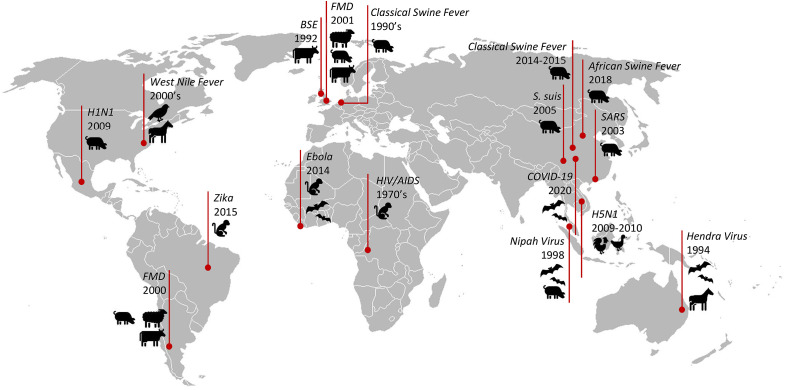
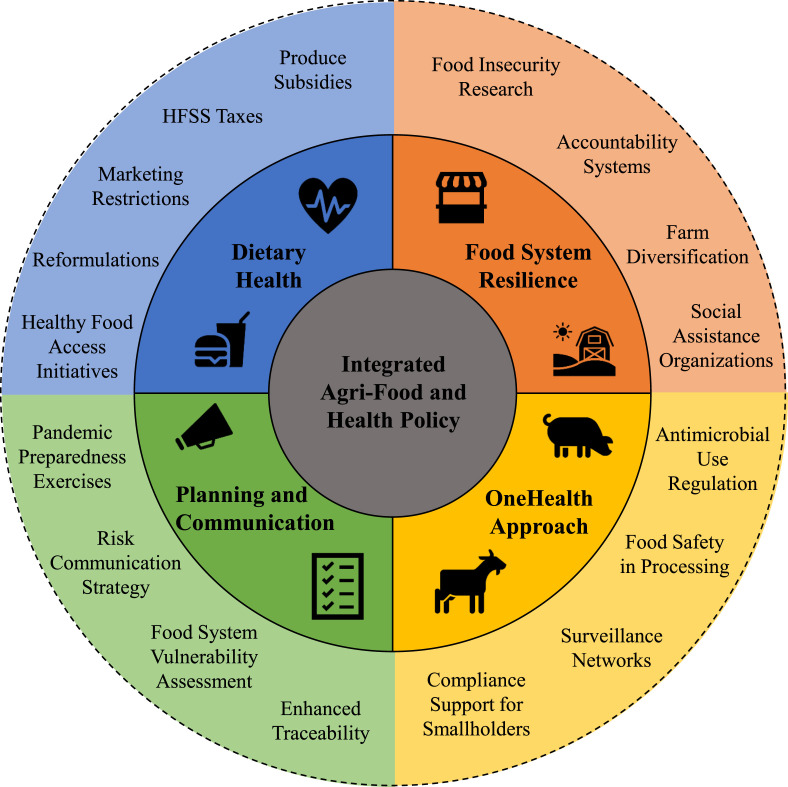
Our food systems are progressively more industrialized and consolidated with many modern food value chains involving multiple countries and continents, and as such being associated with changes in risk profile and impacts of emerging and re-emerging diseases. Disease outbreaks that sweep through a single region can have massive impacts on food supply, while severe outbreaks of human pathogens can disrupt agricultural labor supply or demand for products perceived as 'unsafe'. Market pressures have generally rewarded production of cash crops for fuel and energy dense, low nutrient processed foods over production of fruits and vegetables for local consumption. Climbing rates of food-related NCDs and pre-existing conditions leave the population increasingly susceptible to infectious diseases that are often driven by or arise from the food system. Therefore disease and diet from our food systems cause impacts on human health, and human health issues can impact on the functioning of the food system. The COVID-19 outbreak is the most recent example of food system driven disease emergence and of massive supply and demand shocks in the food system, experienced as a direct and indirect result of this disease. The effects of the food system on disease spread (and vice versa) must be addressed in future plans to prevent and mitigate large scale outbreaks. Health policies must acknowledge the food system as the base of our health system, as must agri-food policy recognize the pre-eminence of human health (directly and indirectly) in decision making.
我们的食品系统正日益走向工业化和整合化,许多现代食品价值链涉及多个国家和各大洲,因此与新出现和再次出现疾病的风险状况变化及影响相关联。席卷单一地区的疾病暴发会对食品供应产生巨大影响,而人类病原体的严重暴发则会扰乱农业劳动力供应或对被视为“不安全”产品的需求。市场压力通常更青睐生产用于燃料和能源密集型、低营养加工食品的经济作物,而非生产供当地消费的水果和蔬菜。与食物相关的非传染性疾病发病率不断攀升以及既存病症使人们越来越容易感染往往由食品系统引发或源于食品系统的传染病。因此,我们食品系统中的疾病和饮食会对人类健康造成影响,而人类健康问题也会影响食品系统的运转。新冠疫情是食品系统引发疾病出现以及食品系统遭受大规模供需冲击的最新例证,这种冲击是该疾病直接和间接造成的结果。食品系统对疾病传播的影响(反之亦然)必须在未来预防和缓解大规模疫情的计划中加以应对。卫生政策必须承认食品系统是我们卫生系统的基础,农业食品政策也必须认识到人类健康(直接和间接)在决策中的首要地位。