Sri Widiastuti Ida Ayu Kade, Rustina Yeni, Efendi Defi
Faculty of Nusing, Universitas Indonesia.
Diploma of Nursing, Mulawarman University.
Pediatr Rep. 2020 Jun 25;12(Suppl 1):8702. doi: 10.4081/pr.2020.8702.
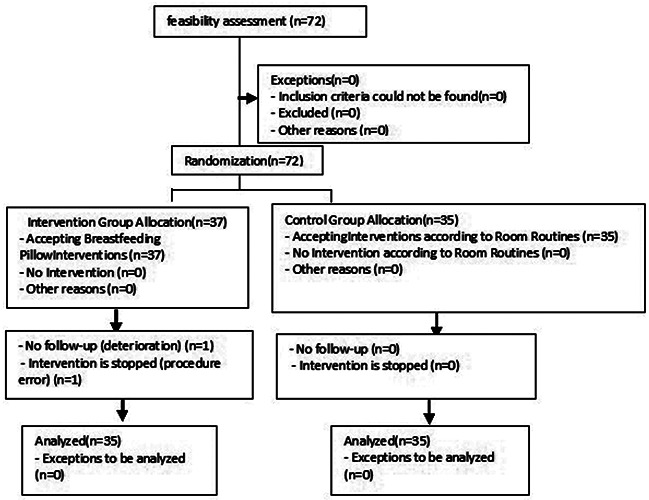
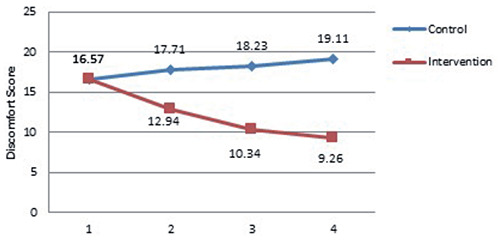
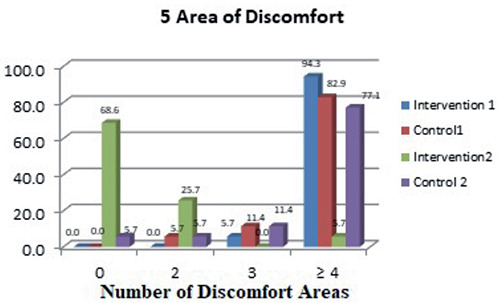
The process of breastfeeding for newborns in the special care room often experiences obstacles due to diverse factors, such as environmental factors, hospitalization impact, and maternal discomfort during breastfeeding. The aim of this study was to determine whether breastfeeding pillows decrease maternal discomfort during breastfeeding. This research employed a randomized control trial (RCT) design involving 70 participants who were divided into an intervention (n=35) and a control group (n=35) based on the inclusion criteria. The intervention group used a breastfeeding pillow while breastfeeding the baby, and the control group provided ASI (breast milk) as recommended in the treatment room. The data measurement instruments were an observation sheet and the body part discomfort scale (BPDS). The BPDS comprised 4 assessments: the initial assessment, day I assessment, day II assessment, and the final assessment. The results of the GLM-RM analysis showed a significant reduction in maternal discomfort among participants using breastfeeding pillows (P<0.05). Supporting facilities such as breastfeeding pillows are needed to improve maternal comfort to increase the breastfeeding period and ensure optimal nutrition.
在特别护理室中,新生儿的母乳喂养过程常常因多种因素而遭遇障碍,这些因素包括环境因素、住院影响以及母乳喂养期间母亲的不适。本研究的目的是确定哺乳枕是否能减轻母乳喂养期间母亲的不适。本研究采用随机对照试验(RCT)设计,70名参与者根据纳入标准被分为干预组(n = 35)和对照组(n = 35)。干预组在给婴儿喂奶时使用哺乳枕,对照组则按照治疗室的建议进行母乳喂养(母乳)。数据测量工具为观察表和身体部位不适量表(BPDS)。BPDS包括4次评估:初始评估、第1天评估、第2天评估和最终评估。广义线性模型重复测量(GLM - RM)分析结果显示,使用哺乳枕的参与者母亲的不适显著减轻(P < 0.05)。需要哺乳枕等辅助设施来提高母亲的舒适度,以延长母乳喂养时间并确保最佳营养。